A brief update while I try to thrash out, under a looming deadline, my piece on the Cleveland International Film Festival...
My Rotten Tomatoes profile is up and ready for the world at large to see. You can find one-stop shopping links to my writing on this blog, at DVDMon.com, and The Film Journal.
Links for everything aren't there yet--that's something for me to add to my task list--so be patient.
Thursday, March 31, 2005


Tuesday, March 29, 2005
Guess Who
GUESS WHO (Kevin Rodney Sullivan, 2005)
In 1967’s GUESS WHO’S COMING TO DINNER Sidney Poitier’s white fiancé brought him home to meet her parents. The scenario gets a race reversal in the new comedy GUESS WHO. Theresa, played by Zoe Saldana, is eager to introduce her boyfriend Simon to mom and dad, but she’s neglected to mention that he’s white. Ashton Kutcher stars as Simon. Bernie Mac is Theresa’s father Percy. As if meeting his future in-laws under these conditions isn’t nerve wracking enough, Simon just quit his job but hasn’t told anyone.
While GUESS WHO gets some mileage out of its black and white issues, it’s more focused on being the interracial romantic comedy answer to MEET THE PARENTS. Bernie Mac is an intimidating but less extreme version of Robert De Niro’s overprotective dad while Kutcher is a blander Greg Focker. Just like Greg, Simon feels compelled to tell a preposterous lie and perpetuate it. Another scene riffs on the tension between future father and son-in-law while listening to the radio in the car. Mac’s standoffish screen personality lets him have a lot of fun tightening the screws on Simon; however, Kutcher feels too restrained, a quality that keeps GUESS WHO from breaking free of its conventions. Racial discomfort flavors scenes rather than dominating them. It also provides the funniest moments, as when Percy mistakes Simon for his daughter’s cabdriver and challenges him to tell offensive jokes about black people. Simon and Theresa’s relationship isn’t controversial, which highlights progress that society has made, but GUESS WHO would have been funnier if it mined the eggshell-walking the characters practice in trying not to offend.
Grade: C+
(Review first aired on the March 29, 2005 NOW PLAYING)
In 1967’s GUESS WHO’S COMING TO DINNER Sidney Poitier’s white fiancé brought him home to meet her parents. The scenario gets a race reversal in the new comedy GUESS WHO. Theresa, played by Zoe Saldana, is eager to introduce her boyfriend Simon to mom and dad, but she’s neglected to mention that he’s white. Ashton Kutcher stars as Simon. Bernie Mac is Theresa’s father Percy. As if meeting his future in-laws under these conditions isn’t nerve wracking enough, Simon just quit his job but hasn’t told anyone.
While GUESS WHO gets some mileage out of its black and white issues, it’s more focused on being the interracial romantic comedy answer to MEET THE PARENTS. Bernie Mac is an intimidating but less extreme version of Robert De Niro’s overprotective dad while Kutcher is a blander Greg Focker. Just like Greg, Simon feels compelled to tell a preposterous lie and perpetuate it. Another scene riffs on the tension between future father and son-in-law while listening to the radio in the car. Mac’s standoffish screen personality lets him have a lot of fun tightening the screws on Simon; however, Kutcher feels too restrained, a quality that keeps GUESS WHO from breaking free of its conventions. Racial discomfort flavors scenes rather than dominating them. It also provides the funniest moments, as when Percy mistakes Simon for his daughter’s cabdriver and challenges him to tell offensive jokes about black people. Simon and Theresa’s relationship isn’t controversial, which highlights progress that society has made, but GUESS WHO would have been funnier if it mined the eggshell-walking the characters practice in trying not to offend.
Grade: C+
(Review first aired on the March 29, 2005 NOW PLAYING)
Gunner Palace
GUNNER PALACE (Petra Epperlein and Michael Tucker, 2004)
The documentary GUNNER PALACE shows us the daily lives of soldiers fighting the war in Iraq after major combat has ended. The film follows the unit stationed at the newly renamed Gunner Palace, one of Uday Hussein’s extravagant party palaces.
GUNNER PALACE contains a lot of important footage of what U.S. troops face every day and how they endure their deployments. Needless to say, it’s a highly stressful situation where a bag cast aside in the street might be a bomb or a regular patrol might be the last thing they ever do. Much of GUNNER PALACE is spent documenting the routine work of soldiers and how they blow off steam. Although this embedded view is revealing, watching the unformed footage becomes tedious. Co-director Petra Epperlein and Michael Tucker’s point may be to depict the monotony that exists in this dangerous work, but too often the film plays like a rough assemblage of random scenes. Whether one supported the war in Iraq or not, GUNNER PALACE’S most vital element is giving a voice to the men and women serving. Many are conflicted and believe their efforts are irrelevant, but they strive to succeed in their assigned duties nevertheless. I think those for and against the war hope they do too.
Grade: C
(Review first aired on the March 29, 2005 NOW PLAYING)
The documentary GUNNER PALACE shows us the daily lives of soldiers fighting the war in Iraq after major combat has ended. The film follows the unit stationed at the newly renamed Gunner Palace, one of Uday Hussein’s extravagant party palaces.
GUNNER PALACE contains a lot of important footage of what U.S. troops face every day and how they endure their deployments. Needless to say, it’s a highly stressful situation where a bag cast aside in the street might be a bomb or a regular patrol might be the last thing they ever do. Much of GUNNER PALACE is spent documenting the routine work of soldiers and how they blow off steam. Although this embedded view is revealing, watching the unformed footage becomes tedious. Co-director Petra Epperlein and Michael Tucker’s point may be to depict the monotony that exists in this dangerous work, but too often the film plays like a rough assemblage of random scenes. Whether one supported the war in Iraq or not, GUNNER PALACE’S most vital element is giving a voice to the men and women serving. Many are conflicted and believe their efforts are irrelevant, but they strive to succeed in their assigned duties nevertheless. I think those for and against the war hope they do too.
Grade: C
(Review first aired on the March 29, 2005 NOW PLAYING)
Ice Princess
ICE PRINCESS (Tim Fywell, 2005)
In ICE PRINCESS Casey Carlyle needs a great idea for a physics project, one that demonstrates her knowledge and conveys her personality. Michelle Trachtenberg stars as Casey, a bright girl who loves skating but is more assured in the classroom than on the ice. For her scholarship project she incorporates her passion for physics and ice skating. The more time Casey spends at the rink, the more she wants to try being a competitive figure skater, much to the objections of Joan Cusack as her academic-minded mother.
The usual fare for tween girls—think the Hilary Duff and Amanda Bynes movies—center on a love story and humor predicated on the idea that nothing is funnier than the protagonist falling down. ICE PRINCESS isn’t the greatest achievement in the history of film, but it’s a nice change of pace from its cinematic sisters. Plus, it has a legitimate excuse to have a klutzy main character, although this film doesn’t dwell on that or the humdrum romance. Instead ICE PRINCESS deals with real issues for real teenagers. Casey is torn between pursuing a dream of going to Harvard and devoting time to skating. The mothers struggle with their visions of their daughters’ futures versus what their girls want. It’s formulaic stuff, but the film treats the conflicts seriously and possesses a sweet demeanor.
Grade: B-
(Review first aired on the March 29, 2005 NOW PLAYING)
In ICE PRINCESS Casey Carlyle needs a great idea for a physics project, one that demonstrates her knowledge and conveys her personality. Michelle Trachtenberg stars as Casey, a bright girl who loves skating but is more assured in the classroom than on the ice. For her scholarship project she incorporates her passion for physics and ice skating. The more time Casey spends at the rink, the more she wants to try being a competitive figure skater, much to the objections of Joan Cusack as her academic-minded mother.
The usual fare for tween girls—think the Hilary Duff and Amanda Bynes movies—center on a love story and humor predicated on the idea that nothing is funnier than the protagonist falling down. ICE PRINCESS isn’t the greatest achievement in the history of film, but it’s a nice change of pace from its cinematic sisters. Plus, it has a legitimate excuse to have a klutzy main character, although this film doesn’t dwell on that or the humdrum romance. Instead ICE PRINCESS deals with real issues for real teenagers. Casey is torn between pursuing a dream of going to Harvard and devoting time to skating. The mothers struggle with their visions of their daughters’ futures versus what their girls want. It’s formulaic stuff, but the film treats the conflicts seriously and possesses a sweet demeanor.
Grade: B-
(Review first aired on the March 29, 2005 NOW PLAYING)
Miss Congeniality 2: Armed and Fabulous
MISS CONGENIALITY 2: ARMED AND FABULOUS (John Pasquin, 2005)
As FBI agent Gracie Hart, Sandra Bullock returns for a second round of glamour and crime fighting in MISS CONGENIALITY 2: ARMED AND FABULOUS. Gracie’s fame and popularity make undercover fieldwork impossible, so she is made over into the public relations face of the agency. Instead of wiling away time on stakeouts, she’s chatting up Regis and giving self-defense and beauty tips. Gracie defies orders to stay out of investigative work when her best friend, the current Miss United States, and the pageant’s emcee are abducted.
MISS CONGENIALITY’S hook was forcing a slovenly tomboy to undergo a complete transformation. I didn’t think the film was funny, but Bullock excels at playing the regular gal and kept MISS CONGENIALITY afloat on the strength of her likeability. For the sequel Bullock’s as likeable as ever, but she can only do so much when working from a mundane script that relies heavily on repeating gags from its predecessor. Having Gracie confidently adopt the posture of a glamour girl in MISS CONGENIALITY 2 is untrue to her character and eliminates Gracie’s discomfort in her appearance, which was the source of the first film’s humor. The only time the sequel puts Gracie in that position is when she dresses as a man in drag, and it results in one of the film’s better scenes. Undue time is given to the convoluted kidnapping plot, stretching a thin idea to an interminable 115 minutes.
Grade: D+
(Review first aired on the March 29, 2005 NOW PLAYING)
As FBI agent Gracie Hart, Sandra Bullock returns for a second round of glamour and crime fighting in MISS CONGENIALITY 2: ARMED AND FABULOUS. Gracie’s fame and popularity make undercover fieldwork impossible, so she is made over into the public relations face of the agency. Instead of wiling away time on stakeouts, she’s chatting up Regis and giving self-defense and beauty tips. Gracie defies orders to stay out of investigative work when her best friend, the current Miss United States, and the pageant’s emcee are abducted.
MISS CONGENIALITY’S hook was forcing a slovenly tomboy to undergo a complete transformation. I didn’t think the film was funny, but Bullock excels at playing the regular gal and kept MISS CONGENIALITY afloat on the strength of her likeability. For the sequel Bullock’s as likeable as ever, but she can only do so much when working from a mundane script that relies heavily on repeating gags from its predecessor. Having Gracie confidently adopt the posture of a glamour girl in MISS CONGENIALITY 2 is untrue to her character and eliminates Gracie’s discomfort in her appearance, which was the source of the first film’s humor. The only time the sequel puts Gracie in that position is when she dresses as a man in drag, and it results in one of the film’s better scenes. Undue time is given to the convoluted kidnapping plot, stretching a thin idea to an interminable 115 minutes.
Grade: D+
(Review first aired on the March 29, 2005 NOW PLAYING)
Monday, March 28, 2005
In Da Club
Good news, good news!
I have been accepted into the Online Film Critics Society. The most notable thing this will mean is that my reviews and features, strewn across three websites, will be linked on Rotten Tomatoes. In celebration I'll dig into my personal archives and, in upcoming weeks, post some NOW PLAYING reviews that have never seen the web.
I have been accepted into the Online Film Critics Society. The most notable thing this will mean is that my reviews and features, strewn across three websites, will be linked on Rotten Tomatoes. In celebration I'll dig into my personal archives and, in upcoming weeks, post some NOW PLAYING reviews that have never seen the web.
Sunday, March 27, 2005
Weekend review
Some thoughts on the holiday weekend...
I was not the most enthusiastic supporter of THE PASSION OF THE CHRIST, but curiosity and the Easter weekend got the better of me when it came to the THE PASSION RECUT. Rather, curiosity would have got the better of me if I could have seen it. The film wasn't playing anywhere in Columbus come Good Friday, which is a surprise considering that the area isn't exactly short on screens and that this was the one weekend where resurrecting the year-old film made sense.
For THE PASSION RECUT Mel Gibson trimmed six minutes of violence in order to make the film more palatable for those folks put off by the gore. (Doesn't this editorial decision undermine last year's arguments supporting the depiction of graphic violence as the key to understanding Christ's sacrifice?) I'm skeptical that removing six minutes would have softened THE PASSION sufficiently for those with gentler constitutions. The scourging sequence aside--which is where I understand the majority of the cuts were made--this is still a very violent film, but not having seen the recut version, I can't say if the edits made any difference.
Outlasting THE PASSION RECUT locally is ONG-BAK: THE THAI WARRIOR. I make mention of it because it's remarkable that this martial arts film is now playing for a fourth week here despite less than ideal conditions. ONG-BAK opened with little advance warning--no press screenings or local reviews the first week--and has not warranted much in the way of local promotion or advertising. It's playing on one screen at a 30-screen multiplex, which is not exactly the place where you'd expect to find a Thai import. I don't have access to the box office numbers, but apparently it has done well enough to merit a longer run than some aggressively promoted arthouse films. If ONG-BAK isn't performing up to snuff, why would the AMC brass keep it when they could cast it aside to play the latest blockbuster on four screens instead of three? ONG-BAK is a real hoot that demands to be seen with an audience reacting to the crazy stunts Tony Jaa performs, so I'm glad that this underdog film has found some success.
Strange musical synchronicity: "Black Betty", a folk song popularized by 70s rockers Ram Jam, popped up in two of this weekend's releases. MISS CONGENIALITY 2: ARMED AND FABULOUS uses Spiderbait's cover of the song during a fight in a casino. GUESS WHO employs "Black Betty"--also Spiderbait's version?--when Bernie Mac and Ashton Kutcher race go-karts. Since GUESS WHO touches upon discomfort regarding interracial relationships, the song may be ill-placed in this film, especially considering the one-time controversy over it.
I was not the most enthusiastic supporter of THE PASSION OF THE CHRIST, but curiosity and the Easter weekend got the better of me when it came to the THE PASSION RECUT. Rather, curiosity would have got the better of me if I could have seen it. The film wasn't playing anywhere in Columbus come Good Friday, which is a surprise considering that the area isn't exactly short on screens and that this was the one weekend where resurrecting the year-old film made sense.
For THE PASSION RECUT Mel Gibson trimmed six minutes of violence in order to make the film more palatable for those folks put off by the gore. (Doesn't this editorial decision undermine last year's arguments supporting the depiction of graphic violence as the key to understanding Christ's sacrifice?) I'm skeptical that removing six minutes would have softened THE PASSION sufficiently for those with gentler constitutions. The scourging sequence aside--which is where I understand the majority of the cuts were made--this is still a very violent film, but not having seen the recut version, I can't say if the edits made any difference.
Outlasting THE PASSION RECUT locally is ONG-BAK: THE THAI WARRIOR. I make mention of it because it's remarkable that this martial arts film is now playing for a fourth week here despite less than ideal conditions. ONG-BAK opened with little advance warning--no press screenings or local reviews the first week--and has not warranted much in the way of local promotion or advertising. It's playing on one screen at a 30-screen multiplex, which is not exactly the place where you'd expect to find a Thai import. I don't have access to the box office numbers, but apparently it has done well enough to merit a longer run than some aggressively promoted arthouse films. If ONG-BAK isn't performing up to snuff, why would the AMC brass keep it when they could cast it aside to play the latest blockbuster on four screens instead of three? ONG-BAK is a real hoot that demands to be seen with an audience reacting to the crazy stunts Tony Jaa performs, so I'm glad that this underdog film has found some success.
Strange musical synchronicity: "Black Betty", a folk song popularized by 70s rockers Ram Jam, popped up in two of this weekend's releases. MISS CONGENIALITY 2: ARMED AND FABULOUS uses Spiderbait's cover of the song during a fight in a casino. GUESS WHO employs "Black Betty"--also Spiderbait's version?--when Bernie Mac and Ashton Kutcher race go-karts. Since GUESS WHO touches upon discomfort regarding interracial relationships, the song may be ill-placed in this film, especially considering the one-time controversy over it.
Friday, March 25, 2005
Bride & Prejudice
BRIDE & PREJUDICE (Gurinder Chadha, 2004)
BEND IT LIKE BECKHAM director Gurinder Chadha adapts Jane Austen’s PRIDE AND PREJUDICE by way of Bollywood in BRIDE & PREJUDICE. Set in India, the film follows the Bakshi daughters and their suitors. Mrs. Bakshi desires to arrange marriages to rich Westerners for her daughters, but the girls, particularly Lalita, are more interested in wedding for love rather than practicality. Bollywood superstar Aishwarya Rai plays the bookish, headstrong Lalita, who clashes with the wealthy American Will Darcy, played by Martin Henderson. Lalita and Will might fall in love if they weren’t so stubborn.
Chadha dresses BRIDE & PREJUDICE in bright colors and accentuates it with lively songs that foster a joyous, party-like atmosphere true to the film’s Bollywood side. In suggesting that Indian men who move to the West return to the homeland for subservient brides, Chadha honors Jane Austen’s writing, which frequently examined marriage as financial transactions rather than matters of the heart. The lighthearted surface and cultural subtext are integrated well, but the story is too busy and the characters too broadly drawn to make an impact. Rai, who has been dubbed “the most beautiful woman in the world”, shows glimmers of what makes her an international sensation, but her charms are more evident in another Austen adaptation, the Bollywood film I HAVE FOUND IT (KANDUKONDAIN KANDUKONDAIN). Chadha doesn’t know how best to use Rai and compounds the problem by pairing her with Henderson, who comes off as the least charismatic romantic lead possible. There’s much to like about BRIDE & PREJUDICE—the cheerful spirit and the relevant update of the source material—but the end result looks and feels like a cut-rate version of the Bollywood and Hollywood sensibilities.
Grade: C
(Review first aired on the March 15, 2005 NOW PLAYING)
BEND IT LIKE BECKHAM director Gurinder Chadha adapts Jane Austen’s PRIDE AND PREJUDICE by way of Bollywood in BRIDE & PREJUDICE. Set in India, the film follows the Bakshi daughters and their suitors. Mrs. Bakshi desires to arrange marriages to rich Westerners for her daughters, but the girls, particularly Lalita, are more interested in wedding for love rather than practicality. Bollywood superstar Aishwarya Rai plays the bookish, headstrong Lalita, who clashes with the wealthy American Will Darcy, played by Martin Henderson. Lalita and Will might fall in love if they weren’t so stubborn.
Chadha dresses BRIDE & PREJUDICE in bright colors and accentuates it with lively songs that foster a joyous, party-like atmosphere true to the film’s Bollywood side. In suggesting that Indian men who move to the West return to the homeland for subservient brides, Chadha honors Jane Austen’s writing, which frequently examined marriage as financial transactions rather than matters of the heart. The lighthearted surface and cultural subtext are integrated well, but the story is too busy and the characters too broadly drawn to make an impact. Rai, who has been dubbed “the most beautiful woman in the world”, shows glimmers of what makes her an international sensation, but her charms are more evident in another Austen adaptation, the Bollywood film I HAVE FOUND IT (KANDUKONDAIN KANDUKONDAIN). Chadha doesn’t know how best to use Rai and compounds the problem by pairing her with Henderson, who comes off as the least charismatic romantic lead possible. There’s much to like about BRIDE & PREJUDICE—the cheerful spirit and the relevant update of the source material—but the end result looks and feels like a cut-rate version of the Bollywood and Hollywood sensibilities.
Grade: C
(Review first aired on the March 15, 2005 NOW PLAYING)
Born Into Brothels
BORN INTO BROTHELS (Zana Briski and Ross Kauffman, 2004)
In the Oscar-winning BORN INTO BROTHELS documentarians Zana Briski and Ross Kauffman venture into Calcutta’s red light district to help the children of prostitutes. Society turns a blind eye to these kids because of who their parents are. Without intervention it is very likely that they too will end up in the sex or drug trades. Briski gives the children cameras and teaches them photography. She sells the children’s photos to fund private educations that will lift them out of their dire circumstances.
Fictional films such as François Truffaut’s SMALL CHANGE or Charles Laughton’s THE NIGHT OF THE HUNTER speak of the resiliency of children under the most trying conditions. BORN INTO BROTHELS depicts the real thing with power and sorrow. Many of these kids seem relatively happy and well adjusted despite living in extreme poverty, filth, and degradation. Their bravery is inspiring, but the future that awaits many of them is depressing. Briski’s valiant efforts to improve their lives meet bureaucratic and familial opposition that leaves the children doomed to repeat a cycle that has existed for generations. BORN INTO BROTHELS simmers with righteous anger, but it never boils over. Briski and Kauffman are cognizant of the odds against their hard work. Even if they can save just one child, they feel it is worth the time and the heartache. Seeing these children is all we need to understand the passion the filmmakers have for rescuing them.
Grade: B-
(Review first aired on the March 15, 2005 NOW PLAYING)
In the Oscar-winning BORN INTO BROTHELS documentarians Zana Briski and Ross Kauffman venture into Calcutta’s red light district to help the children of prostitutes. Society turns a blind eye to these kids because of who their parents are. Without intervention it is very likely that they too will end up in the sex or drug trades. Briski gives the children cameras and teaches them photography. She sells the children’s photos to fund private educations that will lift them out of their dire circumstances.
Fictional films such as François Truffaut’s SMALL CHANGE or Charles Laughton’s THE NIGHT OF THE HUNTER speak of the resiliency of children under the most trying conditions. BORN INTO BROTHELS depicts the real thing with power and sorrow. Many of these kids seem relatively happy and well adjusted despite living in extreme poverty, filth, and degradation. Their bravery is inspiring, but the future that awaits many of them is depressing. Briski’s valiant efforts to improve their lives meet bureaucratic and familial opposition that leaves the children doomed to repeat a cycle that has existed for generations. BORN INTO BROTHELS simmers with righteous anger, but it never boils over. Briski and Kauffman are cognizant of the odds against their hard work. Even if they can save just one child, they feel it is worth the time and the heartache. Seeing these children is all we need to understand the passion the filmmakers have for rescuing them.
Grade: B-
(Review first aired on the March 15, 2005 NOW PLAYING)
Be Cool
BE COOL (F. Gary Gray, 2005)
Ten years after playing a shylock turned movie executive in GET SHORTY, John Travolta returns as Chili Palmer in BE COOL. Chili is tiring of the movie business and decides he wants to try his hand in the music industry. He finds a star in the making in Linda Moon, an R&B diva played by Christina Milian, but she already has an onerous multi-year contract that can’t be broken. Chili takes on her cause anyway, which invites rival music execs to send hit men after him.
The harder you try to be cool, the more you fail. BE COOL attempts to look effortless in seeming hip, but the wink-wink, nudge-nudge jokes about sequels, Hollywood, and the music world come off as familiar and self-congratulatory. Many of the actors preen for the camera, sometimes in amusing ways, but the same jokes get flogged repeatedly. Vince Vaughn’s wannabe hip-hopper and The Rock’s gay bodyguard with dreams of acting stardom get some funny moments--The Rock’s performance of a “monologue” from BRING IT ON is one of the better bits--but how many times do they need to mention that The Rock does that thing with his eyebrow or have Vaughn spit out a string of phony sounding slang? F. Gary Gray’s film has too many characters and convoluted storylines to build to a satisfying conclusion. The lax pacing and inessential scenes give this the feel of a film that could have used another trip or two through the editing room. The satire of the music business isn’t exactly razor-tongued. Here’s a film that’s too inside to take some hard swings at its own. With appearances from Steven Tyler and Aerosmith, Outkast’s André 3000, and The Black Eyed Peas, BE COOL is more of an affectionate ribbing than a full-blast send-up of the industry.
Grade: D+
(Review first aired on the March 15, 2005 NOW PLAYING)
Ten years after playing a shylock turned movie executive in GET SHORTY, John Travolta returns as Chili Palmer in BE COOL. Chili is tiring of the movie business and decides he wants to try his hand in the music industry. He finds a star in the making in Linda Moon, an R&B diva played by Christina Milian, but she already has an onerous multi-year contract that can’t be broken. Chili takes on her cause anyway, which invites rival music execs to send hit men after him.
The harder you try to be cool, the more you fail. BE COOL attempts to look effortless in seeming hip, but the wink-wink, nudge-nudge jokes about sequels, Hollywood, and the music world come off as familiar and self-congratulatory. Many of the actors preen for the camera, sometimes in amusing ways, but the same jokes get flogged repeatedly. Vince Vaughn’s wannabe hip-hopper and The Rock’s gay bodyguard with dreams of acting stardom get some funny moments--The Rock’s performance of a “monologue” from BRING IT ON is one of the better bits--but how many times do they need to mention that The Rock does that thing with his eyebrow or have Vaughn spit out a string of phony sounding slang? F. Gary Gray’s film has too many characters and convoluted storylines to build to a satisfying conclusion. The lax pacing and inessential scenes give this the feel of a film that could have used another trip or two through the editing room. The satire of the music business isn’t exactly razor-tongued. Here’s a film that’s too inside to take some hard swings at its own. With appearances from Steven Tyler and Aerosmith, Outkast’s André 3000, and The Black Eyed Peas, BE COOL is more of an affectionate ribbing than a full-blast send-up of the industry.
Grade: D+
(Review first aired on the March 15, 2005 NOW PLAYING)
The Pacifier
THE PACIFIER (Adam Shankman, 2005)
As Navy S.E.A.L. Shane Wolfe, Vin Diesel is assigned to protect five children in THE PACIFIER. Shane couldn’t successfully guard their father, a scientist whose latest invention led to his murder, but he’s determined to keep the kids safe from the bad guys. As he quickly discovers, Shane’s biggest problem may be managing a household of kids ranging from teenager to infant than keeping evildoers at bay.
Like Arnold Schwarzenegger toyed with his tough guy image in KINDGERGARTEN COP and other comedies, Diesel has fun puncturing his movie persona in THE PACIFIER. If only this film weren’t so dopey. Director Adam Shankman, who last made the very popular and very appalling BRINGING DOWN THE HOUSE, hasn’t met a joke that can’t be distilled into the broadest form possible. There’s nothing intrinsically wrong with the fish out of water element that defines THE PACIFIER, but making Diesel’s character unfamiliar with minivans is a symptom of the screenplay’s preference for dumb, unbelievable jokes. Shankman’s last film played up dubious racial and ethnic stereotypes, and it’s disconcerting to see more of the same in THE PACIFIER. While there’s nothing highly offensive in the film, reducing characters to simplistic ethnic qualities shows lack of imagination at best. THE PACIFIER is funny as an idea but not so much in execution.
Grade: D+
(Review first aired on the March 15, 2005 NOW PLAYING)
As Navy S.E.A.L. Shane Wolfe, Vin Diesel is assigned to protect five children in THE PACIFIER. Shane couldn’t successfully guard their father, a scientist whose latest invention led to his murder, but he’s determined to keep the kids safe from the bad guys. As he quickly discovers, Shane’s biggest problem may be managing a household of kids ranging from teenager to infant than keeping evildoers at bay.
Like Arnold Schwarzenegger toyed with his tough guy image in KINDGERGARTEN COP and other comedies, Diesel has fun puncturing his movie persona in THE PACIFIER. If only this film weren’t so dopey. Director Adam Shankman, who last made the very popular and very appalling BRINGING DOWN THE HOUSE, hasn’t met a joke that can’t be distilled into the broadest form possible. There’s nothing intrinsically wrong with the fish out of water element that defines THE PACIFIER, but making Diesel’s character unfamiliar with minivans is a symptom of the screenplay’s preference for dumb, unbelievable jokes. Shankman’s last film played up dubious racial and ethnic stereotypes, and it’s disconcerting to see more of the same in THE PACIFIER. While there’s nothing highly offensive in the film, reducing characters to simplistic ethnic qualities shows lack of imagination at best. THE PACIFIER is funny as an idea but not so much in execution.
Grade: D+
(Review first aired on the March 15, 2005 NOW PLAYING)
Thursday, March 24, 2005
Fun with traffic monitoring and search engines
For some time I've been curious how many visitors this blog gets, but until yesterday I had never done anything about it. Now I've added a StatCounter to the blog's template, which allows me to see how many visitors I get on a daily basis and how they arrived here.
The results have surprised me. In other words, I'm getting more hits, not to mention bringing in more international visitors, than I expected.
Since a lot of blogspot.com sites have been the referring links, my suspicion is that several visitors arrived here via the Next Blog button in the banner across the top of sites using Blogger. Of greater interest to me are those visitors finding this blog by search engine. Google searches for "hush paltrow spoiler" (third search result) and "memorable quotes from load of the rings-return of the king" (sixth result) and a Yahoo search for "howard hughes hell's angel" (fifth result) have led people here. Typos apparently helped me a lot because correcting "load" with "lord" in that search doesn't put me in the top 100 results. The same is true when searching in Yahoo for the correct title of Hughes' film. Search engines are quirky things.
Of these three searches, only one--my review of HELL'S ANGELS--delivered what the person was probably looking for in the first place. The visitor wanting spoilers for HUSH instead was led to my entry "In Defense of Gwyneth". The LORD OF THE RINGS quote seeker found my 2004 Oscar winner predictions.
I won't bore you all, however many that is, with site data like this on a regular basis, but I thought it was interesting stuff. I suppose this also should add further motivation to update regularly. (I've been lax in posting last week's NOW PLAYING reviews, for instance.)
The results have surprised me. In other words, I'm getting more hits, not to mention bringing in more international visitors, than I expected.
Since a lot of blogspot.com sites have been the referring links, my suspicion is that several visitors arrived here via the Next Blog button in the banner across the top of sites using Blogger. Of greater interest to me are those visitors finding this blog by search engine. Google searches for "hush paltrow spoiler" (third search result) and "memorable quotes from load of the rings-return of the king" (sixth result) and a Yahoo search for "howard hughes hell's angel" (fifth result) have led people here. Typos apparently helped me a lot because correcting "load" with "lord" in that search doesn't put me in the top 100 results. The same is true when searching in Yahoo for the correct title of Hughes' film. Search engines are quirky things.
Of these three searches, only one--my review of HELL'S ANGELS--delivered what the person was probably looking for in the first place. The visitor wanting spoilers for HUSH instead was led to my entry "In Defense of Gwyneth". The LORD OF THE RINGS quote seeker found my 2004 Oscar winner predictions.
I won't bore you all, however many that is, with site data like this on a regular basis, but I thought it was interesting stuff. I suppose this also should add further motivation to update regularly. (I've been lax in posting last week's NOW PLAYING reviews, for instance.)
Sunday, March 20, 2005
Back from Cleveland
Festival festivities kept me more than occupied on Friday and Saturday, thus no further updates after my arrival post. I'm back after setting a personal best: seeing ten feature films in two days. The best one I saw was the German pic THE EDUKATORS. The worst was either the Czech murder mystery BOLERO or PALINDROMES, the latest Todd Solondz film. The Czech film struck me as something that any Hollywood hack could or would do, except for the plentiful helpings of gratuitous nudity that is mostly out of fashion in mainstream American productions. Solondz's film is more obviously "artful"--a word I put in scare quotes because I hesitate to apply it to this unfunny provocation--but I think it's just as devoid of quality. I'll post in-depth reactions in the days to come, but for now sleep beckons.
Friday, March 18, 2005
Live from Cleveland
Blogging on the road from the Cleveland International Film Festival...
Tower City Center has a few computer terminals for free internet usage, so I may try to post periodic updates from the festival when I get the chance. I'm going to see the Thai horror film RAHTREE: FLOWER OF THE NIGHT in less than a half hour to begin my festival experience. More to come later in the day...
Tower City Center has a few computer terminals for free internet usage, so I may try to post periodic updates from the festival when I get the chance. I'm going to see the Thai horror film RAHTREE: FLOWER OF THE NIGHT in less than a half hour to begin my festival experience. More to come later in the day...
NCAA Tournament: Day One
Well, that turned out pretty well. 15-1 in my predictions today, which sits me atop the pool I'm in. If Creighton hadn't mismanaged its last possession, I might have been a flawless 16-0. The next two days I'll have to hope things shake out according to my bracket since I probably won't see much basketball today or Saturday. I'm heading to the Cleveland International Film Festival in the morning and won't be back and able to post again until early Sunday.
Thursday, March 17, 2005
March Madness

My 2005 NCAA Tournament picks
I couldn't figure out how to make a screencap, so I did the next best thing and took a photo of my monitor. You'll need to click on the picture to make it large enough to read. So far I'm off to a good start, correctly predicting wins by UW-Milwaukee, Kentucky, Pacific, and Oklahoma. (These teams are marked in green.) Please, please, please Syracuse, don't screw me over like you do every year. I've advanced you to the Final Four, a risky gambit considering my history of incorrectly picking the winner in games involving you Orangemen.
Tuesday, March 15, 2005
The Eberftest Twelve
The selections for the seventh annual Roger Ebert's Overlooked Film Festival have been announced. The twelve films are:
-After Dark, My Sweet (James Foley, 1990)
Should have seen this one coming since the latest review in Ebert's Great Movies series is for this film.
-Baadasssss! (Mario Van Peebles, 2004)
No surprise here. Ebert championed this film last year, rightfully so, but it went relatively unseen despite pretty good reviews.
-Map of the Human Heart (Vincent Ward, 1993)
I think I've always confused this film with some other similarly titled film from the same time. There isn't a hot air ballon in this, is there?
-Me and You and Everyone We Know (Miranda July, 2005)
Considering he raved about this coming out of Sundance, this doesn't exactly come as a shock.
-Murderball (Dana Adam Shapiro and Henry Alex Rubin, 2005)
I've seen a screener of this in consideration for our Columbus festival. It's pretty terrific. The directors, the producer, and two of the biggest personalities in the film will be in attendance, which should make for an interesting dynamic.
-The Phantom of the Opera (Rupert Julian, 1925)
The Lon Chaney film, with The Alloy Orchestra providing accompaniment. Good job predicting this one, Jarod.
-Playtime (Jacques Tati, 1967)
In 70mm. I was pretty enthusiastic when I saw this last July. Seeing this on the big Virginia Theatre screen makes this the essential event of the festival.
-Primer (Shane Carruth, 2004)
I've heard uniformly great things about it. Glad I'll finally have the chance to check it out.
-The Saddest Music in the World (Guy Maddin, 2003)
Awesome. One of my 2004 honorable mentions.
-The Secret of Roan Inish (John Sayles, 1994)
This year's free family matinee. I believe that this is only available in a panned-and-scanned version on DVD, so this screening should be a nice bonus.
-Taal (Subhash Ghai, 1999)
The Sunday musical that will wrap the festival. Ebert has talked about bringing in a Bollywood film. With BRIDE & PREJUDICE doing decent box office in limited release, the time may be right for this. There's no way Rog will be able to bring Aishwarya Rai with the film, is there? One can hope.
-Yesterday (Darrell Roodt, 2004)
One of this year's Best Foreign Film nominees at the Academy Awards.
My first impression is that this is a great bunch of films. I've seen four of the twelve, but I don't mind seeing any of these again. Regarding PLAYTIME, let me repeat: do not miss this if you will be attending the festival. Festival passes are sold out, but individual tickets go on sale April 1. See you there.
-After Dark, My Sweet (James Foley, 1990)
Should have seen this one coming since the latest review in Ebert's Great Movies series is for this film.
-Baadasssss! (Mario Van Peebles, 2004)
No surprise here. Ebert championed this film last year, rightfully so, but it went relatively unseen despite pretty good reviews.
-Map of the Human Heart (Vincent Ward, 1993)
I think I've always confused this film with some other similarly titled film from the same time. There isn't a hot air ballon in this, is there?
-Me and You and Everyone We Know (Miranda July, 2005)
Considering he raved about this coming out of Sundance, this doesn't exactly come as a shock.
-Murderball (Dana Adam Shapiro and Henry Alex Rubin, 2005)
I've seen a screener of this in consideration for our Columbus festival. It's pretty terrific. The directors, the producer, and two of the biggest personalities in the film will be in attendance, which should make for an interesting dynamic.
-The Phantom of the Opera (Rupert Julian, 1925)
The Lon Chaney film, with The Alloy Orchestra providing accompaniment. Good job predicting this one, Jarod.
-Playtime (Jacques Tati, 1967)
In 70mm. I was pretty enthusiastic when I saw this last July. Seeing this on the big Virginia Theatre screen makes this the essential event of the festival.
-Primer (Shane Carruth, 2004)
I've heard uniformly great things about it. Glad I'll finally have the chance to check it out.
-The Saddest Music in the World (Guy Maddin, 2003)
Awesome. One of my 2004 honorable mentions.
-The Secret of Roan Inish (John Sayles, 1994)
This year's free family matinee. I believe that this is only available in a panned-and-scanned version on DVD, so this screening should be a nice bonus.
-Taal (Subhash Ghai, 1999)
The Sunday musical that will wrap the festival. Ebert has talked about bringing in a Bollywood film. With BRIDE & PREJUDICE doing decent box office in limited release, the time may be right for this. There's no way Rog will be able to bring Aishwarya Rai with the film, is there? One can hope.
-Yesterday (Darrell Roodt, 2004)
One of this year's Best Foreign Film nominees at the Academy Awards.
My first impression is that this is a great bunch of films. I've seen four of the twelve, but I don't mind seeing any of these again. Regarding PLAYTIME, let me repeat: do not miss this if you will be attending the festival. Festival passes are sold out, but individual tickets go on sale April 1. See you there.
Monday, March 14, 2005
Festival Fever

I've been out of commission the last two weeks with some nasty bug--the one year I don't, and couldn't, get a flu shot...--and now I'm going to spend the next two months succumbing to festival fever. The most exciting news is that Columbus will have a film festival of its very own. The Deep Focus Film Festival kicks off the first weekend in May, and yours truly is thrilled to be on the programming committee. Details are scant right now, but work is underway for what should be one of the most exciting film events in town this year.
My festival binge will begin this weekend with two days at the Cleveland International Film Festival. Thanks to The Film Journal's Rick Curnutte I anticipate taking in nine or ten features as a representative of the online publication. Thanks also to Rick for hooking me up with a media pass for this year's Roger Ebert's Overlooked Film Festival. I've attended the last four,so I was disappointed to learn that I'd dragged my feet too long in waiting to purchase a festival pass. (The last one sold an hour before I called.) I figured that there was no hurry since the films hadn't been announced. Lesson learned.
The Ebertfest films still haven't been announced--what's the hold up?--although the intrepid Jarod Musgrave has done some nifty sleuthing to turn up one of this year's titles: THE PHANTOM OF THE OPERA with the Alloy Orchestra. (I'm guessing that this is the Lon Chaney version.)
So, things should be picking up from what has been a relatively quiet (and dismal) time in filmgoing.
Wednesday, March 02, 2005
Man of the House
MAN OF THE HOUSE (Stephen Herek, 2005)
Tommy Lee Jones plays a Texas Ranger assigned to protect five University of Texas cheerleaders in the comedy MAN OF THE HOUSE. The girls witnessed a murder, so to keep them out of harm’s way the crusty officer is required to pose as a cheerleading coach and move into their home.
The blog Query Letters I Love features funny but awful movie proposals that a studio executive receives, dismisses, and posts on the net for our amusement. The premise for MAN OF THE HOUSE may not be as bad as the pitch for the futuristic thriller about a guy suffering from seagull herpes, but it still sounds like a joke. To Jones’ credit, he pulls off his part. The film isn’t particularly funny or logical within its set-up--dumb cheerleader jokes and the lame crime elements can only go so far--but Jones plugs away as if he’s working with better material. Director Stephen Herek keeps the tone light and avoids mean-spiritedness. Herek hasn’t made a good movie, but MAN OF THE HOUSE is an amiable trifle that might be a guilty pleasure if it were better.
Grade: C-
(Review first aired on the March 1, 2005 NOW PLAYING)
Tommy Lee Jones plays a Texas Ranger assigned to protect five University of Texas cheerleaders in the comedy MAN OF THE HOUSE. The girls witnessed a murder, so to keep them out of harm’s way the crusty officer is required to pose as a cheerleading coach and move into their home.
The blog Query Letters I Love features funny but awful movie proposals that a studio executive receives, dismisses, and posts on the net for our amusement. The premise for MAN OF THE HOUSE may not be as bad as the pitch for the futuristic thriller about a guy suffering from seagull herpes, but it still sounds like a joke. To Jones’ credit, he pulls off his part. The film isn’t particularly funny or logical within its set-up--dumb cheerleader jokes and the lame crime elements can only go so far--but Jones plugs away as if he’s working with better material. Director Stephen Herek keeps the tone light and avoids mean-spiritedness. Herek hasn’t made a good movie, but MAN OF THE HOUSE is an amiable trifle that might be a guilty pleasure if it were better.
Grade: C-
(Review first aired on the March 1, 2005 NOW PLAYING)
Inside Deep Throat
INSIDE DEEP THROAT (Fenton Bailey and Randy Barbato, 2005)
The 1972 porn film DEEP THROAT and the cultural maelstrom it set in motion are revisited in the documentary INSIDE DEEP THROAT. Co-directors Fenton Bailey and Randy Barbato talk to key players involved with the film and the controversy over it, including director Gerard Damiano, star Harry Reems, and those who fought the film in the legal system. Hugh Hefner, Larry Flynt, Camille Paglia, and Erica Jong are among the usual suspects who comment about sex, the media, and censorship. DEEP THROAT is said to be the most profitable film in movie history, an unverifiable claim at best, but it left an impact on the culture and the law.
Although the film’s First Amendment debate is overly familiar by now, the energy of INSIDE DEEP THROAT’S direction and editing adds the needed verve to the story behind the dirty movie. The documentary works best when exploring how DEEP THROAT came to be and what led it to become a financial success and cultural lightning rod. Because the argument tends to be one-sided, INSIDE DEEP THROAT is on less sure footing in propping up the porno as an artistic statement or valuable expression of modern sexuality. Damiano, DEEP THROAT’S director, concedes that his film isn’t any good, and the clips on view in the doc support his opinion. Not acknowledging DEEP THROAT as a political hot potato would have been unwise, but placing more emphasis on what it represents detracts from the intrigue of the participants’ stories. As an afterthought we learn that Harry Reems is now a Christian, a turn the filmmakers don’t explore. While flawed, INSIDE DEEP THROAT is a consistently entertaining look at a major battle in the culture wars still being fought today.
Grade: B-
(Review first aired on the March 1, 2005 NOW PLAYING)
The 1972 porn film DEEP THROAT and the cultural maelstrom it set in motion are revisited in the documentary INSIDE DEEP THROAT. Co-directors Fenton Bailey and Randy Barbato talk to key players involved with the film and the controversy over it, including director Gerard Damiano, star Harry Reems, and those who fought the film in the legal system. Hugh Hefner, Larry Flynt, Camille Paglia, and Erica Jong are among the usual suspects who comment about sex, the media, and censorship. DEEP THROAT is said to be the most profitable film in movie history, an unverifiable claim at best, but it left an impact on the culture and the law.
Although the film’s First Amendment debate is overly familiar by now, the energy of INSIDE DEEP THROAT’S direction and editing adds the needed verve to the story behind the dirty movie. The documentary works best when exploring how DEEP THROAT came to be and what led it to become a financial success and cultural lightning rod. Because the argument tends to be one-sided, INSIDE DEEP THROAT is on less sure footing in propping up the porno as an artistic statement or valuable expression of modern sexuality. Damiano, DEEP THROAT’S director, concedes that his film isn’t any good, and the clips on view in the doc support his opinion. Not acknowledging DEEP THROAT as a political hot potato would have been unwise, but placing more emphasis on what it represents detracts from the intrigue of the participants’ stories. As an afterthought we learn that Harry Reems is now a Christian, a turn the filmmakers don’t explore. While flawed, INSIDE DEEP THROAT is a consistently entertaining look at a major battle in the culture wars still being fought today.
Grade: B-
(Review first aired on the March 1, 2005 NOW PLAYING)
Because of Winn-Dixie
BECAUSE OF WINN-DIXIE (Wayne Wang, 2005)
BECAUSE OF WINN-DIXIE follows ten-year-old Opal and the stray dog she names after the southern grocery store chain. Opal lives with her preacher father, played by Jeff Daniels. His job demands frequent moves, which means Opal is often friendless in their new homes. She finds a pal in Winn-Dixie. While her father and their landlord insist she can’t keep him, the dog does its best to bring people together, including introducing Opal to lonely folks around town.
BECAUSE OF WINN-DIXIE isn’t explicitly about religion or God, but how Opal learns about the problems of others and helps them, and, in turn, solves her own issues, brings to mind the spiritual dilemmas and solutions on JOAN OF ARCADIA. In the form of various people God appears to the television show’s teenage protagonist and assigns her tasks to assist others. In leading Opal to those in need, Winn-Dixie serves the same function. The untidy answers and selfless actions in BECAUSE OF WINN-DIXIE stand out from the family films populated with bratty kids and clueless adults. The film has a warm spirit and finds nice performances in unexpected places. Jeff Daniels is genuine in his portrayal of a pastor still reeling from his wife’s leaving. Dave Matthews, in a rare acting appearance, does good understated work as a man with a shady past. Harland Williams pops in for a couple hilarious scenes as the town’s policeman. Director Wayne Wang wields a soft touch to ease the loneliness in BECAUSE OF WINN-DIXIE, and because of that the film is worth a look.
Grade: B
(Review first aired on the March 1, 2005 NOW PLAYING)
BECAUSE OF WINN-DIXIE follows ten-year-old Opal and the stray dog she names after the southern grocery store chain. Opal lives with her preacher father, played by Jeff Daniels. His job demands frequent moves, which means Opal is often friendless in their new homes. She finds a pal in Winn-Dixie. While her father and their landlord insist she can’t keep him, the dog does its best to bring people together, including introducing Opal to lonely folks around town.
BECAUSE OF WINN-DIXIE isn’t explicitly about religion or God, but how Opal learns about the problems of others and helps them, and, in turn, solves her own issues, brings to mind the spiritual dilemmas and solutions on JOAN OF ARCADIA. In the form of various people God appears to the television show’s teenage protagonist and assigns her tasks to assist others. In leading Opal to those in need, Winn-Dixie serves the same function. The untidy answers and selfless actions in BECAUSE OF WINN-DIXIE stand out from the family films populated with bratty kids and clueless adults. The film has a warm spirit and finds nice performances in unexpected places. Jeff Daniels is genuine in his portrayal of a pastor still reeling from his wife’s leaving. Dave Matthews, in a rare acting appearance, does good understated work as a man with a shady past. Harland Williams pops in for a couple hilarious scenes as the town’s policeman. Director Wayne Wang wields a soft touch to ease the loneliness in BECAUSE OF WINN-DIXIE, and because of that the film is worth a look.
Grade: B
(Review first aired on the March 1, 2005 NOW PLAYING)
Son of the Mask
SON OF THE MASK (Lawrence Guterman, 2005)
Eleven years after Jim Carrey starred in THE MASK comes the connected-in-name-only follow-up SON OF THE MASK. Jamie Kennedy is featured as a wannabe cartoonist who impregnates his wife while wearing the mask of Loki, the Norse god of mischief. The inevitable baby is naturally endowed with the mask’s troublemaking powers.
As a live-action cartoon SON OF THE MASK boasts some well-rendered CGI, although rubberizing the baby looks creepy rather than funny. Nifty technical work aside, SON OF THE MASK is a colossal bore and a soulless exercise in computer effects. There’s no story to speak of, just a string of scenarios usually resulting in everything in sight getting smashed. While THE MASK showcased the ability of special effects to enhance Jim Carrey’s comic talents, SON OF THE MASK is just an excuse to display technical wizardry in ways we’ve already seen. In his one extended scene wearing the mask, Jamie Kennedy demonstrates that he’s not Jim Carrey’s equal in timing or physical comedy. Carrey’s elastic face was a perfect match for the exaggerated effects. Kennedy just musters looks varying between blank and confused. Even as a cash-in on THE MASK, and not a quick one, SON OF THE MASK can’t justify its existence.
Grade: D-
(Review first aired on the March 1, 2005 NOW PLAYING)
Eleven years after Jim Carrey starred in THE MASK comes the connected-in-name-only follow-up SON OF THE MASK. Jamie Kennedy is featured as a wannabe cartoonist who impregnates his wife while wearing the mask of Loki, the Norse god of mischief. The inevitable baby is naturally endowed with the mask’s troublemaking powers.
As a live-action cartoon SON OF THE MASK boasts some well-rendered CGI, although rubberizing the baby looks creepy rather than funny. Nifty technical work aside, SON OF THE MASK is a colossal bore and a soulless exercise in computer effects. There’s no story to speak of, just a string of scenarios usually resulting in everything in sight getting smashed. While THE MASK showcased the ability of special effects to enhance Jim Carrey’s comic talents, SON OF THE MASK is just an excuse to display technical wizardry in ways we’ve already seen. In his one extended scene wearing the mask, Jamie Kennedy demonstrates that he’s not Jim Carrey’s equal in timing or physical comedy. Carrey’s elastic face was a perfect match for the exaggerated effects. Kennedy just musters looks varying between blank and confused. Even as a cash-in on THE MASK, and not a quick one, SON OF THE MASK can’t justify its existence.
Grade: D-
(Review first aired on the March 1, 2005 NOW PLAYING)
Tuesday, March 01, 2005
Most Expensive CD Ever

This better be the best CD ever. (Mark Pfeiffer/March 1, 2005)
Every copy of the latest Kathleen Edwards album had this price sticker, a sell-through point which would dissuade even the most fervent fan. The picture is real. The price is not. (It rang up as $12.99, natch.)
Monday, February 28, 2005
Oscar reactions
As it turns out, this year's Academy Awards weren't any more unpredictable than most other years. I identified the winners in 17 of the 24 categories, although three of the misses were in the short subject categories where I might as well have selected a winner by throwing a dart at the nominees. My gamble on Scorsese to win Director was my only miss in the major categories, but at least that pick kept things interesting as far as the Oscar pool was concerned. (A Marty win would have carried the day for me too.) The full list of winners can be found here.
The show seemed leaner this year, which was a good thing. I liked how they mixed it up with the presentations by giving some of the awards from the audience. Chris Rock was a decent if unremarkable host. Like it or not, he had to play it safe for this show. The Oscars are, and always will tend to be, stuffy.
Did Emmy Rossum not perform the nominated song from THE PHANTOM OF THE OPERA? I thought it was strange that she got to introduce "Learn to be Lonely" but not sing on the telecast, instead yielding to Beyoncé. (Answering my own question two days later: Apparently Minnie Driver sang this on the soundtrack.)
Most of all, I'm glad that the Oscars are over because the studios might start letting out some halfway interesting films again. This weekend's miserable slate of new releases--DIARY OF A MAD BLACK WOMAN, CURSED, and MAN OF THE HOUSE--were punishing, to say the least.
The show seemed leaner this year, which was a good thing. I liked how they mixed it up with the presentations by giving some of the awards from the audience. Chris Rock was a decent if unremarkable host. Like it or not, he had to play it safe for this show. The Oscars are, and always will tend to be, stuffy.
Did Emmy Rossum not perform the nominated song from THE PHANTOM OF THE OPERA? I thought it was strange that she got to introduce "Learn to be Lonely" but not sing on the telecast, instead yielding to Beyoncé. (Answering my own question two days later: Apparently Minnie Driver sang this on the soundtrack.)
Most of all, I'm glad that the Oscars are over because the studios might start letting out some halfway interesting films again. This weekend's miserable slate of new releases--DIARY OF A MAD BLACK WOMAN, CURSED, and MAN OF THE HOUSE--were punishing, to say the least.
Sunday, February 27, 2005
Oscar predictions
Before I head out to an Oscar party, I might as well post my predictions here.
Picture: Million Dollar Baby
Director: Martin Scorsese, The Aviator
In recent years Picture and Director haven't lined up as much as usual, and this year is a perfect example of why we'll see those categories split. Even though I don't think Scorsese's film will take Picture, THE AVIATOR should have enough support to get him a substantial number of votes. Toss in those who pick him as the sentimental favorite, and Marty gets his Oscar.
Actor: Jamie Foxx, Ray
He's deserving. He'll probably give the best acceptance speech of the night. But wouldn't it make the awards so much more interesting if someone else won because, let's face it, no one expects him to lose.
Actress: Hilary Swank, Million Dollar Baby
Not as much of a lock as Foxx but close.
Supporting Actor: Morgan Freeman, Million Dollar Baby
My head has been telling me Clive Owen in CLOSER, but my gut tells me that Freeman will edge him. I'm hedging enough that I still may change my pick on my pool sheet, but Freeman's popularity, in addition to that of the film, will probably push him over the top.
Supporting Actress: Cate Blanchett, The Aviator
Virginia Madsen's career has been revived with the other awards and this nomination. She doesn't need to win. Natalie Portman could have her crowning as America's ingenue solidified tonight, but Blanchett's due to win. The part she plays helps too. Hollywood loves itself.
Original Screenplay: Charlie Kaufman, Michel Gondry, and Pierre Bismuth, Eternal Sunshine of the Spotless Mind
Adapted Screenplay: Alexander Payne and Jim Taylor, Sideways
The Screenplay categories are the consolation prizes for the also-rans, right? Kaufman's deserved this twice before, but is his work just too weird for Academy tastes?
Art Direction: The Aviator
Cinematography: The Aviator
A VERY LONG ENGAGEMENT won the American Society of Cinematographers award, but we all know that the acting branch is the largest in the Academy.
Costume Design: The Aviator
Film Editing: The Aviator
I've said it before, and I'll say it again. More often than not, Best Film Editing could be called Most Film Editing. The longest film tends to win.
Makeup: Lemony Snicket's A Series of Unfortunate Events
Original Score: Finding Neverland
I can't say that the nominees are very memorable--THE VILLAGE is the strongest of the bunch to these ears--but FINDING NEVERLAND has to win something, doesn't it?
Original Song: "Believe", The Polar Express
Ballads trump upbeat numbers, so better luck next time Counting Crows, even if your song is the only one that I'd recognize.
Sound Editing: The Incredibles
Sound Mixing: The Aviator
Visual Effects: Spider-Man 2
Foreign-Language Film: Downfall
Although THE CHORUS (LES CHORISTES) or THE SEA INSIDE are the most widely seen of the nominees--and that's not saying much--I don't think either will inspire enough voters. You can't go wrong voting for something about WWII Germany and DOWNFALL, which seems to have the industry buzz at the moment.
Animated Feature: The Incredibles
THE POLAR EXPRESS: robbed of a nomination. (I'm lookin' at you SHARK TALE!) Not that it would win.
Animated Short: Lorenzo
Like I have any idea.
Documentary Feature: Born Into Brothels
Serious beats snark, so sorry Morgan Spurlock and your McDonald's experiment. Of course, I'm still bitter about TUPAC: RESURRECTION getting a nomination when the Metallica doc didn't even make the shortlist.
Documentary Short: Autism is a World
Live-Action Short: Everything in This Country Must
Remember, play for entertainment purposes only, not money!
Picture: Million Dollar Baby
Director: Martin Scorsese, The Aviator
In recent years Picture and Director haven't lined up as much as usual, and this year is a perfect example of why we'll see those categories split. Even though I don't think Scorsese's film will take Picture, THE AVIATOR should have enough support to get him a substantial number of votes. Toss in those who pick him as the sentimental favorite, and Marty gets his Oscar.
Actor: Jamie Foxx, Ray
He's deserving. He'll probably give the best acceptance speech of the night. But wouldn't it make the awards so much more interesting if someone else won because, let's face it, no one expects him to lose.
Actress: Hilary Swank, Million Dollar Baby
Not as much of a lock as Foxx but close.
Supporting Actor: Morgan Freeman, Million Dollar Baby
My head has been telling me Clive Owen in CLOSER, but my gut tells me that Freeman will edge him. I'm hedging enough that I still may change my pick on my pool sheet, but Freeman's popularity, in addition to that of the film, will probably push him over the top.
Supporting Actress: Cate Blanchett, The Aviator
Virginia Madsen's career has been revived with the other awards and this nomination. She doesn't need to win. Natalie Portman could have her crowning as America's ingenue solidified tonight, but Blanchett's due to win. The part she plays helps too. Hollywood loves itself.
Original Screenplay: Charlie Kaufman, Michel Gondry, and Pierre Bismuth, Eternal Sunshine of the Spotless Mind
Adapted Screenplay: Alexander Payne and Jim Taylor, Sideways
The Screenplay categories are the consolation prizes for the also-rans, right? Kaufman's deserved this twice before, but is his work just too weird for Academy tastes?
Art Direction: The Aviator
Cinematography: The Aviator
A VERY LONG ENGAGEMENT won the American Society of Cinematographers award, but we all know that the acting branch is the largest in the Academy.
Costume Design: The Aviator
Film Editing: The Aviator
I've said it before, and I'll say it again. More often than not, Best Film Editing could be called Most Film Editing. The longest film tends to win.
Makeup: Lemony Snicket's A Series of Unfortunate Events
Original Score: Finding Neverland
I can't say that the nominees are very memorable--THE VILLAGE is the strongest of the bunch to these ears--but FINDING NEVERLAND has to win something, doesn't it?
Original Song: "Believe", The Polar Express
Ballads trump upbeat numbers, so better luck next time Counting Crows, even if your song is the only one that I'd recognize.
Sound Editing: The Incredibles
Sound Mixing: The Aviator
Visual Effects: Spider-Man 2
Foreign-Language Film: Downfall
Although THE CHORUS (LES CHORISTES) or THE SEA INSIDE are the most widely seen of the nominees--and that's not saying much--I don't think either will inspire enough voters. You can't go wrong voting for something about WWII Germany and DOWNFALL, which seems to have the industry buzz at the moment.
Animated Feature: The Incredibles
THE POLAR EXPRESS: robbed of a nomination. (I'm lookin' at you SHARK TALE!) Not that it would win.
Animated Short: Lorenzo
Like I have any idea.
Documentary Feature: Born Into Brothels
Serious beats snark, so sorry Morgan Spurlock and your McDonald's experiment. Of course, I'm still bitter about TUPAC: RESURRECTION getting a nomination when the Metallica doc didn't even make the shortlist.
Documentary Short: Autism is a World
Live-Action Short: Everything in This Country Must
Remember, play for entertainment purposes only, not money!
Wednesday, February 23, 2005
The State I Am In
Sorry for no updates over the past week. Life's been busy, etc. Compared to other blogs, the lack of new content for eight days is either an eternity--ie., blogs that feature new posts on an hourly basis--or a blip--like those blogs that were started and likely abandoned.
I'm exercising diligence in repairing the formatting problem with many of my DVDMon reviews. It's a slow process, but I'm making progress. The most painful part may be rereading less-than-perfect pieces written years ago. For instance, I hope I've curbed the use of beginning statements of opinion with "I think", which I've noticed frequently used in many of my first online reviews.
I may start porting over these older reviews to this site to house everything under one roof, but if so, some nipping and tucking will take place. Anyway, more new stuff will be on the way soon.
I'm exercising diligence in repairing the formatting problem with many of my DVDMon reviews. It's a slow process, but I'm making progress. The most painful part may be rereading less-than-perfect pieces written years ago. For instance, I hope I've curbed the use of beginning statements of opinion with "I think", which I've noticed frequently used in many of my first online reviews.
I may start porting over these older reviews to this site to house everything under one roof, but if so, some nipping and tucking will take place. Anyway, more new stuff will be on the way soon.
Tuesday, February 15, 2005
Vera Drake
VERA DRAKE (Mike Leigh, 2004)
Imelda Staunton stars as the title character in VERA DRAKE, the new film from writer-director Mike Leigh. Vera is the model of the post-World War II working class wife in 1950s London. She cleans houses to help with expenses and cares for the ill and the lonely in her neighborhood. From all appearances, she’s the sweetest, most innocent person in the world. Secretly, though, Vera “helps young girls with their problems”, or, in other words, performs illegal abortions.
There are probably few subjects more inflammatory for a film than abortion, but Leigh’s evenhanded treatment approaches the issue from a realistic perspective than a rhetorical one. Leigh doesn’t shy away from the actuality of what Vera does. He shows us the procedure and explains how it works. Some of the women depicted don’t think twice about choosing to have abortions while others experience great physical and emotional anguish. Leigh examines the public health and economic issues that affect why some women are able to terminate their pregnancies without any trouble from the law and why others must do so in hiding. Although those in opposing camps would have us believe otherwise, determining whether abortion should be legal is not simple. While I think Leigh has a specific viewpoint, his film is slippery to pin down and is stronger because of it. The toll of abortion and the consequences of its illegality are balanced, leaving us to decide what to make of it all. VERA DRAKE succeeds because Leigh is not interested in sloganeering but in looking at the human and moral cost. Vera is an apolitical character who, correctly or not, ignores the law to do what she believes is right for these women. Staunton’s tender performance puts a face on the struggle. Her conflict is society’s. VERA DRAKE’S expert framing mitigates the combustible subject matter.
Grade: B+
(Review first aired on the February 15, 2005 NOW PLAYING)
Imelda Staunton stars as the title character in VERA DRAKE, the new film from writer-director Mike Leigh. Vera is the model of the post-World War II working class wife in 1950s London. She cleans houses to help with expenses and cares for the ill and the lonely in her neighborhood. From all appearances, she’s the sweetest, most innocent person in the world. Secretly, though, Vera “helps young girls with their problems”, or, in other words, performs illegal abortions.
There are probably few subjects more inflammatory for a film than abortion, but Leigh’s evenhanded treatment approaches the issue from a realistic perspective than a rhetorical one. Leigh doesn’t shy away from the actuality of what Vera does. He shows us the procedure and explains how it works. Some of the women depicted don’t think twice about choosing to have abortions while others experience great physical and emotional anguish. Leigh examines the public health and economic issues that affect why some women are able to terminate their pregnancies without any trouble from the law and why others must do so in hiding. Although those in opposing camps would have us believe otherwise, determining whether abortion should be legal is not simple. While I think Leigh has a specific viewpoint, his film is slippery to pin down and is stronger because of it. The toll of abortion and the consequences of its illegality are balanced, leaving us to decide what to make of it all. VERA DRAKE succeeds because Leigh is not interested in sloganeering but in looking at the human and moral cost. Vera is an apolitical character who, correctly or not, ignores the law to do what she believes is right for these women. Staunton’s tender performance puts a face on the struggle. Her conflict is society’s. VERA DRAKE’S expert framing mitigates the combustible subject matter.
Grade: B+
(Review first aired on the February 15, 2005 NOW PLAYING)
Tarnation
TARNATION (Jonathan Caouette, 2004)
Today’s affordable, available technology offers anyone the chance to be a filmmaker as long as the individual has a story to tell. Jonathan Caouette is proof that you don’t need a hundred million dollar budget or big-name stars to make a movie. He used an iMac to compile old photos, footage he started shooting as a teenager, answering machine messages, and film and TV clips into his feature TARNATION. In fact, he made the film for the widely quoted amount of $218, although rights clearances and the distributor’s associated costs quickly shot that price into the hundreds of thousands once the film was purchased. Caouette directs, edits, and stars in this video diary of his dysfunctional family. TARNATION tells the story about his mother Renee, a child model who was injured and unnecessarily put through electroshock treatment. She never recovered from the damage. The aftereffects caused great harm in Jonathan’s formative years too, but through it all his love for his mother never dwindled.
TARNATION is a confessional film so emotionally naked and fearless that at times it can be uncomfortable to watch. Caouette reveals himself and his family life to a startling degree. It would feel exploitative if we didn’t see how much he cares for his mother and his grandparents. Typically, harrowing personal stories like Caouette’s are marked with anger and victimization, but TARNATION is relatively free of those qualities. As a first-time experimental filmmaker, Caouette displays remarkable directing and editing skills. TARNATION is a dazzling piece of work that proves imagination is not limited by lack of money. While it is quite the impressive technical exercise, what lingers is Caouette’s relationship with his mother. Both have gone through their own hells, but rather than abandon his mother, he becomes her caretaker as best he can. The depth of his affection is powerfully shown in one of the film’s final moments, a gesture that says more than any of the flashy flourishes used to assemble the raw materials of his life.
Grade: B
(Review first aired on the February 15, 2005 NOW PLAYING)
(I first saw TARNATION at Roger Ebert's Overlooked Film Festival in 2004. My thoughts at the time on the film can be found here.)
Today’s affordable, available technology offers anyone the chance to be a filmmaker as long as the individual has a story to tell. Jonathan Caouette is proof that you don’t need a hundred million dollar budget or big-name stars to make a movie. He used an iMac to compile old photos, footage he started shooting as a teenager, answering machine messages, and film and TV clips into his feature TARNATION. In fact, he made the film for the widely quoted amount of $218, although rights clearances and the distributor’s associated costs quickly shot that price into the hundreds of thousands once the film was purchased. Caouette directs, edits, and stars in this video diary of his dysfunctional family. TARNATION tells the story about his mother Renee, a child model who was injured and unnecessarily put through electroshock treatment. She never recovered from the damage. The aftereffects caused great harm in Jonathan’s formative years too, but through it all his love for his mother never dwindled.
TARNATION is a confessional film so emotionally naked and fearless that at times it can be uncomfortable to watch. Caouette reveals himself and his family life to a startling degree. It would feel exploitative if we didn’t see how much he cares for his mother and his grandparents. Typically, harrowing personal stories like Caouette’s are marked with anger and victimization, but TARNATION is relatively free of those qualities. As a first-time experimental filmmaker, Caouette displays remarkable directing and editing skills. TARNATION is a dazzling piece of work that proves imagination is not limited by lack of money. While it is quite the impressive technical exercise, what lingers is Caouette’s relationship with his mother. Both have gone through their own hells, but rather than abandon his mother, he becomes her caretaker as best he can. The depth of his affection is powerfully shown in one of the film’s final moments, a gesture that says more than any of the flashy flourishes used to assemble the raw materials of his life.
Grade: B
(Review first aired on the February 15, 2005 NOW PLAYING)
(I first saw TARNATION at Roger Ebert's Overlooked Film Festival in 2004. My thoughts at the time on the film can be found here.)
The Wedding Date
THE WEDDING DATE (Clare Kilner, 2005)
THE WEDDING DATE answers that age-old question about what to do when a single person must go to a matrimonial ceremony at which their ex-fiancé will be in attendance. Why, pay an escort to be your companion, of course! Facing this dilemma is Kat, played by Debra Messing. Rather than show up without a date at her sister’s London wedding, she drops thousands of dollars on Dermot Mulroney’s stud-for-hire Nick.
When romantic comedies work, they often reflect the measures people take to fall in love. Even when characters in the genre exaggerate their actions, there’s still something familiar in what they’re doing. THE WEDDING DATE reveals no trace of recognizable human behavior in it. Neither of the main characters is ever defined beyond broad sitcom brushstrokes. Messing and Mulroney struggle mightily and fail to give Kat and Nick personalities or reasons for how they conduct themselves. The scenario is a screenwriter’s invention combining PRETTY WOMAN, with a gender reversal of the main characters, and a splash of the BRIDGET JONES movies thrown in for some British flavor. Things occur because someone saw it once in another romantic comedy, not because people are this way. THE WEDDING DATE is one of the worst romantic comedies I’ve seen in a long time.
Grade: F
(Review first aired on the February 15, 2005 NOW PLAYING)
THE WEDDING DATE answers that age-old question about what to do when a single person must go to a matrimonial ceremony at which their ex-fiancé will be in attendance. Why, pay an escort to be your companion, of course! Facing this dilemma is Kat, played by Debra Messing. Rather than show up without a date at her sister’s London wedding, she drops thousands of dollars on Dermot Mulroney’s stud-for-hire Nick.
When romantic comedies work, they often reflect the measures people take to fall in love. Even when characters in the genre exaggerate their actions, there’s still something familiar in what they’re doing. THE WEDDING DATE reveals no trace of recognizable human behavior in it. Neither of the main characters is ever defined beyond broad sitcom brushstrokes. Messing and Mulroney struggle mightily and fail to give Kat and Nick personalities or reasons for how they conduct themselves. The scenario is a screenwriter’s invention combining PRETTY WOMAN, with a gender reversal of the main characters, and a splash of the BRIDGET JONES movies thrown in for some British flavor. Things occur because someone saw it once in another romantic comedy, not because people are this way. THE WEDDING DATE is one of the worst romantic comedies I’ve seen in a long time.
Grade: F
(Review first aired on the February 15, 2005 NOW PLAYING)
Pooh's Heffalump Movie
POOH'S HEFFALUMP MOVIE (Frank Nissen, 2005)
Winnie the Pooh and friends return for another adventure in POOH’S HEFFALUMP MOVIE. Strange sounds from the forest lead the residents of the Hundred Acre Wood to believe that Heffalumps are out there. Pooh, Tigger, Rabbit, Piglet, and Eeyore decide to go on a trek to capture one of the scary beasts.
Oddly enough, about the first half of POOH’S HEFFALUMP MOVIE could be thought of as the children’s version of THE VILLAGE. Something dangerous lurks in the woods, and youngsters like Roo shouldn’t doubt that the others say to be afraid of it. The story turns, though, from fear of the unknown into a nice lesson on tolerance. Roo encounters a Heffalump close to his age and realizes that although they are different in some ways, they have much more in common. This gentle film imparts its message without being heavy-handed. The relaxed pace and good-natured spirit are a welcome relief from the hyperactive and crass kids’ films that traffic in poop jokes and kicks to the crotch. At 68 minutes, the abbreviated POOH’S HEFFALUMP MOVIE tests the limits of the minimum time required to qualify as a feature film, but in this case, I’d rather the filmmakers tell their story in the time they need than pad it out unnecessarily.
Grade: B-
(Review first aired on the February 15, 2005 NOW PLAYING)
Winnie the Pooh and friends return for another adventure in POOH’S HEFFALUMP MOVIE. Strange sounds from the forest lead the residents of the Hundred Acre Wood to believe that Heffalumps are out there. Pooh, Tigger, Rabbit, Piglet, and Eeyore decide to go on a trek to capture one of the scary beasts.
Oddly enough, about the first half of POOH’S HEFFALUMP MOVIE could be thought of as the children’s version of THE VILLAGE. Something dangerous lurks in the woods, and youngsters like Roo shouldn’t doubt that the others say to be afraid of it. The story turns, though, from fear of the unknown into a nice lesson on tolerance. Roo encounters a Heffalump close to his age and realizes that although they are different in some ways, they have much more in common. This gentle film imparts its message without being heavy-handed. The relaxed pace and good-natured spirit are a welcome relief from the hyperactive and crass kids’ films that traffic in poop jokes and kicks to the crotch. At 68 minutes, the abbreviated POOH’S HEFFALUMP MOVIE tests the limits of the minimum time required to qualify as a feature film, but in this case, I’d rather the filmmakers tell their story in the time they need than pad it out unnecessarily.
Grade: B-
(Review first aired on the February 15, 2005 NOW PLAYING)
Monday, February 14, 2005
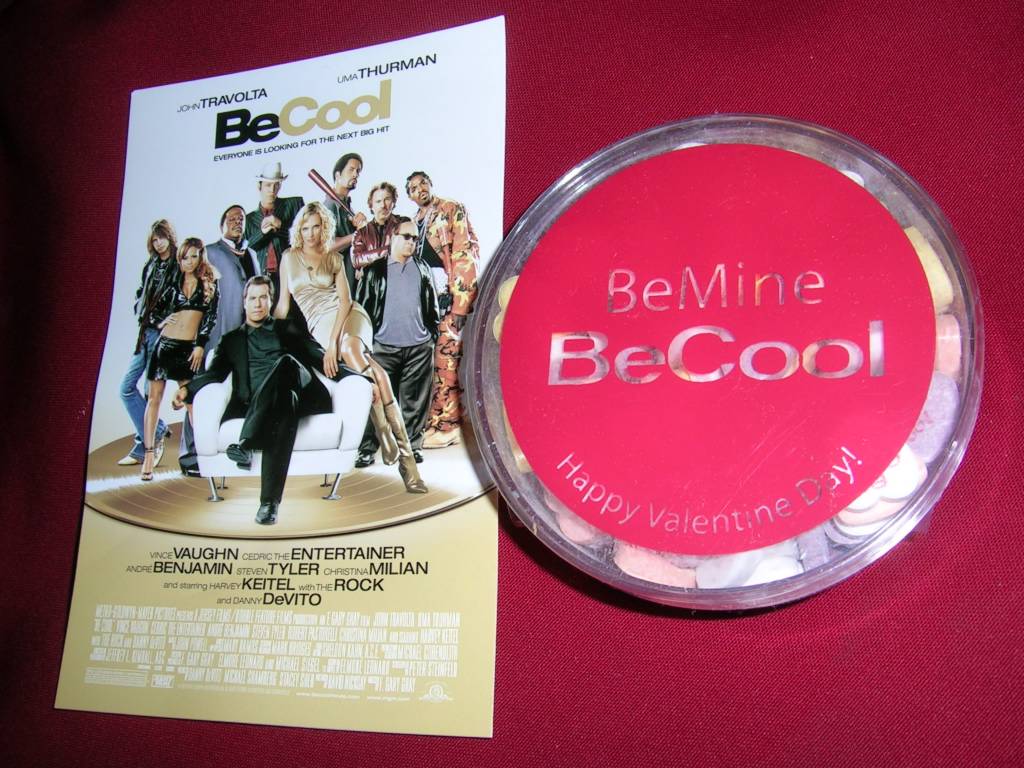
After all, patience is a virtue
I'm posting this in full since the column at this link will change. My comments follow.
By Matt Roush on TV Guide Online:
Some of it stems from a lack of understanding about commercial television or an unwillingness to accept that reality. I don't know where to begin when people complain about the cliffhanger elements at the end of each episode of 24. Griping about how unbelievable it is that all these things happen to one person and in one day doesn't make much sense either. You buy into the show or you don't. While the real world parallels can add to the drama--and make it politically touchy at times--in the end it's an escapist serial, not a realistic look at the domestic war on terror. The BBC's excellent series MI-5--or SPOOKS, as it's known in the UK--stays closer to what one might expect to be the true activities and lives of spies, but even it must contain a healthy dose of fiction.
Some ALIAS fans are ticked that the first three seasons' mythology has been mostly ignored in the self-contained episodes composing season four so far. Blame is laid on the network's desire to gain new viewers. ABC has been very patient with the series but wanted to put it in front of more eyeballs. Gee, imagine that. The passionate but small fanbase that ALIAS built seems put off that the series has been rejiggered to make it less intimidating for new viewers. The increasingly complicated mythology--not the show's primary appeal to me--made it difficult for newcomers to jump into the show without being totally lost. This season welcomes newbies, has succeeded in drawing the show's highest ratings, and remains at a creative peak (a point on which the detractors would disagree). So what exactly is the problem?
The complaints that I don't understand at all focus on the mysteries of LOST, namely, that there are mysteries. Some viewers apparently can't stand the fact that everything hasn't been explained. The series is only fifteen episodes old. Have we become so spoiled by the immediacy of modern life that we can't wait? (I'm not talking about the three week waiting period between episodes. THAT'S cruel.)
Granted, when it comes to internet message boards, snark is easier and more fun to write, but after awhile it gets tiresome to read. These three shows are among the best narrative programs currently on television. Nitpicking them to death doesn't seem that enjoyable to me.
By Matt Roush on TV Guide Online:
I'll admit my eyes rolled when 24's Jack Bauer (Kiefer Sutherland) pretended to rob a convenience store at the end of this season's third hour. This ridiculous twist served two purposes: keeping a terrorist from escaping and giving the show yet another cliff-hanger.I couldn't agree more. I've just about given up reading the threads dedicated to these shows on Home Theater Forum because all the "fans" do is bitch and moan about every little thing.
Thankfully, that situation was resolved during the next hour, and 24 and Jack moved on to another preposterous, electrifying crisis.
Shows like 24 and ABC's Wednesday-night one-two punch of dynamic thrills, Lost and Alias, bring a jolt of creative and reckless energy to a medium so often locked into predictable formula. They're a blast to watch and to talk about.
And yet, much of the mail and e-mail I get from fans brings new meaning to the word "spoiler" — not as in plot spoiler, but as in spoilsport.
"Look, I don't want to be critical," a 24 buff named Steven writes about another mole (Aisha Tyler) infiltrating CTU, "[but] don't you think it pushes the credibility boundary just a little?" I suppose it does. And I simply don't care. With these wild rides, I prefer not sweating details or fretting over plot holes that could swallow a freeway.
Fans are miffed that Alias ignores continuity from previous, less-watched seasons. What happened to the Covenant, to the Rambaldi prophecies? (Good riddance.) And how many times can Lost make us think someone has died, just to resurrect them? I've even heard the "jump the shark" phrase applied to this brand-new show.
There may be sharks in the water on Lost, but we're years away from any of these shows taking a leap past entertaining implausibility to a point of no return.
Some of it stems from a lack of understanding about commercial television or an unwillingness to accept that reality. I don't know where to begin when people complain about the cliffhanger elements at the end of each episode of 24. Griping about how unbelievable it is that all these things happen to one person and in one day doesn't make much sense either. You buy into the show or you don't. While the real world parallels can add to the drama--and make it politically touchy at times--in the end it's an escapist serial, not a realistic look at the domestic war on terror. The BBC's excellent series MI-5--or SPOOKS, as it's known in the UK--stays closer to what one might expect to be the true activities and lives of spies, but even it must contain a healthy dose of fiction.
Some ALIAS fans are ticked that the first three seasons' mythology has been mostly ignored in the self-contained episodes composing season four so far. Blame is laid on the network's desire to gain new viewers. ABC has been very patient with the series but wanted to put it in front of more eyeballs. Gee, imagine that. The passionate but small fanbase that ALIAS built seems put off that the series has been rejiggered to make it less intimidating for new viewers. The increasingly complicated mythology--not the show's primary appeal to me--made it difficult for newcomers to jump into the show without being totally lost. This season welcomes newbies, has succeeded in drawing the show's highest ratings, and remains at a creative peak (a point on which the detractors would disagree). So what exactly is the problem?
The complaints that I don't understand at all focus on the mysteries of LOST, namely, that there are mysteries. Some viewers apparently can't stand the fact that everything hasn't been explained. The series is only fifteen episodes old. Have we become so spoiled by the immediacy of modern life that we can't wait? (I'm not talking about the three week waiting period between episodes. THAT'S cruel.)
Granted, when it comes to internet message boards, snark is easier and more fun to write, but after awhile it gets tiresome to read. These three shows are among the best narrative programs currently on television. Nitpicking them to death doesn't seem that enjoyable to me.
Thursday, February 10, 2005
The Film Journal's 2004 International Cinema Poll
In addition to voting in the Central Ohio Film Critics Association yearly awards, I participated in The Film Journal's 2004 International Cinema poll. Depending on the day of the week, I might make a change here or there, but my ballot accurately reflects what I felt was the best in cinema last year. Since the nominees aren't ranked, they are listed alphabetically.
Film
-The Aviator
-Before Sunset
-Dogville
-Eternal Sunshine of the Spotless Mind
-The Five Obstructions
-Kill Bill Vol. 2
-The Life Aquatic with Steve Zissou
-Metallica: Some Kind of Monster
-Million Dollar Baby
-The Village
No surprises here since it matches my Top 10.
Direction
-Wes Anderson, The Life Aquatic with Steve Zissou
-Clint Eastwood, Million Dollar Baby
-Michel Gondry, Eternal Sunshine of the Spotless Mind
-Richard Linklater, Before Sunset
-Martin Scorsese, The Aviator
-M. Night Shyamalan, The Village
-Quentin Tarantino, Kill Bill Vol. 2
-Lars von Trier, Dogville
-Lars von Trier and Jørgen Leth, The Five Obstructions
-Zhang Yimou, Hero and House of Flying Daggers
These match my picks in Film, except for tossing aside METALLICA doc directors Joe Berlinger and Bruce Sinofsky in favor of Zhang Yimou.
Lead Performance
-Julie Delpy, Before Sunset
-Clint Eastwood, Million Dollar Baby
-Jamie Foxx, Collateral
-Bryce Dallas Howard, The Village
-Nicole Kidman, Dogville
-Catalina Sandino Moreno, Maria Full of Grace
-Clive Owen, Closer
-Natalie Portman, Closer
-Kurt Russell, Miracle
-Hilary Swank, Million Dollar Baby
It seems like an annual ritual for the entertainment media to bemoan the lack of worthy Lead Actress nominees, but the six I listed in the gender-neutral Lead Performance category are all aces in my book. Plus, I left out VERA DRAKE'S Imelda Staunton, who was no slouch either. I suppose the problem is that what the Hollywood scribes seek are lead actress performances in big, "important" movies, of which Swank is probably the only one to qualify. Let's face facts. Outside of romantic comedies or woman-in-peril thrillers, Hollywood doesn't structure many major films around female characters. As for the guys, no one remembered Kurt Russell in MIRACLE, but his tightly coiled performance as the Team USA Olympic hockey coach was one of his best. There's also a case to be made for another sports coach performance--Billy Bob Thornton in FRIDAY NIGHT LIGHTS--but I had just ten spots.
Supporting Performance
-Alan Alda, The Aviator
-Cate Blanchett, The Aviator
-Steve Coogan, Coffee and Cigarettes
-Willem Dafoe, The Life Aquatic with Steve Zissou
-Morgan Freeman, Million Dollar Baby
-Virginia Madsen, Sideways
-Alfred Molina, Coffee and Cigarettes
-Maia Morgenstern, The Passion of the Christ
-Natalie Portman, Garden State
-Sharon Warren, Ray
While I had mixed feelings about many aspects of THE PASSION OF THE CHRIST, Morgenstern's performance as Mary was not one of them. Switching gears, the Academy Awards ignore comedy most of the time, but the funny people I picked were as, if not more, memorable than those playing serious roles. Even if you can't abide Jarmusch, the Coogan/Molina scene in COFFEE AND CIGARETTES is worth a look.
Screenplay
-The Aviator
-Before Sunset
-Eternal Sunshine of the Spotless Mind
-I Heart Huckabees
-The Life Aquatic with Steve Zissou
-Maria Full of Grace
-Million Dollar Baby
-Spartan
-Spider-Man 2
-The Village
I'd try to explain why I picked some of these over DOGVILLE, but it's such an ineffable thing that I can't. I suppose it has something to do with dialogue--see SPARTAN--and structure--see MARIA FULL OF GRACE--but ultimately it's just a gut feeling.
Formal Design
-The Aviator
-Before Sunset
-Birth
-Collateral
-Dogville
-Eternal Sunshine of the Spotless Mind
-Hero
-House of Flying Daggers
-The Life Aquatic with Steve Zissou
-Million Dollar Baby
Nothing to add here as the films speak for themselves.
Actor of the Year
-Cate Blanchett (The Aviator, Coffee and Cigarettes, The Life Aquatic with Steve Zissou)
-Jamie Foxx (Collateral, Ray)
-Isabelle Huppert (I Heart Huckabees, Time of the Wolf)
-Nicole Kidman (Birth, Dogville)
-Jude Law (Alfie, The Aviator, Closer, I Heart Huckabees, Sky Captain and the World of Tomorrow)
-Bill Murray (Coffee and Cigarettes, The Life Aquatic with Steve Zissou)
-Natalie Portman (Closer, Garden State)
-Mark Ruffalo (13 Going on 30, Collateral, Eternal Sunshine of the Spotless Mind, We Don't Live Here Anymore)
-Peter Sarsgaard (Garden State, Kinsey)
-Billy Bob Thornton (The Alamo, Friday Night Lights)
With this being a "body of work" category, some of these are more deserving than others--Kidman's two exceptional lead performances trump Huppert's supporting HUCKABEES turn and lead, but minor, role in the Haneke film, for example--but we're not selecting anything of vital importance here, are we?
Non-Fiction Film
-Control Room
-The Corporation
-Fahrenheit 9/11
-The Five Obstructions
-Los Angeles Plays Itself
-Metallica: Some Kind of Monster
-Riding Giants
-Super Size Me
-Tarnation
-Touching the Void
Since rights clearances will probably make it impossible to release on home video, LOS ANGELES PLAYS ITSELF is the must-see if it plays your town.
The Film Journal poll didn't ask for Sound Design, Ensemble, or Breakthrough Film Artist nominees, so, as a bonus, here were my picks in the COFCA vote:
Sound Design
-The Aviator
-Before Sunset
-House of Flying Daggers
-The Incredibles
-Sky Captain and the World of Tomorrow
I had THE VILLAGE here and took it off for some reason. It should probably be there.
Ensemble
-Closer
-Coffee and Cigarettes
-I Heart Huckabees
-The Life Aquatic with Steve Zissou
-Million Dollar Baby
If you've looked at my other acting nominations, these choices ought to be self-explanatory.
Breakthrough Film Artist
-Zach Braff, Garden State (for acting, writing, and directing)
-Bryce Dallas Howard, The Village (for acting)
-Joshua Marston, Maria Full of Grace (for writing and directing)
-Rachel McAdams, The Notebook (for acting)
-Catalina Sandino Moreno, Maria Full of Grace (for acting)
Howard is my top choice in this category. If THE VILLAGE hadn't been so maligned, she might have even been in the running for an Academy Award nomination. McAdams' movie star turn in THE NOTEBOOK--and the film's surprising box office success--ought to keep her in casting directors' minds as America's next sweetheart.
Film
-The Aviator
-Before Sunset
-Dogville
-Eternal Sunshine of the Spotless Mind
-The Five Obstructions
-Kill Bill Vol. 2
-The Life Aquatic with Steve Zissou
-Metallica: Some Kind of Monster
-Million Dollar Baby
-The Village
No surprises here since it matches my Top 10.
Direction
-Wes Anderson, The Life Aquatic with Steve Zissou
-Clint Eastwood, Million Dollar Baby
-Michel Gondry, Eternal Sunshine of the Spotless Mind
-Richard Linklater, Before Sunset
-Martin Scorsese, The Aviator
-M. Night Shyamalan, The Village
-Quentin Tarantino, Kill Bill Vol. 2
-Lars von Trier, Dogville
-Lars von Trier and Jørgen Leth, The Five Obstructions
-Zhang Yimou, Hero and House of Flying Daggers
These match my picks in Film, except for tossing aside METALLICA doc directors Joe Berlinger and Bruce Sinofsky in favor of Zhang Yimou.
Lead Performance
-Julie Delpy, Before Sunset
-Clint Eastwood, Million Dollar Baby
-Jamie Foxx, Collateral
-Bryce Dallas Howard, The Village
-Nicole Kidman, Dogville
-Catalina Sandino Moreno, Maria Full of Grace
-Clive Owen, Closer
-Natalie Portman, Closer
-Kurt Russell, Miracle
-Hilary Swank, Million Dollar Baby
It seems like an annual ritual for the entertainment media to bemoan the lack of worthy Lead Actress nominees, but the six I listed in the gender-neutral Lead Performance category are all aces in my book. Plus, I left out VERA DRAKE'S Imelda Staunton, who was no slouch either. I suppose the problem is that what the Hollywood scribes seek are lead actress performances in big, "important" movies, of which Swank is probably the only one to qualify. Let's face facts. Outside of romantic comedies or woman-in-peril thrillers, Hollywood doesn't structure many major films around female characters. As for the guys, no one remembered Kurt Russell in MIRACLE, but his tightly coiled performance as the Team USA Olympic hockey coach was one of his best. There's also a case to be made for another sports coach performance--Billy Bob Thornton in FRIDAY NIGHT LIGHTS--but I had just ten spots.
Supporting Performance
-Alan Alda, The Aviator
-Cate Blanchett, The Aviator
-Steve Coogan, Coffee and Cigarettes
-Willem Dafoe, The Life Aquatic with Steve Zissou
-Morgan Freeman, Million Dollar Baby
-Virginia Madsen, Sideways
-Alfred Molina, Coffee and Cigarettes
-Maia Morgenstern, The Passion of the Christ
-Natalie Portman, Garden State
-Sharon Warren, Ray
While I had mixed feelings about many aspects of THE PASSION OF THE CHRIST, Morgenstern's performance as Mary was not one of them. Switching gears, the Academy Awards ignore comedy most of the time, but the funny people I picked were as, if not more, memorable than those playing serious roles. Even if you can't abide Jarmusch, the Coogan/Molina scene in COFFEE AND CIGARETTES is worth a look.
Screenplay
-The Aviator
-Before Sunset
-Eternal Sunshine of the Spotless Mind
-I Heart Huckabees
-The Life Aquatic with Steve Zissou
-Maria Full of Grace
-Million Dollar Baby
-Spartan
-Spider-Man 2
-The Village
I'd try to explain why I picked some of these over DOGVILLE, but it's such an ineffable thing that I can't. I suppose it has something to do with dialogue--see SPARTAN--and structure--see MARIA FULL OF GRACE--but ultimately it's just a gut feeling.
Formal Design
-The Aviator
-Before Sunset
-Birth
-Collateral
-Dogville
-Eternal Sunshine of the Spotless Mind
-Hero
-House of Flying Daggers
-The Life Aquatic with Steve Zissou
-Million Dollar Baby
Nothing to add here as the films speak for themselves.
Actor of the Year
-Cate Blanchett (The Aviator, Coffee and Cigarettes, The Life Aquatic with Steve Zissou)
-Jamie Foxx (Collateral, Ray)
-Isabelle Huppert (I Heart Huckabees, Time of the Wolf)
-Nicole Kidman (Birth, Dogville)
-Jude Law (Alfie, The Aviator, Closer, I Heart Huckabees, Sky Captain and the World of Tomorrow)
-Bill Murray (Coffee and Cigarettes, The Life Aquatic with Steve Zissou)
-Natalie Portman (Closer, Garden State)
-Mark Ruffalo (13 Going on 30, Collateral, Eternal Sunshine of the Spotless Mind, We Don't Live Here Anymore)
-Peter Sarsgaard (Garden State, Kinsey)
-Billy Bob Thornton (The Alamo, Friday Night Lights)
With this being a "body of work" category, some of these are more deserving than others--Kidman's two exceptional lead performances trump Huppert's supporting HUCKABEES turn and lead, but minor, role in the Haneke film, for example--but we're not selecting anything of vital importance here, are we?
Non-Fiction Film
-Control Room
-The Corporation
-Fahrenheit 9/11
-The Five Obstructions
-Los Angeles Plays Itself
-Metallica: Some Kind of Monster
-Riding Giants
-Super Size Me
-Tarnation
-Touching the Void
Since rights clearances will probably make it impossible to release on home video, LOS ANGELES PLAYS ITSELF is the must-see if it plays your town.
The Film Journal poll didn't ask for Sound Design, Ensemble, or Breakthrough Film Artist nominees, so, as a bonus, here were my picks in the COFCA vote:
Sound Design
-The Aviator
-Before Sunset
-House of Flying Daggers
-The Incredibles
-Sky Captain and the World of Tomorrow
I had THE VILLAGE here and took it off for some reason. It should probably be there.
Ensemble
-Closer
-Coffee and Cigarettes
-I Heart Huckabees
-The Life Aquatic with Steve Zissou
-Million Dollar Baby
If you've looked at my other acting nominations, these choices ought to be self-explanatory.
Breakthrough Film Artist
-Zach Braff, Garden State (for acting, writing, and directing)
-Bryce Dallas Howard, The Village (for acting)
-Joshua Marston, Maria Full of Grace (for writing and directing)
-Rachel McAdams, The Notebook (for acting)
-Catalina Sandino Moreno, Maria Full of Grace (for acting)
Howard is my top choice in this category. If THE VILLAGE hadn't been so maligned, she might have even been in the running for an Academy Award nomination. McAdams' movie star turn in THE NOTEBOOK--and the film's surprising box office success--ought to keep her in casting directors' minds as America's next sweetheart.
Monday, February 07, 2005
Post Super Bowl reaction
Yawn, New England wins again. A headline on Slate gets it right in labelling the Patriots "The Lamest Dynasty Ever". For what it's worth, I nearly hit the Eagles' points with my prediction, but close only counts in horseshoes and hand grenades. At least THE SIMPSONS episode following the game was better than the series' recent shows this season.
Sunday, February 06, 2005
A Super Prediction
I'm rarely right when it comes to making Super Bowl picks, so here's my latest futile effort. (I think the last time I picked the right team was when St. Louis nosed out Tennessee.) I'm going against the grain and picking Philadelphia 20-17, with Donovan McNabb as the MVP.
The first Super Bowl I remember watching was the Eagles/Raiders tilt, and unless memory hasn't been colored by the intervening years, I wanted Philly to win, probably in part because I had an Eagles' coat. I was and am a Bengals fan, but I had it because the team's kelly green and silver was similar to my school's green and white. So, go Eagles!
The first Super Bowl I remember watching was the Eagles/Raiders tilt, and unless memory hasn't been colored by the intervening years, I wanted Philly to win, probably in part because I had an Eagles' coat. I was and am a Bengals fan, but I had it because the team's kelly green and silver was similar to my school's green and white. So, go Eagles!
Friday, February 04, 2005
The Best Films of 2004
As it was with the honorable mentions, the years listed with these films indicate world premiere, not U.S. premiere/domestic run, which explains why my top two are not identified as 2004 releases.
1. DOGVILLE (Lars von Trier, 2003)
DOGVILLE is Lars von Trier's wildly ambitious film rich with themes and cinematic extravagance. Via a Depression-era story centered on the porcelain-skinned beauty Grace (Nicole Kidman), von Trier examines the impulse to despoil beauty and goodness. His film THE IDIOTS was, among other things, about the death of communism. DOGVILLE explores the death of idealism. Certainly it can be viewed as an allegory for the exploitation of immigrants. Yet my second viewing uncovered von Trier's main interest, which is staging a morality tale steeped in the book of Revelation. Those familiar with the director's BREAKING THE WAVES or DANCER IN THE DARK know that he loves to yank the carpet from underneath the audience in the third act, and he does so here in a way that you'll find either necessary for his purpose or infuriating. Themes aside, this is a stunning technical achievement. The austere production--a set on a stage with minimal props--feels stifling even though it should open up the space. Von Trier lays out Dogville's geography with masterfully composed overhead shots, high angles that also hint at God looking down upon a world resistant to His message of love. Kidman's performance is nothing short of astonishing, but the real star is the director, whose artistic brillance makes DOGVILLE a masterpiece.
2. THE FIVE OBSTRUCTIONS (De Fem benspænd) (Jørgen Leth and Lars von Trier, 2003)
Lars von Trier challenges his mentor, filmmaker Jørgen Leth, to remake his short film THE PERFECT HUMAN according to rules of the apprentice's choosing in THE FIVE OBSTRUCTIONS. Imagine an art film/world cinema version of a reality television show with von Trier hosting and playing up his reputation as an enfant terrible. THE FIVE OBSTRUCTIONS examines how an artist unwittingly divulges information about himself in his work even if the observer gets no closer to seeing through the creator's eyes. The film also digs into the artistic process and how expression can be refined and improved even when in the most limiting circumstances. In the end, THE FIVE OBSTRUCTIONS is a commentary on life, how all manner of things obstruct us from doing what we desire but we push on and make a go of it regardless.
3. BEFORE SUNSET (Richard Linklater, 2004)
In Richard Linklater's 1995 film BEFORE SUNRISE Ethan Hawke and Julie Delpy are American and Parisian twentysomethings who meet on a train going through Eurpoe and decide to spend the day together wandering around Vienna. Nine years later their characters, Jesse and Celine, are reunited in BEFORE SUNSET. BEFORE SUNRISE posed questions on the nature of romance and destiny and was itself a modern masterpiece. The sequel may be even better. BEFORE SUNSET is funny, romantic, and formally perfect. Linklater presents the film in real time, which lends a sense of urgency to everything, yet the tension builds to an almost unbearable point because of the complex emotions generated between Jesse and Celine. Hawke and Delpy embody these characters with performances so natural that they don't appear to be acting at all. A lot of words pass between them, but they say more with how they touch one another and, in one sublime moment, when they don't. BEFORE SUNRISE proffered a romance both real and fantasy. BEFORE SUNSET remembers that beautiful time and wonders how an idealized moment has changed them, especially when life hasn't matched that day. Where BEFORE SUNRISE encapsulated their starry-eyed twenties, BEFORE SUNSET captures the thirties, when some disappointment has caught up with them. Over a period of years François Truffaut followed Jean-Pierre Leaud as Antoine Doinel from childhood to middle age. If only we can be so lucky that Linklater, Hawke, and Delpy revisit Jesse and Celine in another five or ten years.
4. THE VILLAGE (M. Night Shyamalan, 2004)
M. Night Shyamalan's THE VILLAGE may have been the most misunderstood film of 2004, but make no mistake, it's the director's best film. Shyamalan looks at a community withdrawn from the world and the fear that compels the villagers not to venture outside their boundaries. The film's boldest stroke isn't the "twist" ending, which the director's fans have expected since THE SIXTH SENSE even if this one is hard to foresee, but a scene that is concerned with something Bryce Dallas Howard's blind character Ivy knows isn't true yet still causes her great anguish. Even those of us in the audience, well aware that the film firmly states something is not there, cling to the belief of what we had been told before the truth was revealed. It's a vivid depiction of fear's overwhelming power. Shyamalan's use of empty space on the screen and soundtrack to create dread and overall lyrical direction display his growing formal control. Howard's breakthrough performance announces her as an actress to watch.
5. THE LIFE AQUATIC WITH STEVE ZISSOU (Wes Anderson, 2004)
THE LIFE AQUATIC WITH STEVE ZISSOU, co-writer-director Wes Anderson's comic riff on MOBY-DICK, has Bill Murray's title character embark on a quest to avenge the death of his friend. Anderson creates a wondrous visual space in Steve's ship, the Belafonte. From the very first shot THE LIFE AQUATIC displays Anderson's masterful eye for composition and color, treating us to eye-popping images that make most other films look like the dingy work of amateurs. Not to be overlooked is the arch humor that lightens the film's ennui.
6. THE AVIATOR (Martin Scorsese, 2004)
THE AVIATOR is the old-fashioned Hollywood picture Martin Scorsese seems to have been itching to make. Astonishing period recreations, including lavish locations like the Coconut Grove, and the replicated film processing looks of yesteryear let the film burn with Scorsese's passion for the old films he loves so well. Leonardo DiCaprio delivers a dynamic performance as Howard Hughes, breathing life into the qualities that helped Hughes thrive in his work and ultimately brought about his ruin. Cate Blanchett's turn as Katharine Hepburn is also terrific fun.
7. MILLION DOLLAR BABY (Clint Eastwood, 2004)
Clint Eastwood's exceptional boxing movie MILLION DOLLAR BABY reveals itself, under closer inspection, to be a great love story. As one of the main characters, the boxing trainer Frankie, Eastwood uses his gruff screen persona differently than audiences are accustomed to seeing. He shows Frankie to be all bark and no bite rather than the pit bull we expect. His interactions with aspiring boxing champion Hilary Swank and Morgan Freeman, who plays his best friend Eddie, are terse and brittle, but there’s little doubt that it’s his way of masking the affection he’s afraid to reveal. The three central performances rank among the finest these actors have given in their impressive careers, an achievement that can be credited in part to Eastwood’s unobtrusive, classical direction.
8. ETERNAL SUNSHINE OF THE SPOTLESS MIND (Michel Gondry, 2004)
For all of its plot complexities and gimmickry, ETERNAL SUNSHINE OF THE SPOTLESS MIND is really a very simple film about love and the impact others have on us. Charlie Kaufman's elliptical screenplay takes us through Joel's (Jim Carrey) memories of his relationship with Clementine (Kate Winslet) while a technician tries to eliminate them. The result is a touching story of a man who learns how this woman enriched his life and how valuable those experiences were and are, even if he ended up with heartache. Michel Gondry's inventive direction is of the same spirit that inhabits his music video work with artists such as Bjork and The White Stripes. Gondry assembles ETERNAL SUNSHINE like an M.C. Escher drawing made real. The performances are terrific across the board, including good supporting turns from Kirsten Dunst, Mark Ruffalo, and Tom Wilkinson. Carrey's work in this film is among his best, and Winslet captivates and frustrates us just like she does Joel.
9. KILL BILL VOL. 2 (Quentin Tarantino, 2004)
KILL BILL VOL. 2, a continuation of rather than a sequel to Quentin Tarantino's KILL BILL VOL. 1, features Uma Thurman as the payback-seeking former assassin known as The Bride. Tarantino pushes the story toward the climax promised in the title as well as revealing more of The Bride's backstory. Regardless of the reasons to cleave KILL BILL into two films, VOL. 1 and VOL. 2 are significantly different and work very well as stand-alone movies. The first was a cartoon orgy of violence that paid tribute to grindhouse and martial arts cinema. The second is an operatic ode to westerns and spaghetti westerns in which the landscapes and perhaps God himself look down on the story, as many shots take an overhead perspective. The languid pacing and extreme close-ups are in keeping with Sergio Leone's style, leaving lots of time for Tarantino's signature dialogue. VOL. 2 has fewer action scenes, but it has a doozy when The Bride and Elle Driver (Darryl Hannah) square off in the confined space of a trailer. Tarantino divided both films into chapters, giving them the feel of a novel. This storytelling device allows him to continue to work non-linearly but also affords him time for scenes that would otherwise be omitted. KILL BILL VOL. 2 is equally as good as its predecessor, which combine for a vital cinematic experience.
10. METALLICA: SOME KIND OF MONSTER (Joe Berlinger and Bruce Sinofsky, 2004)
Metallica, the lumbering behemoth of heavy metal, agreed to document the recording of the album ST. ANGER, but with the group starting to come apart at the seams, METALLICA: SOME KIND OF MONSTER captures something much more interesting than what would typically comprise a standard making-of picture. The film transcends being a fans-only memento. In fact, it may be of more interest to those with nothing invested in the band. METALLICA: SOME KIND OF MONSTER details the music-making process with great skill. Directors Joe Berlinger and Bruce Sinofsky show how songs are built, from laying the musical foundation, to experimenting with vocal delivery, and then figuring out how to put it together in an album that satisfies the artists. More fascinating is the sight of these wealthy, macho metalheads trying to get in touch with their feelings during the band therapy sessions. Hearing them speak in psychological terms and strategies is often hilarious. The therapy scenes provide a lot of laughs, but it's in these emotionally naked moments that we can see the band members' humanity. Although they've accumulated more material possessions than they could ever need, it isn't enough. After all, Metallica will now struggle to stay at the top as they enter middle age in what is a young man's arena. METALLICA: SOME KIND OF MONSTER is a remarkable study of the creative process and group psychology.
1. DOGVILLE (Lars von Trier, 2003)
DOGVILLE is Lars von Trier's wildly ambitious film rich with themes and cinematic extravagance. Via a Depression-era story centered on the porcelain-skinned beauty Grace (Nicole Kidman), von Trier examines the impulse to despoil beauty and goodness. His film THE IDIOTS was, among other things, about the death of communism. DOGVILLE explores the death of idealism. Certainly it can be viewed as an allegory for the exploitation of immigrants. Yet my second viewing uncovered von Trier's main interest, which is staging a morality tale steeped in the book of Revelation. Those familiar with the director's BREAKING THE WAVES or DANCER IN THE DARK know that he loves to yank the carpet from underneath the audience in the third act, and he does so here in a way that you'll find either necessary for his purpose or infuriating. Themes aside, this is a stunning technical achievement. The austere production--a set on a stage with minimal props--feels stifling even though it should open up the space. Von Trier lays out Dogville's geography with masterfully composed overhead shots, high angles that also hint at God looking down upon a world resistant to His message of love. Kidman's performance is nothing short of astonishing, but the real star is the director, whose artistic brillance makes DOGVILLE a masterpiece.
2. THE FIVE OBSTRUCTIONS (De Fem benspænd) (Jørgen Leth and Lars von Trier, 2003)
Lars von Trier challenges his mentor, filmmaker Jørgen Leth, to remake his short film THE PERFECT HUMAN according to rules of the apprentice's choosing in THE FIVE OBSTRUCTIONS. Imagine an art film/world cinema version of a reality television show with von Trier hosting and playing up his reputation as an enfant terrible. THE FIVE OBSTRUCTIONS examines how an artist unwittingly divulges information about himself in his work even if the observer gets no closer to seeing through the creator's eyes. The film also digs into the artistic process and how expression can be refined and improved even when in the most limiting circumstances. In the end, THE FIVE OBSTRUCTIONS is a commentary on life, how all manner of things obstruct us from doing what we desire but we push on and make a go of it regardless.
3. BEFORE SUNSET (Richard Linklater, 2004)
In Richard Linklater's 1995 film BEFORE SUNRISE Ethan Hawke and Julie Delpy are American and Parisian twentysomethings who meet on a train going through Eurpoe and decide to spend the day together wandering around Vienna. Nine years later their characters, Jesse and Celine, are reunited in BEFORE SUNSET. BEFORE SUNRISE posed questions on the nature of romance and destiny and was itself a modern masterpiece. The sequel may be even better. BEFORE SUNSET is funny, romantic, and formally perfect. Linklater presents the film in real time, which lends a sense of urgency to everything, yet the tension builds to an almost unbearable point because of the complex emotions generated between Jesse and Celine. Hawke and Delpy embody these characters with performances so natural that they don't appear to be acting at all. A lot of words pass between them, but they say more with how they touch one another and, in one sublime moment, when they don't. BEFORE SUNRISE proffered a romance both real and fantasy. BEFORE SUNSET remembers that beautiful time and wonders how an idealized moment has changed them, especially when life hasn't matched that day. Where BEFORE SUNRISE encapsulated their starry-eyed twenties, BEFORE SUNSET captures the thirties, when some disappointment has caught up with them. Over a period of years François Truffaut followed Jean-Pierre Leaud as Antoine Doinel from childhood to middle age. If only we can be so lucky that Linklater, Hawke, and Delpy revisit Jesse and Celine in another five or ten years.
4. THE VILLAGE (M. Night Shyamalan, 2004)
M. Night Shyamalan's THE VILLAGE may have been the most misunderstood film of 2004, but make no mistake, it's the director's best film. Shyamalan looks at a community withdrawn from the world and the fear that compels the villagers not to venture outside their boundaries. The film's boldest stroke isn't the "twist" ending, which the director's fans have expected since THE SIXTH SENSE even if this one is hard to foresee, but a scene that is concerned with something Bryce Dallas Howard's blind character Ivy knows isn't true yet still causes her great anguish. Even those of us in the audience, well aware that the film firmly states something is not there, cling to the belief of what we had been told before the truth was revealed. It's a vivid depiction of fear's overwhelming power. Shyamalan's use of empty space on the screen and soundtrack to create dread and overall lyrical direction display his growing formal control. Howard's breakthrough performance announces her as an actress to watch.
5. THE LIFE AQUATIC WITH STEVE ZISSOU (Wes Anderson, 2004)
THE LIFE AQUATIC WITH STEVE ZISSOU, co-writer-director Wes Anderson's comic riff on MOBY-DICK, has Bill Murray's title character embark on a quest to avenge the death of his friend. Anderson creates a wondrous visual space in Steve's ship, the Belafonte. From the very first shot THE LIFE AQUATIC displays Anderson's masterful eye for composition and color, treating us to eye-popping images that make most other films look like the dingy work of amateurs. Not to be overlooked is the arch humor that lightens the film's ennui.
6. THE AVIATOR (Martin Scorsese, 2004)
THE AVIATOR is the old-fashioned Hollywood picture Martin Scorsese seems to have been itching to make. Astonishing period recreations, including lavish locations like the Coconut Grove, and the replicated film processing looks of yesteryear let the film burn with Scorsese's passion for the old films he loves so well. Leonardo DiCaprio delivers a dynamic performance as Howard Hughes, breathing life into the qualities that helped Hughes thrive in his work and ultimately brought about his ruin. Cate Blanchett's turn as Katharine Hepburn is also terrific fun.
7. MILLION DOLLAR BABY (Clint Eastwood, 2004)
Clint Eastwood's exceptional boxing movie MILLION DOLLAR BABY reveals itself, under closer inspection, to be a great love story. As one of the main characters, the boxing trainer Frankie, Eastwood uses his gruff screen persona differently than audiences are accustomed to seeing. He shows Frankie to be all bark and no bite rather than the pit bull we expect. His interactions with aspiring boxing champion Hilary Swank and Morgan Freeman, who plays his best friend Eddie, are terse and brittle, but there’s little doubt that it’s his way of masking the affection he’s afraid to reveal. The three central performances rank among the finest these actors have given in their impressive careers, an achievement that can be credited in part to Eastwood’s unobtrusive, classical direction.
8. ETERNAL SUNSHINE OF THE SPOTLESS MIND (Michel Gondry, 2004)
For all of its plot complexities and gimmickry, ETERNAL SUNSHINE OF THE SPOTLESS MIND is really a very simple film about love and the impact others have on us. Charlie Kaufman's elliptical screenplay takes us through Joel's (Jim Carrey) memories of his relationship with Clementine (Kate Winslet) while a technician tries to eliminate them. The result is a touching story of a man who learns how this woman enriched his life and how valuable those experiences were and are, even if he ended up with heartache. Michel Gondry's inventive direction is of the same spirit that inhabits his music video work with artists such as Bjork and The White Stripes. Gondry assembles ETERNAL SUNSHINE like an M.C. Escher drawing made real. The performances are terrific across the board, including good supporting turns from Kirsten Dunst, Mark Ruffalo, and Tom Wilkinson. Carrey's work in this film is among his best, and Winslet captivates and frustrates us just like she does Joel.
9. KILL BILL VOL. 2 (Quentin Tarantino, 2004)
KILL BILL VOL. 2, a continuation of rather than a sequel to Quentin Tarantino's KILL BILL VOL. 1, features Uma Thurman as the payback-seeking former assassin known as The Bride. Tarantino pushes the story toward the climax promised in the title as well as revealing more of The Bride's backstory. Regardless of the reasons to cleave KILL BILL into two films, VOL. 1 and VOL. 2 are significantly different and work very well as stand-alone movies. The first was a cartoon orgy of violence that paid tribute to grindhouse and martial arts cinema. The second is an operatic ode to westerns and spaghetti westerns in which the landscapes and perhaps God himself look down on the story, as many shots take an overhead perspective. The languid pacing and extreme close-ups are in keeping with Sergio Leone's style, leaving lots of time for Tarantino's signature dialogue. VOL. 2 has fewer action scenes, but it has a doozy when The Bride and Elle Driver (Darryl Hannah) square off in the confined space of a trailer. Tarantino divided both films into chapters, giving them the feel of a novel. This storytelling device allows him to continue to work non-linearly but also affords him time for scenes that would otherwise be omitted. KILL BILL VOL. 2 is equally as good as its predecessor, which combine for a vital cinematic experience.
10. METALLICA: SOME KIND OF MONSTER (Joe Berlinger and Bruce Sinofsky, 2004)
Metallica, the lumbering behemoth of heavy metal, agreed to document the recording of the album ST. ANGER, but with the group starting to come apart at the seams, METALLICA: SOME KIND OF MONSTER captures something much more interesting than what would typically comprise a standard making-of picture. The film transcends being a fans-only memento. In fact, it may be of more interest to those with nothing invested in the band. METALLICA: SOME KIND OF MONSTER details the music-making process with great skill. Directors Joe Berlinger and Bruce Sinofsky show how songs are built, from laying the musical foundation, to experimenting with vocal delivery, and then figuring out how to put it together in an album that satisfies the artists. More fascinating is the sight of these wealthy, macho metalheads trying to get in touch with their feelings during the band therapy sessions. Hearing them speak in psychological terms and strategies is often hilarious. The therapy scenes provide a lot of laughs, but it's in these emotionally naked moments that we can see the band members' humanity. Although they've accumulated more material possessions than they could ever need, it isn't enough. After all, Metallica will now struggle to stay at the top as they enter middle age in what is a young man's arena. METALLICA: SOME KIND OF MONSTER is a remarkable study of the creative process and group psychology.
2004 in Film: The Honorable Mentions
It should be self-explanatory that I liked these films a lot but couldn't find room for them in my top 10. If it isn't, then keep reading. I liked these films a lot but couldn't find room for them in my top 10.
(The years listed with these films indicate world premiere, not U.S. premiere/domestic run, which explains why so many of these are not identified as 2004 releases.)
BON VOYAGE (Jean-Paul Rappeneau, 2003)
A kitchen sink movie with a who's who of French stars. The Nazi invasion of France provides the backdrop for a story about an actress (Isabelle Adjani) guilty of murder, the man mistakenly imprisoned for her crime, and a scientist who must find safe passage out of the country with some dangerous materials. BON VOYAGE has the sweep of classic cinema, being at turns comic, romantic, thrilling, mysterious, and historical.
CODE 46 (Michael Winterbottom, 2003)
The versatile Michael Winterbottom's futuristic tale of global totalitarianism and forbidden love makes a fine cinematic companion to novels like Aldous Huxley's BRAVE NEW WORLD and George Orwell's 1984. Like the best science fiction, CODE 46 explores contemporary issues from the perspective of the world to come, in this case looking at genetics and globalization in a woozy, hypnotic tomorrow.
COWARDS BEND THE KNEE (Guy Maddin, 2003)
THE SADDEST MUSIC IN THE WORLD (Guy Maddin, 2003)
Canadian director Guy Maddin makes distinctive films that frequently recreate silent-era cinema, with inspirations as disparate as German mountain climbing movies and Soviet propaganda films. COWARDS BEND THE KNEE, his comic rumination on hockey, hairdressing, and sex, is as imaginative and provocative as anything Maddin has done.
THE SADDEST MUSIC IN THE WORLD isn't a silent film, but it retains much of the tone and style of those old melodramas. Maddin is some kind of aesthetic genius in how he mimics film's early days. He gives the images a bygone era's texture and authenticity. Yet modern technology is what permits him to make something as altogether fresh and astonishing as this. Formal aspects aside, THE SADDEST MUSIC IN THE WORLD is worth seeing because it is a consistently funny film. Isabella Rossllini plays a Depression-era, double amputee beer baroness who holds a contest to find what country plays the planet's saddest music. Maddin takes good-natured pokes at cultural stereotypes and the absurdity of what he's putting on screen. The film also works as a sort of musical, with Maria de Medeiros' nymphomaniac Narcissa providing a song highlight.
GARDEN STATE (Zach Braff, 2004)
Written, directed by, and starring Zach Braff of SCRUBS as an aspiring actor who returns home for the first time in nine years, GARDEN STATE takes its place as a film for the generation growing up in a time when parents and doctors try to manage them with Prozac, Paxil, Zoloft, or any other similar drugs. Braff creates an absurdist environment where someone wearing a suit of armor in the kitchen simultaneously looks correct and out of place. He inserts sly visual jokes, often as punctuation to scenes, that are similar to those in SCRUBS, except in this film they're based in reality rather than fantasy. GARDEN STATE shares the postmodern angst and the humor derived from it that exists in Douglas Coupland and Dave Eggers' novels. Contemporary life is amazing, bewildering, and feels like it is experienced at a distance. Braff has a terrific eye as a director and turns in a good, low-key performance. Natalie Portman is sweet and eccentric in one of her two great performances of 2004, the other coming in CLOSER. Peter Sarsgaard also does some fine work as Braff's gravedigging friend. The music leans toward emo selections and is well suited for the film.
HERO (YING XIONG) (Zhang Yimou, 2002)
HOUSE OF FLYING DAGGERS (SHI MIAN MAI FU) (Zhang Yimou, 2004)
Zhang Yimou's HERO, finally allowed off the studio shelf, and HOUSE OF FLYING DAGGERS delivered a one-two chopsocky combination punch for the Chinese director. HERO'S poetic martial arts scenes with superstars Jet Li, Maggie Cheung, Tony Leung, and Zhang Ziyi are staged against gorgeous scenery and landscapes and captured in Christopher Doyle's color-drenched cinematography. The visually sumptuous wuxia spectacle HOUSE OF FLYING DAGGERS contains breathtaking action and passionate romance. A sight to behold for the eyes and a treat for the ears, the physical and emotional violence rises to operatic proportions.
MARIA FULL OF GRACE (Joshua Marston, 2004)
MARIA FULL OF GRACE provides an authentic and compelling view of a drug mule's experience. The difficulties of carrying the pellets, not to mention the danger, are spelled out in a few terrific scenes. As Maria, Catalina Sandino Moreno gives a natural and assured debut performance. Moreno's skillful acting and writer-director Joshua Marston's screenplay convey why an intelligent young woman with a future would choose to risk everything to serve as a one-time drug courier.
SIDEWAYS (Alexander Payne, 2004)
The week-long tour of California wine country with a prickly English teacher (Paul Giamatti) and his freewheeling friend (Thomas Haden Church) in SIDEWAYS made for one of the year's better blends of comedy and drama. Jim Taylor and director/co-writer Alexander Payne's screenplay gets under the tough exterior of a wounded man who is incapable of letting others see his true self. Sterling performances from the four principal actors and Payne's fluid direction bring out the characters' humanity with humor and deep feeling.
SPARTAN (David Mamet, 2004)
The President's daughter has been abducted, and Val Kilmer must find her in SPARTAN. Kilmer stars as a special forces ranger up against a ticking clock to find the girl before the story hits the media. The title refers to the lone warrior sent to assist in a conflict, but it could just as well apply to the film's style. David Mamet has fashioned a film as terse in story and character as his trademark staccato dialogue. The major pleasure of SPARTAN is trying to cut through the minimal, sometimes enigmatic words and keep up with the film. Big explanatory scenes have been eliminated. Mamet forces the audience to read between the lines. Although he may lose clarity in the moment, he gains a propulsive pace that makes this one of the more exciting thrillers in recent memory. His signature dialogue is highly stylized and wonderfully chewy. Kilmer delivers his best performance in a long time, maybe ever. He spits out words in a blunt, programmed manner while keeping his steeliness in check.
SPIDER-MAN 2 (Sam Raimi, 2004)
Improving on the original, SPIDER-MAN 2 features top notch action scenes and special effects work, but it's the character moments, like Peter Parker's struggle to accept the personal sacrifice being a superhero entails, that make the film stand above most other comic book adaptations.
SPRING, SUMMER, FALL, WINTER...AND SPRING (BOM YEOREUM GAEUL GYEOUL GEURIGO BOM) (Kim Ki-duk, 2003)
This Buddhist fable about a master and pupil living on a floating monastery removed from society grants a window for meditation in our busy lives. SPRING, SUMMER, FALL, WINTER...AND SPRING is a film of few but select words that encourages reflection and appreciation of nature's beauty and the importance of simply being. The stunning cinematography shows the world with fresh eyes.
TOUCHING THE VOID (Kevin Macdonald, 2003)
The will to live shines through in TOUCHING THE VOID. Not quite documentary or narrative feature, the film mixes interviews with mountain climbers and recreated scenes of their harrowing climb in the Andes. The trip down should have resulted in certain death for one man, who broke his leg, was cut loose from his partner, and fell into a crevice. Somehow he found the inner strength to grit through the mental and physical anguish and make it to base camp in time to survive. Director Kevin Macdonald's excellent recreations give the viewer the firsthand experience and show how amazing it was that anyone could overcome these obstacles.
(The years listed with these films indicate world premiere, not U.S. premiere/domestic run, which explains why so many of these are not identified as 2004 releases.)
BON VOYAGE (Jean-Paul Rappeneau, 2003)
A kitchen sink movie with a who's who of French stars. The Nazi invasion of France provides the backdrop for a story about an actress (Isabelle Adjani) guilty of murder, the man mistakenly imprisoned for her crime, and a scientist who must find safe passage out of the country with some dangerous materials. BON VOYAGE has the sweep of classic cinema, being at turns comic, romantic, thrilling, mysterious, and historical.
CODE 46 (Michael Winterbottom, 2003)
The versatile Michael Winterbottom's futuristic tale of global totalitarianism and forbidden love makes a fine cinematic companion to novels like Aldous Huxley's BRAVE NEW WORLD and George Orwell's 1984. Like the best science fiction, CODE 46 explores contemporary issues from the perspective of the world to come, in this case looking at genetics and globalization in a woozy, hypnotic tomorrow.
COWARDS BEND THE KNEE (Guy Maddin, 2003)
THE SADDEST MUSIC IN THE WORLD (Guy Maddin, 2003)
Canadian director Guy Maddin makes distinctive films that frequently recreate silent-era cinema, with inspirations as disparate as German mountain climbing movies and Soviet propaganda films. COWARDS BEND THE KNEE, his comic rumination on hockey, hairdressing, and sex, is as imaginative and provocative as anything Maddin has done.
THE SADDEST MUSIC IN THE WORLD isn't a silent film, but it retains much of the tone and style of those old melodramas. Maddin is some kind of aesthetic genius in how he mimics film's early days. He gives the images a bygone era's texture and authenticity. Yet modern technology is what permits him to make something as altogether fresh and astonishing as this. Formal aspects aside, THE SADDEST MUSIC IN THE WORLD is worth seeing because it is a consistently funny film. Isabella Rossllini plays a Depression-era, double amputee beer baroness who holds a contest to find what country plays the planet's saddest music. Maddin takes good-natured pokes at cultural stereotypes and the absurdity of what he's putting on screen. The film also works as a sort of musical, with Maria de Medeiros' nymphomaniac Narcissa providing a song highlight.
GARDEN STATE (Zach Braff, 2004)
Written, directed by, and starring Zach Braff of SCRUBS as an aspiring actor who returns home for the first time in nine years, GARDEN STATE takes its place as a film for the generation growing up in a time when parents and doctors try to manage them with Prozac, Paxil, Zoloft, or any other similar drugs. Braff creates an absurdist environment where someone wearing a suit of armor in the kitchen simultaneously looks correct and out of place. He inserts sly visual jokes, often as punctuation to scenes, that are similar to those in SCRUBS, except in this film they're based in reality rather than fantasy. GARDEN STATE shares the postmodern angst and the humor derived from it that exists in Douglas Coupland and Dave Eggers' novels. Contemporary life is amazing, bewildering, and feels like it is experienced at a distance. Braff has a terrific eye as a director and turns in a good, low-key performance. Natalie Portman is sweet and eccentric in one of her two great performances of 2004, the other coming in CLOSER. Peter Sarsgaard also does some fine work as Braff's gravedigging friend. The music leans toward emo selections and is well suited for the film.
HERO (YING XIONG) (Zhang Yimou, 2002)
HOUSE OF FLYING DAGGERS (SHI MIAN MAI FU) (Zhang Yimou, 2004)
Zhang Yimou's HERO, finally allowed off the studio shelf, and HOUSE OF FLYING DAGGERS delivered a one-two chopsocky combination punch for the Chinese director. HERO'S poetic martial arts scenes with superstars Jet Li, Maggie Cheung, Tony Leung, and Zhang Ziyi are staged against gorgeous scenery and landscapes and captured in Christopher Doyle's color-drenched cinematography. The visually sumptuous wuxia spectacle HOUSE OF FLYING DAGGERS contains breathtaking action and passionate romance. A sight to behold for the eyes and a treat for the ears, the physical and emotional violence rises to operatic proportions.
MARIA FULL OF GRACE (Joshua Marston, 2004)
MARIA FULL OF GRACE provides an authentic and compelling view of a drug mule's experience. The difficulties of carrying the pellets, not to mention the danger, are spelled out in a few terrific scenes. As Maria, Catalina Sandino Moreno gives a natural and assured debut performance. Moreno's skillful acting and writer-director Joshua Marston's screenplay convey why an intelligent young woman with a future would choose to risk everything to serve as a one-time drug courier.
SIDEWAYS (Alexander Payne, 2004)
The week-long tour of California wine country with a prickly English teacher (Paul Giamatti) and his freewheeling friend (Thomas Haden Church) in SIDEWAYS made for one of the year's better blends of comedy and drama. Jim Taylor and director/co-writer Alexander Payne's screenplay gets under the tough exterior of a wounded man who is incapable of letting others see his true self. Sterling performances from the four principal actors and Payne's fluid direction bring out the characters' humanity with humor and deep feeling.
SPARTAN (David Mamet, 2004)
The President's daughter has been abducted, and Val Kilmer must find her in SPARTAN. Kilmer stars as a special forces ranger up against a ticking clock to find the girl before the story hits the media. The title refers to the lone warrior sent to assist in a conflict, but it could just as well apply to the film's style. David Mamet has fashioned a film as terse in story and character as his trademark staccato dialogue. The major pleasure of SPARTAN is trying to cut through the minimal, sometimes enigmatic words and keep up with the film. Big explanatory scenes have been eliminated. Mamet forces the audience to read between the lines. Although he may lose clarity in the moment, he gains a propulsive pace that makes this one of the more exciting thrillers in recent memory. His signature dialogue is highly stylized and wonderfully chewy. Kilmer delivers his best performance in a long time, maybe ever. He spits out words in a blunt, programmed manner while keeping his steeliness in check.
SPIDER-MAN 2 (Sam Raimi, 2004)
Improving on the original, SPIDER-MAN 2 features top notch action scenes and special effects work, but it's the character moments, like Peter Parker's struggle to accept the personal sacrifice being a superhero entails, that make the film stand above most other comic book adaptations.
SPRING, SUMMER, FALL, WINTER...AND SPRING (BOM YEOREUM GAEUL GYEOUL GEURIGO BOM) (Kim Ki-duk, 2003)
This Buddhist fable about a master and pupil living on a floating monastery removed from society grants a window for meditation in our busy lives. SPRING, SUMMER, FALL, WINTER...AND SPRING is a film of few but select words that encourages reflection and appreciation of nature's beauty and the importance of simply being. The stunning cinematography shows the world with fresh eyes.
TOUCHING THE VOID (Kevin Macdonald, 2003)
The will to live shines through in TOUCHING THE VOID. Not quite documentary or narrative feature, the film mixes interviews with mountain climbers and recreated scenes of their harrowing climb in the Andes. The trip down should have resulted in certain death for one man, who broke his leg, was cut loose from his partner, and fell into a crevice. Somehow he found the inner strength to grit through the mental and physical anguish and make it to base camp in time to survive. Director Kevin Macdonald's excellent recreations give the viewer the firsthand experience and show how amazing it was that anyone could overcome these obstacles.
Wednesday, February 02, 2005
The Worst Films of 2004
Can you believe how much crap I see?
1. LITTLE BLACK BOOK (Nick Hurran, 2004)
With her cartoonish voice and ditzy blonde persona, Brittany Murphy has the potential to be a great screwball comedy actress. Until she gets those roles, she'll have to settle for parts that Melanie Griffith is too old to play. Actually, Griffith already played the role Murphy has in LITTLE BLACK BOOK, which ransacks WORKING GIRL--and admits as much, as though the theft is more forgivable when acknowledged outright--and adds a self-righteous message about the evils of reality television. This unpleasant romantic comedy flogs the genre's worst cliches, but it's most egregious offense is pretending to occupy the moral high ground.
2. YU-GI-OH!: THE MOVIE (Yûgiô: Gekijô-ban) (Hatsuki Tsuji, 2004)
The feature-length advertisement for a children's collectible card game, otherwise known as YU-GI-OH!: THE MOVIE, makes the POKEMON movies look like public service announcements directed by Steven Spielberg. Virtually unwatchable and totally incomprehensible, YU-GI-OH!'S ninety-minute running time felt interminable.
3. NATIONAL LAMPOON'S GOLD DIGGERS (Gary Preisler, 2003)
Pity the horny teenage boys who went to see NATIONAL LAMPOON'S GOLD DIGGERS in search of outrageous comedy and scantily-clad babes. The juvenile humor makes a feeble attempt to replicate recent raucous comedies. The main female characters consist of two grotesque elderly women that the penniless young studs marry and bed--blecch--in hopes of inheriting their wealth. Of course, what they don't know is that the old biddies are unable to get their hands on the family fortune and plan to off the dumbbells to collect their life insurance. If the National Lampoon brand had any value left, this disgusting, laughless film ought to wipe it out.
4. THE COOKOUT (Lance Rivera, 2004)
The dreadful comedy TAXI wasn't the worst movie Queen Latifah made last year. THE COOKOUT gets that distinction. A newly rich NBA draft pick invites a throng of stereotypes to a party at his swanky home to prove he is still able to keep it real. The usual hijinks inevitably send the family barbecue spinning out of control.
5. WHAT THE #$*! DO WE KNOW!? (William Arntz, Besty Chasse, and Mark Vicente, 2004)
The intellectually suspect documentary WHAT THE #$*! DO WE KNOW!? tries to make quantum physics accessible for the average joe. In floating many lofty theories, the filmmakers overload the viewer with mumbo jumbo in the hope that something will stick. Hard science is mingled with New Age cult teachings, with no distinction made between academics, at least one of which asserts the film quotes him out of context, and the woman who claims to channel the ancient warrior Ramtha. The wedding scene in which CGI-animated blobs lip sync to Robert Palmer's "Addicted to Love" rivals any other for the year's worst.
6. CHRISTMAS WITH THE KRANKS (Joe Roth, 2004)
CHRISTMAS WITH THE KRANKS sucks the joy out of the holiday season with its message in praise of excess consumerism and enforced Christmas cheer. Instead of spreading the festive spirit, this so-called comedy plays out like a nightmare.
7. SUPERBABIES: BABY GENIUSES 2 (Bob Clark, 2004)
An inessential sequel to one of 1999's worst films, SUPERBABIES: BABY GENIUSES 2 may be about the weirdest kids' film to come down the pike in some time. Jon Voight plays a former Nazi with "a soft spot for the laughter of babies". He's hellbent on world domination via subliminal messages through television programming but has his plans thwarted by an eternally seven-year-old superkid called The Kahuna. Seriously.
8. MY BABY'S DADDY (Cheryl Dunye, 2004)
The impotent urban comedy MY BABY'S DADDY might as well have been called THREE MEN AND THREE BABIES. Three buddies (Anthony Anderson, Eddie Griffin, and Michael Imperioli) have to become less like Dr. Dre and more like Dr. Spock. Hilarity does not ensue.
9. CELSIUS 41.11: THE TEMPERATURE AT WHICH THE BRAIN BEGINS TO DIE (Kevin Knoblock, 2004)
For the election year political documentaries were dumped by the bushel load into the film market. The worst by far was CELSIUS 41.11: THE TEMPERATURE AT WHICH THE BRAIN BEGINS TO DIE, a filmic response to Michael Moore's FAHRENHEIT 9/11. Structurally incoherent and philosophically muddled, CELSIUS 41.11 is for true believers only, and even they may fall alseep during this dull doc. Whether one loves or hates Moore's cinematic agitprop, he hopes to entertain while promoting his viewpoint. In fact, the most surprising aspect of director Kevin Knoblock's hastily assembled film is that it is as incendiary as a book of wet matches.
10. TAKING LIVES (D.J. Caruso, 2004)
The appropriately titled TAKING LIVES steals almost two hours better spent doing anything else. Angelina Jolie stars in yet another Hollywood serial killer movie that thrives on nonsense logic and predictable unpredictability.
1. LITTLE BLACK BOOK (Nick Hurran, 2004)
With her cartoonish voice and ditzy blonde persona, Brittany Murphy has the potential to be a great screwball comedy actress. Until she gets those roles, she'll have to settle for parts that Melanie Griffith is too old to play. Actually, Griffith already played the role Murphy has in LITTLE BLACK BOOK, which ransacks WORKING GIRL--and admits as much, as though the theft is more forgivable when acknowledged outright--and adds a self-righteous message about the evils of reality television. This unpleasant romantic comedy flogs the genre's worst cliches, but it's most egregious offense is pretending to occupy the moral high ground.
2. YU-GI-OH!: THE MOVIE (Yûgiô: Gekijô-ban) (Hatsuki Tsuji, 2004)
The feature-length advertisement for a children's collectible card game, otherwise known as YU-GI-OH!: THE MOVIE, makes the POKEMON movies look like public service announcements directed by Steven Spielberg. Virtually unwatchable and totally incomprehensible, YU-GI-OH!'S ninety-minute running time felt interminable.
3. NATIONAL LAMPOON'S GOLD DIGGERS (Gary Preisler, 2003)
Pity the horny teenage boys who went to see NATIONAL LAMPOON'S GOLD DIGGERS in search of outrageous comedy and scantily-clad babes. The juvenile humor makes a feeble attempt to replicate recent raucous comedies. The main female characters consist of two grotesque elderly women that the penniless young studs marry and bed--blecch--in hopes of inheriting their wealth. Of course, what they don't know is that the old biddies are unable to get their hands on the family fortune and plan to off the dumbbells to collect their life insurance. If the National Lampoon brand had any value left, this disgusting, laughless film ought to wipe it out.
4. THE COOKOUT (Lance Rivera, 2004)
The dreadful comedy TAXI wasn't the worst movie Queen Latifah made last year. THE COOKOUT gets that distinction. A newly rich NBA draft pick invites a throng of stereotypes to a party at his swanky home to prove he is still able to keep it real. The usual hijinks inevitably send the family barbecue spinning out of control.
5. WHAT THE #$*! DO WE KNOW!? (William Arntz, Besty Chasse, and Mark Vicente, 2004)
The intellectually suspect documentary WHAT THE #$*! DO WE KNOW!? tries to make quantum physics accessible for the average joe. In floating many lofty theories, the filmmakers overload the viewer with mumbo jumbo in the hope that something will stick. Hard science is mingled with New Age cult teachings, with no distinction made between academics, at least one of which asserts the film quotes him out of context, and the woman who claims to channel the ancient warrior Ramtha. The wedding scene in which CGI-animated blobs lip sync to Robert Palmer's "Addicted to Love" rivals any other for the year's worst.
6. CHRISTMAS WITH THE KRANKS (Joe Roth, 2004)
CHRISTMAS WITH THE KRANKS sucks the joy out of the holiday season with its message in praise of excess consumerism and enforced Christmas cheer. Instead of spreading the festive spirit, this so-called comedy plays out like a nightmare.
7. SUPERBABIES: BABY GENIUSES 2 (Bob Clark, 2004)
An inessential sequel to one of 1999's worst films, SUPERBABIES: BABY GENIUSES 2 may be about the weirdest kids' film to come down the pike in some time. Jon Voight plays a former Nazi with "a soft spot for the laughter of babies". He's hellbent on world domination via subliminal messages through television programming but has his plans thwarted by an eternally seven-year-old superkid called The Kahuna. Seriously.
8. MY BABY'S DADDY (Cheryl Dunye, 2004)
The impotent urban comedy MY BABY'S DADDY might as well have been called THREE MEN AND THREE BABIES. Three buddies (Anthony Anderson, Eddie Griffin, and Michael Imperioli) have to become less like Dr. Dre and more like Dr. Spock. Hilarity does not ensue.
9. CELSIUS 41.11: THE TEMPERATURE AT WHICH THE BRAIN BEGINS TO DIE (Kevin Knoblock, 2004)
For the election year political documentaries were dumped by the bushel load into the film market. The worst by far was CELSIUS 41.11: THE TEMPERATURE AT WHICH THE BRAIN BEGINS TO DIE, a filmic response to Michael Moore's FAHRENHEIT 9/11. Structurally incoherent and philosophically muddled, CELSIUS 41.11 is for true believers only, and even they may fall alseep during this dull doc. Whether one loves or hates Moore's cinematic agitprop, he hopes to entertain while promoting his viewpoint. In fact, the most surprising aspect of director Kevin Knoblock's hastily assembled film is that it is as incendiary as a book of wet matches.
10. TAKING LIVES (D.J. Caruso, 2004)
The appropriately titled TAKING LIVES steals almost two hours better spent doing anything else. Angelina Jolie stars in yet another Hollywood serial killer movie that thrives on nonsense logic and predictable unpredictability.
Million Dollar Baby
MILLION DOLLAR BABY (Clint Eastwood, 2004)
In MILLION DOLLAR BABY Hilary Swank plays Maggie Fitzgerald, a hardscrabble waitress who dreams of becoming a boxing champion. Clint Eastwood directs and stars as Frankie Dunn, the crusty trainer who eventually gives in to Maggie’s persistent pleas to whip her into peak prizefighting form.
MILLION DOLLAR BABY is an exceptional boxing movie, but Paul Haggis’ screenplay, based on F.X. Toole’s stories, amounts to something greater than the familiar underdog sports tale. Frankie’s estrangement from his daughter and Maggie’s ability to fill that aching emptiness turn MILLION DOLLAR BABY into a great Hollywood love story. What people do in relationships often speaks volumes more than what they say. Eastwood and Haggis understand that as they let the actions of these characters articulate the feelings they might never verbalize. Eastwood uses his gruff screen persona differently than audiences are accustomed to seeing. He shows Frankie to be all bark and no bite rather than the pit bull we expect. His interactions with Swank and Morgan Freeman, who plays his best friend Eddie, are terse and brittle, but there’s little doubt that it’s his way of masking the affection he’s afraid to reveal. The three central performances rank among the finest these actors have given in their impressive careers, an achievement that can be credited in part to Eastwood’s unobtrusive, classical direction. MILLION DOLLAR BABY is one of the year’s best films.
Grade: A
(Review first aired on the February 1, 2005 NOW PLAYING)
In MILLION DOLLAR BABY Hilary Swank plays Maggie Fitzgerald, a hardscrabble waitress who dreams of becoming a boxing champion. Clint Eastwood directs and stars as Frankie Dunn, the crusty trainer who eventually gives in to Maggie’s persistent pleas to whip her into peak prizefighting form.
MILLION DOLLAR BABY is an exceptional boxing movie, but Paul Haggis’ screenplay, based on F.X. Toole’s stories, amounts to something greater than the familiar underdog sports tale. Frankie’s estrangement from his daughter and Maggie’s ability to fill that aching emptiness turn MILLION DOLLAR BABY into a great Hollywood love story. What people do in relationships often speaks volumes more than what they say. Eastwood and Haggis understand that as they let the actions of these characters articulate the feelings they might never verbalize. Eastwood uses his gruff screen persona differently than audiences are accustomed to seeing. He shows Frankie to be all bark and no bite rather than the pit bull we expect. His interactions with Swank and Morgan Freeman, who plays his best friend Eddie, are terse and brittle, but there’s little doubt that it’s his way of masking the affection he’s afraid to reveal. The three central performances rank among the finest these actors have given in their impressive careers, an achievement that can be credited in part to Eastwood’s unobtrusive, classical direction. MILLION DOLLAR BABY is one of the year’s best films.
Grade: A
(Review first aired on the February 1, 2005 NOW PLAYING)
Hide and Seek
HIDE AND SEEK (John Polson, 2005)
In the thriller HIDE AND SEEK psychologist David Callaway and his daughter Emily move from the city to the country in the aftermath of his wife’s suicide. Robert De Niro stars as David, and Hollywood’s favorite little darling Dakota Fanning plays Emily. Understandably, Emily has difficulty dealing with her mother’s death. Her emotional turbulence manifests itself in the form of Charlie, who may or may not be her imaginary friend.
For two-thirds of its running time HIDE AND SEEK plays out as an unremarkable thriller that at least has the good sense to take itself seriously and keep the nature of what or who Charlie is secret. The lack of supporting characters weakens the suspense, although ultimately HIDE AND SEEK isn’t a solvable mystery. Too many modern thrillers hinge on a hard right turn that viewers can’t see coming. M. Night Shyamalan’s film endings frequently catch audiences unaware, but he also leaves clues that repeat viewers will realize they missed the first time. HIDE AND SEEK goes off the rails when the secret is brought into the light because it feels like a cheap gimmick, and not an original one at that, as if the filmmaker is saying, “You didn’t see that coming, did you?” Dakota Fanning usually gives me the creeps, which makes her particularly well cast as a wicked little girl. De Niro is above material like this, even if the last few years demonstrate that he’s not being terribly selective. He doesn’t embarrass himself until the film’s end.
Grade: D+
(Review first aired on the February 1, 2005 NOW PLAYING)
In the thriller HIDE AND SEEK psychologist David Callaway and his daughter Emily move from the city to the country in the aftermath of his wife’s suicide. Robert De Niro stars as David, and Hollywood’s favorite little darling Dakota Fanning plays Emily. Understandably, Emily has difficulty dealing with her mother’s death. Her emotional turbulence manifests itself in the form of Charlie, who may or may not be her imaginary friend.
For two-thirds of its running time HIDE AND SEEK plays out as an unremarkable thriller that at least has the good sense to take itself seriously and keep the nature of what or who Charlie is secret. The lack of supporting characters weakens the suspense, although ultimately HIDE AND SEEK isn’t a solvable mystery. Too many modern thrillers hinge on a hard right turn that viewers can’t see coming. M. Night Shyamalan’s film endings frequently catch audiences unaware, but he also leaves clues that repeat viewers will realize they missed the first time. HIDE AND SEEK goes off the rails when the secret is brought into the light because it feels like a cheap gimmick, and not an original one at that, as if the filmmaker is saying, “You didn’t see that coming, did you?” Dakota Fanning usually gives me the creeps, which makes her particularly well cast as a wicked little girl. De Niro is above material like this, even if the last few years demonstrate that he’s not being terribly selective. He doesn’t embarrass himself until the film’s end.
Grade: D+
(Review first aired on the February 1, 2005 NOW PLAYING)
Alone in the Dark
ALONE IN THE DARK (Uwe Boll, 2005)
Director Uwe Boll specializes in adapting video games into feature films. Previously he helmed HOUSE OF THE DEAD, with BLOODRAYNE to follow later this year. His latest, ALONE IN THE DARK, is based on a series of Atari games. Christian Slater stars as paranormal investigator Edward Carnby. Edward’s newest obsession is ancient Native American artifacts that may bridge the worlds of darkness and light. When he gets together with a museum archivist played by Tara Reid, Edward begins to see the danger of his pursuit.
ALONE IN THE DARK is the only Uwe Boll film I’ve seen, but on the basis of it and the reputation of his much-maligned oeuvre, he may be the closest thing I’ve found to a modern-day Ed Wood. Unlike Wood’s movies, the laughs don’t derive from exceedingly poor effects work, but Boll’s incompetently assembled film can be mined for a wealth of unintended hilarity. ALONE IN THE DARK is thoroughly incomprehensible, a matter complicated rather than clarified by the film’s absurdly long narrated text intro. One scene doesn’t seem connected to the next, and the stock dialogue attempts in vain to explain what’s happening. Slater and Reid’s wooden performances weren’t worth the money that probably elevated this to a theatrical release, although even with them it’s somewhat a miracle this didn’t go straight to video. Boll’s vague X-FILES rip-off isn’t scary or exciting, but inadvertently he’s made a movie funnier than a lot of the purported comedies Hollywood cranks out. ALONE IN THE DARK is a frontrunner for 2005’s worst film of the year.
Grade: F
(Review first aired on the February 1, 2005 NOW PLAYING)
Director Uwe Boll specializes in adapting video games into feature films. Previously he helmed HOUSE OF THE DEAD, with BLOODRAYNE to follow later this year. His latest, ALONE IN THE DARK, is based on a series of Atari games. Christian Slater stars as paranormal investigator Edward Carnby. Edward’s newest obsession is ancient Native American artifacts that may bridge the worlds of darkness and light. When he gets together with a museum archivist played by Tara Reid, Edward begins to see the danger of his pursuit.
ALONE IN THE DARK is the only Uwe Boll film I’ve seen, but on the basis of it and the reputation of his much-maligned oeuvre, he may be the closest thing I’ve found to a modern-day Ed Wood. Unlike Wood’s movies, the laughs don’t derive from exceedingly poor effects work, but Boll’s incompetently assembled film can be mined for a wealth of unintended hilarity. ALONE IN THE DARK is thoroughly incomprehensible, a matter complicated rather than clarified by the film’s absurdly long narrated text intro. One scene doesn’t seem connected to the next, and the stock dialogue attempts in vain to explain what’s happening. Slater and Reid’s wooden performances weren’t worth the money that probably elevated this to a theatrical release, although even with them it’s somewhat a miracle this didn’t go straight to video. Boll’s vague X-FILES rip-off isn’t scary or exciting, but inadvertently he’s made a movie funnier than a lot of the purported comedies Hollywood cranks out. ALONE IN THE DARK is a frontrunner for 2005’s worst film of the year.
Grade: F
(Review first aired on the February 1, 2005 NOW PLAYING)
Subscribe to:
Posts (Atom)