I've really been enjoying the Winter Olympics, a sentiment that would put me far out of the mainstream if you're paying attention to the reviews the Games are getting. Every time the Olympics come around, it's standard for the sports columnists to scoff at the them, especially the Winter Games, as not being real sports. The implicit criticism is that Americans don't care about these sports because are too European--a gripe that will kick into high gear when the World Cup starts--and are not masculine enough, as if a sport is defined by how closely it resembles American football.
The Olympics are also written off because the TV ratings don't match what they once did. That's doubly true for the Torino Olympics because it follows the Salt Lake City Games, which saw a ratings boost due to being on U.S. soil. Isn't it funny how 23 million viewers translates into "nobody's watching"?
Since NBC's primetime coverage is not live and the results are on the front page of the network's Olympics site--this is the place for the TV schedule without spoilers--a DVR provides the perfect way to view the most Games in the least time. NBC's coverage has been pretty good. They've gone light on the syrupy human interest packages in favor of showing more athletic competition. How novel. A broad range of sports are getting substantial TV time on the NBC family of networks. Much to my pleasure, curling has been a showcase sport.
Previous Olympics have piqued my interest in the sport, but I don't recall it ever being shown much to get a sense of how the game is played. Now that I've had the chance to watch entire matches once or twice a day, I can say that curling is a lot of fun to watch. It's a game of strategy and precision rather than power. Like baseball, the action may not be fast, but it can be very exciting.
The U.S. men turned things around with a dramatic win over Sweden yesterday. Pete Fenson and team are a fun bunch to watch. Plus, how cool is it that the skip (curling jargon for captain) owns and runs two pizza shops?
The U.S. women's heartbreaking loss to Sweden was as thrilling as any close sporting event I've seen recently. This morning I couldn't believe how they pulled out a miracle in the 10th end to tie Russia. To my chagrin, the U.S. women's hockey game was due to start when the extra end began, so I had to keep refreshing the results page to learn that the curl girls dropped another tough one. The loss pretty much seals their elimination from medal contention.
I'm not sure what led NBC to give curling as much air time as it's getting. (It's not that well known, is it?) Both teams were considered medal contenders, so it's likely that factored into the equation. Sisters Cassie and Jamie Johnson are cute as buttons, so I imagine that didn't hurt either. Whatever the reasons, I'm glad NBC has chosen to showcase a sport that is so fun to watch that I'm tempted to give it a try myself.
Friday, February 17, 2006


Thursday, February 16, 2006
Curious George
CURIOUS GEORGE (Matthew O’Callaghan, 2006)
In CURIOUS GEORGE, Will Ferrell provides the voice of Ted, a museum worker who embarks on an African expedition to find a giant monkey shrine. If he doesn’t return with the artifact, the museum will shut down and become a parking lot.
Decked out in a big yellow hat and suit, Ted finds an idol that looks like the shrine but is considerably smaller than anticipated. He sends the museum’s owner, Mr. Bloomsberry (Dick Van Dyke), a cell phone photo of the dispiriting treasure, but the photo’s perspective skews the size, leading Ted’s boss to believe that the shrine is bigger than he expected. Mr. Bloomsberry covers the city in advertisements to promote this exciting discovery.
On the trip Ted meets a playful monkey, later to be named George, who follows him back to the U.S. Already facing a monumental work dilemma, Ted thinks George is a nuisance—he’s responsible for Ted getting evicted from his pet-forbidding apartment building—but the inquisitive monkey might provide the solution to his problems and the museum’s.
For more than sixty years Curious George and the man with the big yellow hat have entertained generations of young readers. The new CURIOUS GEORGE film, beautifully animated in a style similar to the drawings in the Margret and H.A. Rey books, should also enchant children.
Most of today’s animated films are made with a broad audience in mind, a strategy that has produced some delightful movies for kids of all ages--Pixar's movies immediately come to mind--as well as some creative flops (SHARK TALE, CHICKEN LITTLE) that strain to be hip enough for teens and adults. CURIOUS GEORGE’S vocal talents will appeal to those older than the target audience. Ferrell and David Cross' participation ups the coolness factor for this quaint movie. Having Jack Johnson on board for several songs, none of which are distinguishable from the others, probably doesn't hurt either. Nevertheless, this is a film strictly for those eight and younger.
Having endured plenty of family movies that try to flatter the parents for getting pop culture in-jokes, it’s nice for a film to come along that knows its audience and doesn’t talk over them in hopes of amusing the adults. The minor romantic subplot between Ted and Maggie, a teacher voiced by Drew Barrymore, is unnecessary for this film, but at least there’s not much time given to it. Also pay no mind to the tacky product placement for a certain brand of bananas.
CURIOUS GEORGE is a sweet and gentle film that views the world as a wonderful place to be explored. Some of the film’s best moments are when George helps Ted experience the simple joys of what is around him. They gaze at the stars, appreciate the beauty (but not the taste) of fireflies, and observe the city from a balloon-aided perspective.
George is as ornery and endearing as the little ones moms and dads will take to see the film. He causes some trouble, but he acts with no malice. George's impromptu paint job of a socialite’s penthouse isn’t appreciated, just like parents may not like seeing handprints on their walls, but it's hard to remain angry at the curiosity of the young, be it a monkey or a child.
Grade: B-
In CURIOUS GEORGE, Will Ferrell provides the voice of Ted, a museum worker who embarks on an African expedition to find a giant monkey shrine. If he doesn’t return with the artifact, the museum will shut down and become a parking lot.
Decked out in a big yellow hat and suit, Ted finds an idol that looks like the shrine but is considerably smaller than anticipated. He sends the museum’s owner, Mr. Bloomsberry (Dick Van Dyke), a cell phone photo of the dispiriting treasure, but the photo’s perspective skews the size, leading Ted’s boss to believe that the shrine is bigger than he expected. Mr. Bloomsberry covers the city in advertisements to promote this exciting discovery.
On the trip Ted meets a playful monkey, later to be named George, who follows him back to the U.S. Already facing a monumental work dilemma, Ted thinks George is a nuisance—he’s responsible for Ted getting evicted from his pet-forbidding apartment building—but the inquisitive monkey might provide the solution to his problems and the museum’s.
For more than sixty years Curious George and the man with the big yellow hat have entertained generations of young readers. The new CURIOUS GEORGE film, beautifully animated in a style similar to the drawings in the Margret and H.A. Rey books, should also enchant children.
Most of today’s animated films are made with a broad audience in mind, a strategy that has produced some delightful movies for kids of all ages--Pixar's movies immediately come to mind--as well as some creative flops (SHARK TALE, CHICKEN LITTLE) that strain to be hip enough for teens and adults. CURIOUS GEORGE’S vocal talents will appeal to those older than the target audience. Ferrell and David Cross' participation ups the coolness factor for this quaint movie. Having Jack Johnson on board for several songs, none of which are distinguishable from the others, probably doesn't hurt either. Nevertheless, this is a film strictly for those eight and younger.
Having endured plenty of family movies that try to flatter the parents for getting pop culture in-jokes, it’s nice for a film to come along that knows its audience and doesn’t talk over them in hopes of amusing the adults. The minor romantic subplot between Ted and Maggie, a teacher voiced by Drew Barrymore, is unnecessary for this film, but at least there’s not much time given to it. Also pay no mind to the tacky product placement for a certain brand of bananas.
CURIOUS GEORGE is a sweet and gentle film that views the world as a wonderful place to be explored. Some of the film’s best moments are when George helps Ted experience the simple joys of what is around him. They gaze at the stars, appreciate the beauty (but not the taste) of fireflies, and observe the city from a balloon-aided perspective.
George is as ornery and endearing as the little ones moms and dads will take to see the film. He causes some trouble, but he acts with no malice. George's impromptu paint job of a socialite’s penthouse isn’t appreciated, just like parents may not like seeing handprints on their walls, but it's hard to remain angry at the curiosity of the young, be it a monkey or a child.
Grade: B-
The Pink Panther
THE PINK PANTHER (Shawn Levy, 2006)
Steve Martin follows in Peter Sellers’ bumbling footsteps as Inspector Jacques Clouseau in THE PINK PANTHER. Clouseau is handpicked to investigate the murder of a French soccer coach and the theft of the Pink Panther diamond. Being placed on such an important case would seem to indicate that he is the most qualified person for the job. Not so. Instead, Chief Inspector Dreyfus (Kevin Kline) selects the incompetent gendarme with the expectation that Clouseau’s failure will permit him to solve the case and finally earn him the Medal of Honor. Dreyfus assigns police detective Gilbert Ponton (Jean Reno) to keep tabs on Clouseau and his investigation of the soccer team and the coach’s pop singer girlfriend Xania (Beyoncé Knowles).
Former wild and crazy guy Martin is at best mildly goofy in THE PINK PANTHER, although anything’s better than his tepid family man roles of recent years. His Clouseau isn’t all that funny because he’s trying too hard in a part that requires effortless stupidity. For example, Martin overdoes the intentionally tortured French accent like his mouth is full of peanut butter.
At least Martin's way of talking is supposed to be ridiculous. Kline’s accent wobbles between British and French, which is fitting because he doesn’t grasp his role either. Beyoncé couldn’t act her way out of a paper bag. As Clouseau’s secretary Nicole, Emily Mortimer comes out unscathed. (Anyway, who’d begrudge her a decent check for a studio movie after all the wonderful work she’s done in independent films?) Only Reno hits the right notes in this silly comedy. He takes part in the film’s best gag: having Clouseau and Ponton dressed head to toe in camouflage outfits with one side patterned after a room’s curtains and the other side styled like a marble wall. THE PINK PANTHER wants to be madcap, but the strain in the effort is too apparent.
Grade: C-
Steve Martin follows in Peter Sellers’ bumbling footsteps as Inspector Jacques Clouseau in THE PINK PANTHER. Clouseau is handpicked to investigate the murder of a French soccer coach and the theft of the Pink Panther diamond. Being placed on such an important case would seem to indicate that he is the most qualified person for the job. Not so. Instead, Chief Inspector Dreyfus (Kevin Kline) selects the incompetent gendarme with the expectation that Clouseau’s failure will permit him to solve the case and finally earn him the Medal of Honor. Dreyfus assigns police detective Gilbert Ponton (Jean Reno) to keep tabs on Clouseau and his investigation of the soccer team and the coach’s pop singer girlfriend Xania (Beyoncé Knowles).
Former wild and crazy guy Martin is at best mildly goofy in THE PINK PANTHER, although anything’s better than his tepid family man roles of recent years. His Clouseau isn’t all that funny because he’s trying too hard in a part that requires effortless stupidity. For example, Martin overdoes the intentionally tortured French accent like his mouth is full of peanut butter.
At least Martin's way of talking is supposed to be ridiculous. Kline’s accent wobbles between British and French, which is fitting because he doesn’t grasp his role either. Beyoncé couldn’t act her way out of a paper bag. As Clouseau’s secretary Nicole, Emily Mortimer comes out unscathed. (Anyway, who’d begrudge her a decent check for a studio movie after all the wonderful work she’s done in independent films?) Only Reno hits the right notes in this silly comedy. He takes part in the film’s best gag: having Clouseau and Ponton dressed head to toe in camouflage outfits with one side patterned after a room’s curtains and the other side styled like a marble wall. THE PINK PANTHER wants to be madcap, but the strain in the effort is too apparent.
Grade: C-
Tuesday, February 14, 2006

Wednesday, February 08, 2006
Match Point
MATCH POINT (Woody Allen, 2005)
Part thriller and part morality play, MATCH POINT is Woody Allen’s best film in a decade (1996’s EVERYONE SAYS I LOVE YOU). It’s also a marvelous companion with CRIMES AND MISDEMEANORS, one of Allen’s greatest works. In CRIMES AND MISDEMEANORS, God’s inaction and failure to punish is viewed as passive complicity with evil. MATCH POINT’S black-hearted protagonist doesn’t consider God a factor. In his nihilistic worldview, the universe is cruel and uncaring. Such a philosophy liberates Chris to satisfy his desires without a moral framework. His actions are icily calculated and free of empathy for those he uses, yet it doesn’t seem as though his amorality would inevitably lead to evil. The culmination of Chris’ narcissism comes in a chilling sequence that rhymes with a similar scene in CRIMES AND MISDEMEANORS. Allen has questioned religion throughout his career, but in MATCH POINT he shows how a lack of faith can be disturbing.
MATCH POINT is not a declaration of the value of firm belief—it denounces theodicy, after all—but a caution against the outright rejection of it. Chris believes it is better to be lucky than good. While his illustration, quoted above, likely defines “good” as talented, the film expands its meaning to moral. After all, if, in Chris’ view, it doesn’t matter what you do because there are no moral absolutes, why wouldn’t one think that counting on luck is a better way to live than being decent, an honorable idea but not one that is always rewarded.
Initially Chris appears to be in the mold of Patricia Highsmith’s Tom Ripley character, a chameleon looking to obtain the finer things even if it means assuming Dickie Greenleaf’s identity and killing him. Chris doesn’t give the impression that he would go to that extreme. He isn’t deceitful so much as he is malleable to the demands of those who can provide what he wants, although, like Ripley, he is an empty vessel. Plus, Chris doesn’t need to pose as Tom Hewett (or murder him) to gain wealth or have Nola. Nevertheless, he shares with Ripley a pathological need for upward social mobility and the willingness to protect it at all costs.
Aside from some scratchy, old records on the soundtrack, the minimalist credits, a Dostoyevsky reference, and the Bergman-influenced nature of MATCH POINT, the film isn’t immediately recognizable as Allen’s work. The English setting opens up Allen’s filmmaking. Having a new city to discover does wonders for his visuals, which cinematographer Remi Adefarasin soaks in color and gives excellent depth of field.
The stable of British actors brings a fresh quality to Allen’s dialogue, changing the cadence and sound even if there’s not a substantial difference from anything else he’s written. To the relief of Allen fans, Rhys-Meyers is anything but a surrogate Woody. As the brooding, smoothly malicious Chris, Rhys-Meyers conveys a cruel elegance in everything he does. The film seems to view Chloe as somewhat of a silly woman, a trust fund princess who dabbles in the artistic community and wants a baby, but Mortimer invests her with an uncommon amount of sympathy. Johansson is perfectly cast as a femme fatale, even if the actress and the character are atypical for Allen’s fantasy figures. The break from the mold finds steam rising from Chris and Nola’s scenes, possibly the first time erotic tension can be found in the director’s oeuvre.
Grade: A
The man who said 'I'd rather be lucky than good' saw deeply into life. People are afraid to face how great a part of life is dependent on luck. It's scary to think so much is out of one's control. There are moments in a match when the ball hits the top of the net, and for a split second it can either go forward or fall back. With a little luck, it goes forward and you win…or maybe it doesn't, and you lose.—Chris Wilton in MATCH POINTIn MATCH POINT former tennis pro Chris Wilton (Jonathan Rhys-Meyers), now a club instructor, aspires to rise from his working class Irish roots. At work he befriends Tom Hewett (Matthew Goode), the son of a wealthy London businessman, and is introduced to their world of luxury. Chris charms Tom’s sister Chloe (Emily Mortimer) but is drawn to Nola (Scarlett Johansson), a sensual American actress engaged to Tom. In no time at all Chris marries into the family and is arranged with a prominent job in their company, but he continues to obsess about Nola, who by this time is no longer linked to Tom. Chris tracks her down eventually. They begin a torrid affair, but after awhile Nola becomes impatient that Chris will not leave his wife for her.
Part thriller and part morality play, MATCH POINT is Woody Allen’s best film in a decade (1996’s EVERYONE SAYS I LOVE YOU). It’s also a marvelous companion with CRIMES AND MISDEMEANORS, one of Allen’s greatest works. In CRIMES AND MISDEMEANORS, God’s inaction and failure to punish is viewed as passive complicity with evil. MATCH POINT’S black-hearted protagonist doesn’t consider God a factor. In his nihilistic worldview, the universe is cruel and uncaring. Such a philosophy liberates Chris to satisfy his desires without a moral framework. His actions are icily calculated and free of empathy for those he uses, yet it doesn’t seem as though his amorality would inevitably lead to evil. The culmination of Chris’ narcissism comes in a chilling sequence that rhymes with a similar scene in CRIMES AND MISDEMEANORS. Allen has questioned religion throughout his career, but in MATCH POINT he shows how a lack of faith can be disturbing.
MATCH POINT is not a declaration of the value of firm belief—it denounces theodicy, after all—but a caution against the outright rejection of it. Chris believes it is better to be lucky than good. While his illustration, quoted above, likely defines “good” as talented, the film expands its meaning to moral. After all, if, in Chris’ view, it doesn’t matter what you do because there are no moral absolutes, why wouldn’t one think that counting on luck is a better way to live than being decent, an honorable idea but not one that is always rewarded.
Initially Chris appears to be in the mold of Patricia Highsmith’s Tom Ripley character, a chameleon looking to obtain the finer things even if it means assuming Dickie Greenleaf’s identity and killing him. Chris doesn’t give the impression that he would go to that extreme. He isn’t deceitful so much as he is malleable to the demands of those who can provide what he wants, although, like Ripley, he is an empty vessel. Plus, Chris doesn’t need to pose as Tom Hewett (or murder him) to gain wealth or have Nola. Nevertheless, he shares with Ripley a pathological need for upward social mobility and the willingness to protect it at all costs.
Aside from some scratchy, old records on the soundtrack, the minimalist credits, a Dostoyevsky reference, and the Bergman-influenced nature of MATCH POINT, the film isn’t immediately recognizable as Allen’s work. The English setting opens up Allen’s filmmaking. Having a new city to discover does wonders for his visuals, which cinematographer Remi Adefarasin soaks in color and gives excellent depth of field.
The stable of British actors brings a fresh quality to Allen’s dialogue, changing the cadence and sound even if there’s not a substantial difference from anything else he’s written. To the relief of Allen fans, Rhys-Meyers is anything but a surrogate Woody. As the brooding, smoothly malicious Chris, Rhys-Meyers conveys a cruel elegance in everything he does. The film seems to view Chloe as somewhat of a silly woman, a trust fund princess who dabbles in the artistic community and wants a baby, but Mortimer invests her with an uncommon amount of sympathy. Johansson is perfectly cast as a femme fatale, even if the actress and the character are atypical for Allen’s fantasy figures. The break from the mold finds steam rising from Chris and Nola’s scenes, possibly the first time erotic tension can be found in the director’s oeuvre.
Grade: A
The New World
THE NEW WORLD (Terrence Malick, 2005)
Terrence Malick’s THE NEW WORLD is a nearly plotless version of the Pocahontas story. The British arrive in America to establish a colony, but they quickly discover that the effort will be much tougher than they have anticipated. Running low on supplies, John Smith (Colin Farrell) is sent on a mission to trade with the Native Americans, referred to as “the naturals” in the film. He is captured and prepared for execution when Pocahontas (Q’Orianka Kilcher) throws herself upon him to spare his life. Their connection and her eventual transition to life with the colonists provide the basis for THE NEW WORLD.
Malick is less a storyteller and more a visual poet. He’s a master at producing magnificent images and creating a lyrical tone with the rhythms of nature. There are few more thrilling moments in last year’s films than the arrival of the English ships scored to a selection from Wagner’s THE RING. Malick’s meditative films are not to everyone’s tastes, and THE NEW WORLD is sure to frustrate those expecting more traditional exposition.
Since Malick tells Pocahontas’ story, it’s fair to interpret the new world as being London and not the virgin lands of America. Indeed, upon arriving on England’s shores, the enormous stone buildings and manicured foliage look foreign in comparison to the untamed landscapes she called home. Emmanuel Lubezki’s sun-dappled cinematography is frequently stunning in how it captures the American wilderness and contrasts with London’s ordered nature and society. Newcomer Q’Orianka Kilcher gives a breakthrough performance as Pocahontas. Her transformation from an innocent in Eden to a stranger in a strange land and back again is a remarkable bit of largely nonverbal acting.
Grade: B+
Terrence Malick’s THE NEW WORLD is a nearly plotless version of the Pocahontas story. The British arrive in America to establish a colony, but they quickly discover that the effort will be much tougher than they have anticipated. Running low on supplies, John Smith (Colin Farrell) is sent on a mission to trade with the Native Americans, referred to as “the naturals” in the film. He is captured and prepared for execution when Pocahontas (Q’Orianka Kilcher) throws herself upon him to spare his life. Their connection and her eventual transition to life with the colonists provide the basis for THE NEW WORLD.
Malick is less a storyteller and more a visual poet. He’s a master at producing magnificent images and creating a lyrical tone with the rhythms of nature. There are few more thrilling moments in last year’s films than the arrival of the English ships scored to a selection from Wagner’s THE RING. Malick’s meditative films are not to everyone’s tastes, and THE NEW WORLD is sure to frustrate those expecting more traditional exposition.
Since Malick tells Pocahontas’ story, it’s fair to interpret the new world as being London and not the virgin lands of America. Indeed, upon arriving on England’s shores, the enormous stone buildings and manicured foliage look foreign in comparison to the untamed landscapes she called home. Emmanuel Lubezki’s sun-dappled cinematography is frequently stunning in how it captures the American wilderness and contrasts with London’s ordered nature and society. Newcomer Q’Orianka Kilcher gives a breakthrough performance as Pocahontas. Her transformation from an innocent in Eden to a stranger in a strange land and back again is a remarkable bit of largely nonverbal acting.
Grade: B+
Wednesday, February 01, 2006
The Best Films of 2005
1. KINGS AND QUEEN (ROIS ET REINE) (Arnaud Desplechin, 2004)
I’m at a loss to describe my pick for the best film of 2005. My choice is Arnaud Desplechin’s KINGS AND QUEEN, a messy, bewildering, and brilliant film whose merits defy simple explanations. Emanuelle Devos plays Nora, a single mother seeking a father for her son. Her first husband was killed in an accident. Her second lover tended to be a head case, and her son doesn’t get along with her current businessman fiancé. On top of this, her father is diagnosed with terminal cancer. Nora’s tragic story is juxtaposed with the comedy of Ismaël (Mathieu Amalric), a violist who, at the request of his sister, is admitted against his will into a mental hospital. Like Ismaël, KINGS AND QUEEN is manic-depressive, alternating between the silly relentlessness of his scenes and the deep guilt and sorrow of Nora’s. That Desplechin and the spectacular Devos and Amalric pull off these drastic tonal shifts is something of a miracle. This delirious magnum opus is overstuffed with ideas, contradictions, and affection that get the brain's synapses firing like crazy. I don't know that I completely understand KINGS AND QUEEN, so maybe it's the pure aesthetic pleasure of sensory overload that won me over. More than anything else I saw in 2005, this was the movie that had my head spinning for days.
2. MURDERBALL (Henry Alex Rubin and Dana Adam Shapiro, 2005)
This brash, highly entertaining documentary breaks all kinds of preconceptions and misconceptions about quadriplegics. Shot almost exclusively from the vantage point of a wheelchair, MURDERBALL introduces the rough and tumble world of quad rugby and the hardnosed men who play the game. It's uplifting and inspirational without being cloying or sentimental.
3. NOBODY KNOWS (DARE MO SHIRANAI) (Hirokazu Kore-eda, 2004)
One of my favorite filmmakers tells a harrowing tale of abandoned children with such delicacy and grace that the dark places it goes don't feel oppressive. NOBODY KNOWS seems to owe much to Truffaut, specifically THE 400 BLOWS and SMALL CHANGE. It's sort of like if the first Antoine Doinel film focused exclusively on the time he ran away from home and found a hidden place in Paris to live and play. The children in NOBODY KNOWS are mostly confined to their parent-free home but don't see the gravity of the situation, turning it into their own little paradise. (A tracking shot of the eldest running through the city and the film-ending freeze frame are the strongest tip-offs to any intended 400 BLOWS homage.) Hirokazu dwells on the resiliency of the children, a theme that also resonated in SMALL CHANGE.
4. MUNICH (Steven Spielberg, 2005)
Obviously MUNICH is about the Israel-Palestine conflict, but when paired with WAR OF THE WORLDS, it's apparent that both films are crypto-9/11 movies also. They are views of 9/11 and the aftermath while ostensibly not being about 9/11 in the least. (If one posits that WAR OF THE WORLDS is the view of the attacked--whether America on 9/11 or Iraq during the resulting war--then MUNICH is the view of the attacker.) 9/11 considerations aside, MUNICH is a strong piece of work that wrestles with the moral and psychological cost of revenge. Spielberg is a master storyteller who smoothly guides this long, densely plotted film as a series of thriller setpieces. He's also a great formalist. Part of the thrill is grooving on the 70s filmmaking aesthetic--one scene plays like a riff on THE CONVERSATION while another is a tip of the hat to Hitchcock--and the travelogue aspect. Janusz Kaminski's cinematography imbues the image with a fragile, tissue paper-like quality.
5. WAR OF THE WORLDS (Steven Spielberg, 2005)
Steven Spielberg's visually magnificent and utterly terrifying interpretation of WAR OF THE WORLDS proves that there's no one better at making event movies. Although it isn't particularly deep in regard to character or theme, WAR OF THE WORLDS rattled and awed me. The unrelenting intensity becomes uncomfortable while the visualization of terror from above and below is technically impressive and believable.
6. GRIZZLY MAN (Werner Herzog, 2005)
Werner Herzog is drawn to obsessive characters, and he couldn't have found a better subject than Timothy Treadwell for his documentary GRIZZLY MAN. Treadwell spent a lot of time living among and interacting with grizzly bears in Alaska, a pursuit that ended when one of the animals ate him and a companion. Treadwell left hours of terrific footage he shot of himself in the wilderness with the bears and other animals. Herzog organizes it into a compelling portrait of self-delusion and identity creation. He shows how Treadwell acted for the camera, which allowed him to become removed from a disappointing personal history. Herzog stages interviews to achieve the same effect that Treadwell used to invent his new self. Truth is often stranger than fiction. Such was Treadwell's story.
7. PRIDE & PREJUDICE (Joe Wright, 2005)
Joe Wright's splendid adaptation of Jane Austen's PRIDE & PREJUDICE is a lovely production, with spectacular estates and soft, golden hues, but it’s far from a stuffy affair. Wright favors a classicist’s approach yet also deploys some exhilarating modern cinematic touches. The delightful dialogue is quick-witted and, at critical moments, quite moving. As the heroine Elizabeth Bennet, Keira Knightley has never been better than she is in this glorious film.
8. BROKEBACK MOUNTAIN (Ang Lee, 2005)
Whether one views BROKEBACK MOUNTAIN as a tragic gay romance or a universal love story--it's both--either way director Ang Lee has crafted a great melodrama about emotional repression. The theme resonates throughout Lee's body of work. In Ennis Del Mar, Lee's film has a main character incapable of giving or revealing himself fully to another person. (The gender of the other person is almost incidental.) The emotional upheaval of Ennis' struggle trumps the specifics of the on-screen character's sexuality. Ennis' inability to surrender to Jack Twist is the main relationship, but his failure to be honest with wife Alma is significant too. The one, though, that strikes me as the key is how he resists committing to attend his daughter's wedding. He fights so hard not to connect with someone else--out of habit and out of fear--that it is an enormous feat to agree to be there, although not indicative that he will change (or even show up when it comes). Heath Ledger, giving an intense, highly internalized performance, and Michelle Williams do great work as Ennis and Alma. BROKEBACK'S formal elements (and Lee's direction, natch) are top rate. The wide open spaces and big sky speak to the room Ennis needs.
9. MATCH POINT (Woody Allen, 2005)
Part thriller and part morality play, MATCH POINT is Woody Allen’s best film in a decade (1996’s EVERYONE SAYS I LOVE YOU). It’s also a marvelous companion with CRIMES AND MISDEMEANORS, one of Allen’s greatest works. In CRIMES AND MISDEMEANORS, God’s inaction and failure to punish is viewed as passive complicity with evil. MATCH POINT’S black-hearted protagonist doesn’t consider God a factor. In his nihilistic worldview, the universe is cruel and uncaring. Such a philosophy liberates Chris to satisfy his desires without a moral framework. His actions are icily calculated and free of empathy for those he uses, yet it doesn’t seem as though his amorality would inevitably lead to evil. The culmination of Chris’ narcissism comes in a chilling sequence that rhymes with a similar scene in CRIMES AND MISDEMEANORS. Allen has questioned religion throughout his career, but in MATCH POINT he shows how a lack of faith can be disturbing.
10. KISS KISS BANG BANG (Shane Black, 2005)
A first rate entertainment that snaps with humor and style, KISS KISS BANG BANG was one of 2005's funniest movies and a potent shot in the arm for the modern crime picture. The film noir and dime store paperback elements satisfy, but the murder mystery is secondary to the characters and their quips. The characters spar, equipped with Shane Black’s sharply written wordplay that consistently lands big laughs. Robert Downey Jr., Val Kilmer, and Michelle Monaghan give nimble performances that juggle the danger of their situations as well as the comedy and romance.
I’m at a loss to describe my pick for the best film of 2005. My choice is Arnaud Desplechin’s KINGS AND QUEEN, a messy, bewildering, and brilliant film whose merits defy simple explanations. Emanuelle Devos plays Nora, a single mother seeking a father for her son. Her first husband was killed in an accident. Her second lover tended to be a head case, and her son doesn’t get along with her current businessman fiancé. On top of this, her father is diagnosed with terminal cancer. Nora’s tragic story is juxtaposed with the comedy of Ismaël (Mathieu Amalric), a violist who, at the request of his sister, is admitted against his will into a mental hospital. Like Ismaël, KINGS AND QUEEN is manic-depressive, alternating between the silly relentlessness of his scenes and the deep guilt and sorrow of Nora’s. That Desplechin and the spectacular Devos and Amalric pull off these drastic tonal shifts is something of a miracle. This delirious magnum opus is overstuffed with ideas, contradictions, and affection that get the brain's synapses firing like crazy. I don't know that I completely understand KINGS AND QUEEN, so maybe it's the pure aesthetic pleasure of sensory overload that won me over. More than anything else I saw in 2005, this was the movie that had my head spinning for days.
2. MURDERBALL (Henry Alex Rubin and Dana Adam Shapiro, 2005)
This brash, highly entertaining documentary breaks all kinds of preconceptions and misconceptions about quadriplegics. Shot almost exclusively from the vantage point of a wheelchair, MURDERBALL introduces the rough and tumble world of quad rugby and the hardnosed men who play the game. It's uplifting and inspirational without being cloying or sentimental.
3. NOBODY KNOWS (DARE MO SHIRANAI) (Hirokazu Kore-eda, 2004)
One of my favorite filmmakers tells a harrowing tale of abandoned children with such delicacy and grace that the dark places it goes don't feel oppressive. NOBODY KNOWS seems to owe much to Truffaut, specifically THE 400 BLOWS and SMALL CHANGE. It's sort of like if the first Antoine Doinel film focused exclusively on the time he ran away from home and found a hidden place in Paris to live and play. The children in NOBODY KNOWS are mostly confined to their parent-free home but don't see the gravity of the situation, turning it into their own little paradise. (A tracking shot of the eldest running through the city and the film-ending freeze frame are the strongest tip-offs to any intended 400 BLOWS homage.) Hirokazu dwells on the resiliency of the children, a theme that also resonated in SMALL CHANGE.
4. MUNICH (Steven Spielberg, 2005)
Obviously MUNICH is about the Israel-Palestine conflict, but when paired with WAR OF THE WORLDS, it's apparent that both films are crypto-9/11 movies also. They are views of 9/11 and the aftermath while ostensibly not being about 9/11 in the least. (If one posits that WAR OF THE WORLDS is the view of the attacked--whether America on 9/11 or Iraq during the resulting war--then MUNICH is the view of the attacker.) 9/11 considerations aside, MUNICH is a strong piece of work that wrestles with the moral and psychological cost of revenge. Spielberg is a master storyteller who smoothly guides this long, densely plotted film as a series of thriller setpieces. He's also a great formalist. Part of the thrill is grooving on the 70s filmmaking aesthetic--one scene plays like a riff on THE CONVERSATION while another is a tip of the hat to Hitchcock--and the travelogue aspect. Janusz Kaminski's cinematography imbues the image with a fragile, tissue paper-like quality.
5. WAR OF THE WORLDS (Steven Spielberg, 2005)
Steven Spielberg's visually magnificent and utterly terrifying interpretation of WAR OF THE WORLDS proves that there's no one better at making event movies. Although it isn't particularly deep in regard to character or theme, WAR OF THE WORLDS rattled and awed me. The unrelenting intensity becomes uncomfortable while the visualization of terror from above and below is technically impressive and believable.
6. GRIZZLY MAN (Werner Herzog, 2005)
Werner Herzog is drawn to obsessive characters, and he couldn't have found a better subject than Timothy Treadwell for his documentary GRIZZLY MAN. Treadwell spent a lot of time living among and interacting with grizzly bears in Alaska, a pursuit that ended when one of the animals ate him and a companion. Treadwell left hours of terrific footage he shot of himself in the wilderness with the bears and other animals. Herzog organizes it into a compelling portrait of self-delusion and identity creation. He shows how Treadwell acted for the camera, which allowed him to become removed from a disappointing personal history. Herzog stages interviews to achieve the same effect that Treadwell used to invent his new self. Truth is often stranger than fiction. Such was Treadwell's story.
7. PRIDE & PREJUDICE (Joe Wright, 2005)
Joe Wright's splendid adaptation of Jane Austen's PRIDE & PREJUDICE is a lovely production, with spectacular estates and soft, golden hues, but it’s far from a stuffy affair. Wright favors a classicist’s approach yet also deploys some exhilarating modern cinematic touches. The delightful dialogue is quick-witted and, at critical moments, quite moving. As the heroine Elizabeth Bennet, Keira Knightley has never been better than she is in this glorious film.
8. BROKEBACK MOUNTAIN (Ang Lee, 2005)
Whether one views BROKEBACK MOUNTAIN as a tragic gay romance or a universal love story--it's both--either way director Ang Lee has crafted a great melodrama about emotional repression. The theme resonates throughout Lee's body of work. In Ennis Del Mar, Lee's film has a main character incapable of giving or revealing himself fully to another person. (The gender of the other person is almost incidental.) The emotional upheaval of Ennis' struggle trumps the specifics of the on-screen character's sexuality. Ennis' inability to surrender to Jack Twist is the main relationship, but his failure to be honest with wife Alma is significant too. The one, though, that strikes me as the key is how he resists committing to attend his daughter's wedding. He fights so hard not to connect with someone else--out of habit and out of fear--that it is an enormous feat to agree to be there, although not indicative that he will change (or even show up when it comes). Heath Ledger, giving an intense, highly internalized performance, and Michelle Williams do great work as Ennis and Alma. BROKEBACK'S formal elements (and Lee's direction, natch) are top rate. The wide open spaces and big sky speak to the room Ennis needs.
9. MATCH POINT (Woody Allen, 2005)
Part thriller and part morality play, MATCH POINT is Woody Allen’s best film in a decade (1996’s EVERYONE SAYS I LOVE YOU). It’s also a marvelous companion with CRIMES AND MISDEMEANORS, one of Allen’s greatest works. In CRIMES AND MISDEMEANORS, God’s inaction and failure to punish is viewed as passive complicity with evil. MATCH POINT’S black-hearted protagonist doesn’t consider God a factor. In his nihilistic worldview, the universe is cruel and uncaring. Such a philosophy liberates Chris to satisfy his desires without a moral framework. His actions are icily calculated and free of empathy for those he uses, yet it doesn’t seem as though his amorality would inevitably lead to evil. The culmination of Chris’ narcissism comes in a chilling sequence that rhymes with a similar scene in CRIMES AND MISDEMEANORS. Allen has questioned religion throughout his career, but in MATCH POINT he shows how a lack of faith can be disturbing.
10. KISS KISS BANG BANG (Shane Black, 2005)
A first rate entertainment that snaps with humor and style, KISS KISS BANG BANG was one of 2005's funniest movies and a potent shot in the arm for the modern crime picture. The film noir and dime store paperback elements satisfy, but the murder mystery is secondary to the characters and their quips. The characters spar, equipped with Shane Black’s sharply written wordplay that consistently lands big laughs. Robert Downey Jr., Val Kilmer, and Michelle Monaghan give nimble performances that juggle the danger of their situations as well as the comedy and romance.
2005 in Film: The Honorable Mentions
Last year I ignored the tradition of limiting my honorable mentions to ten. After all, it's an arbitrary number, and I had more than ten films I wanted to recognize. I planned on doing the same this year, but for whatever reason--maybe it's just how I feel today--I chose not to shoehorn in more than the artificial limit. Sorry Terrence Malick, Wong Kar-wai, and others. It was very tough to keep some of these out of my top ten for 2005, but suffice it to say that although these films just missed the highest tier of cinema for last year, all of them come highly recommended by me.
(Late addition: I totally forgot about CLARA AND I, which I saw at the Cleveland International Film Festival. To my knowledge it has not been released in the United States, which is the main reason why it slipped my mind when forming this list. So disregard the whole obsession with ten honorable mentions. It's eleven now.)
BATMAN BEGINS (Christopher Nolan, 2005)
Christopher Nolan's post-9/11 BATMAN film succeeds as much in exploring trenchant ideas of fear, both personal and civic, as in fulfilling the comic book poses.
CLARA AND I (CLARA ET MOI) (Arnaud Viard, 2004)
Arnaud Viard’s feature directorial debut starts as a breezy romance between Julien Boisselier and Julie Gayet as Antoine and Clara. On the verge of turning 33, Antoine resolves to get married. The problem is that he isn’t seeing anyone. He and Clara meet cute on the train, and before they know it, they’re head over heels in love. Their match seems fated when out of nowhere they sing a song along the river on their first date, a sublime and delightful moment as unexpected as finding someone with whom you immediately click. The easy early days give way to turmoil that tests their relationship. There’s nothing that sets CLARA AND I apart from other French cinematic explorations of l’amour, but Viard’s deft navigation of Antoine and Clara’s ups and downs and Boisselier and Gayet’s appealing performances make this mature romance a Francophile’s indulgence.
CRASH (Paul Haggis, 2004)
Paul Haggis' eloquent examination of race relations posits more questions than answers, but it offers redemption to those struggling with these issues in contemporary America. Superbly acted and fluidly directed to connect multiple storylines, CRASH brings stereotypes and prejudices to the forefront in hopes of breaking them. Matt Dillon and Thandie Newton give two of the best performances among this excellent cast.
DOWNFALL (DER UNTERGANG) (Oliver Hirschbiegel, 2004)
Oliver Hirschbiegel dramatizes much of the same material found in the too-dry doc BLIND SPOT: HITLER'S SECRETARY for this gripping inside story of national political madness. Bruno Ganz's great performance as Hitler is chilling because he plays him not as a monster but as a human, albeit a profoundly disturbed one who perpetuated some of the past century's greatest evil.
DUMA (Carroll Ballard, 2005)
Carroll Ballard's DUMA is the stuff of classic children's stories. A boy and his cheetah hike across the African wilderness in this beautifully photographed film. The undeservedly overlooked DUMA is thrilling, warm-hearted, and intelligent. It's the perfect anodyne for the loud and crass children's films that garner more commercial favor.
THE EDUKATORS (DIE FETTEN JAHRE SIND VORBEI) (Hans Weingartner, 2004)
Hans Weingartner’s THE EDUKATORS taps into youthful feelings of anti-capitalist rebellion a la FIGHT CLUB, without the violent outbursts, and idealistic self-doubt, the kind that plagued Mark Wahlberg’s character in I ♥ HUCKABEES. The Edukators consist of two young men who break into the vacant homes of the wealthy, rearrange their possessions, and leave notes proclaiming sentiments such as, “Your days of plenty are numbered.” Their motivation is to make the victims uneasy about their accumulated wealth, not to steal or destroy. Scenes of the political pranksters at work are playful and tense. While THE EDUKATORS has affection for the young radicals played by Daniel Brühl, Julia Jentsch, and Stipe Erceg, the final destination isn’t apparent from the outset because their principles get put to the test when a mission takes an unexpected turn. THE EDUKATORS' complex political message is also sprinkled with humor and a romance that interjects some JULES ET JIM tension.
FEVER PITCH (Bobby Farrelly and Peter Farrelly, 2005)
The track record of Nick Hornby book-to-American film adaptations (HIGH FIDELITY and ABOUT A BOY) goes three for three with FEVER PITCH. This ANNIE HALL for baseball fans is one of the best romantic comedies of the last ten years.
GOOD NIGHT, AND GOOD LUCK. (George Clooney, 2005)
George Clooney's nimble direction and David Strathairn's riveting embodiment of legendary CBS newsman Edward R. Murrow anchor GOOD NIGHT, AND GOOD LUCK. This snapshot of the Senator Joseph McCarthy era looks great in stark black-and-white with accents of billowing cigarette smoke. In addition to being a history lesson, GOOD NIGHT, AND GOOD LUCK. is undoubtedly meant to play as an allegory for the current state of politics and journalism. Murrow's successors are beckoned to follow his lead.
MILLIONS (Danny Boyle, 2004)
Two motherless boys find a gym bag full of money in MILLIONS, a children’s film that gets the directorial energy that Danny Boyle brought to TRAINSPOTTING. The younger boy believes the money is a gift from God and and is determined to distribute the cash to the needy, much to the chagrin of his older brother. Boyle demonstrates that a family film with a moral message mustn’t necessarily be a musty affair. MILLIONS asks hard questions about faith and charity in entertaining and imaginative ways.
OLDBOY (Park Chan-wook, 2003)
A man is abducted and held prisoner in a room for fifteen years. He has no idea who is imprisoning him or why he is being kept. Then he is mysteriously set free. Naturally, he seeks revenge on his anonymous captors. One of the best examples of Asian extreme cinema, OLDBOY is an exciting, twist-filled vengeance tale that isn't for the faint-hearted. It boasts a great fight scene in which the protagonist, who has a knife stuck in his back, wields a hammer to fend off a hallway packed with his enemy's thugs.
WALLACE & GROMIT: THE CURSE OF THE WERE-RABBIT (Steve Box and Nick Park, 2005)
Who says traditional animation is dead? The superb stop-motion animated feature WALLACE & GROMIT: THE CURSE OF THE WERE-RABBIT gave fans of the cheese-loving inventor and his loyal (and smarter) dog one of the most purely entertaining films of the year. Puns and visual gags abound in this funny film for kids of all ages.
(Late addition: I totally forgot about CLARA AND I, which I saw at the Cleveland International Film Festival. To my knowledge it has not been released in the United States, which is the main reason why it slipped my mind when forming this list. So disregard the whole obsession with ten honorable mentions. It's eleven now.)
BATMAN BEGINS (Christopher Nolan, 2005)
Christopher Nolan's post-9/11 BATMAN film succeeds as much in exploring trenchant ideas of fear, both personal and civic, as in fulfilling the comic book poses.
CLARA AND I (CLARA ET MOI) (Arnaud Viard, 2004)
Arnaud Viard’s feature directorial debut starts as a breezy romance between Julien Boisselier and Julie Gayet as Antoine and Clara. On the verge of turning 33, Antoine resolves to get married. The problem is that he isn’t seeing anyone. He and Clara meet cute on the train, and before they know it, they’re head over heels in love. Their match seems fated when out of nowhere they sing a song along the river on their first date, a sublime and delightful moment as unexpected as finding someone with whom you immediately click. The easy early days give way to turmoil that tests their relationship. There’s nothing that sets CLARA AND I apart from other French cinematic explorations of l’amour, but Viard’s deft navigation of Antoine and Clara’s ups and downs and Boisselier and Gayet’s appealing performances make this mature romance a Francophile’s indulgence.
CRASH (Paul Haggis, 2004)
Paul Haggis' eloquent examination of race relations posits more questions than answers, but it offers redemption to those struggling with these issues in contemporary America. Superbly acted and fluidly directed to connect multiple storylines, CRASH brings stereotypes and prejudices to the forefront in hopes of breaking them. Matt Dillon and Thandie Newton give two of the best performances among this excellent cast.
DOWNFALL (DER UNTERGANG) (Oliver Hirschbiegel, 2004)
Oliver Hirschbiegel dramatizes much of the same material found in the too-dry doc BLIND SPOT: HITLER'S SECRETARY for this gripping inside story of national political madness. Bruno Ganz's great performance as Hitler is chilling because he plays him not as a monster but as a human, albeit a profoundly disturbed one who perpetuated some of the past century's greatest evil.
DUMA (Carroll Ballard, 2005)
Carroll Ballard's DUMA is the stuff of classic children's stories. A boy and his cheetah hike across the African wilderness in this beautifully photographed film. The undeservedly overlooked DUMA is thrilling, warm-hearted, and intelligent. It's the perfect anodyne for the loud and crass children's films that garner more commercial favor.
THE EDUKATORS (DIE FETTEN JAHRE SIND VORBEI) (Hans Weingartner, 2004)
Hans Weingartner’s THE EDUKATORS taps into youthful feelings of anti-capitalist rebellion a la FIGHT CLUB, without the violent outbursts, and idealistic self-doubt, the kind that plagued Mark Wahlberg’s character in I ♥ HUCKABEES. The Edukators consist of two young men who break into the vacant homes of the wealthy, rearrange their possessions, and leave notes proclaiming sentiments such as, “Your days of plenty are numbered.” Their motivation is to make the victims uneasy about their accumulated wealth, not to steal or destroy. Scenes of the political pranksters at work are playful and tense. While THE EDUKATORS has affection for the young radicals played by Daniel Brühl, Julia Jentsch, and Stipe Erceg, the final destination isn’t apparent from the outset because their principles get put to the test when a mission takes an unexpected turn. THE EDUKATORS' complex political message is also sprinkled with humor and a romance that interjects some JULES ET JIM tension.
FEVER PITCH (Bobby Farrelly and Peter Farrelly, 2005)
The track record of Nick Hornby book-to-American film adaptations (HIGH FIDELITY and ABOUT A BOY) goes three for three with FEVER PITCH. This ANNIE HALL for baseball fans is one of the best romantic comedies of the last ten years.
GOOD NIGHT, AND GOOD LUCK. (George Clooney, 2005)
George Clooney's nimble direction and David Strathairn's riveting embodiment of legendary CBS newsman Edward R. Murrow anchor GOOD NIGHT, AND GOOD LUCK. This snapshot of the Senator Joseph McCarthy era looks great in stark black-and-white with accents of billowing cigarette smoke. In addition to being a history lesson, GOOD NIGHT, AND GOOD LUCK. is undoubtedly meant to play as an allegory for the current state of politics and journalism. Murrow's successors are beckoned to follow his lead.
MILLIONS (Danny Boyle, 2004)
Two motherless boys find a gym bag full of money in MILLIONS, a children’s film that gets the directorial energy that Danny Boyle brought to TRAINSPOTTING. The younger boy believes the money is a gift from God and and is determined to distribute the cash to the needy, much to the chagrin of his older brother. Boyle demonstrates that a family film with a moral message mustn’t necessarily be a musty affair. MILLIONS asks hard questions about faith and charity in entertaining and imaginative ways.
OLDBOY (Park Chan-wook, 2003)
A man is abducted and held prisoner in a room for fifteen years. He has no idea who is imprisoning him or why he is being kept. Then he is mysteriously set free. Naturally, he seeks revenge on his anonymous captors. One of the best examples of Asian extreme cinema, OLDBOY is an exciting, twist-filled vengeance tale that isn't for the faint-hearted. It boasts a great fight scene in which the protagonist, who has a knife stuck in his back, wields a hammer to fend off a hallway packed with his enemy's thugs.
WALLACE & GROMIT: THE CURSE OF THE WERE-RABBIT (Steve Box and Nick Park, 2005)
Who says traditional animation is dead? The superb stop-motion animated feature WALLACE & GROMIT: THE CURSE OF THE WERE-RABBIT gave fans of the cheese-loving inventor and his loyal (and smarter) dog one of the most purely entertaining films of the year. Puns and visual gags abound in this funny film for kids of all ages.
The Worst Films of 2005
1. WAITING... (Rob McKittrick, 2005)
For the second time Ryan Reynolds has the starring role in my pick for the worst film of the year. (His previous "winner" was NATIONAL LAMPOON'S VAN WILDER.) As the obnoxious server Monty in WAITING..., Reynolds takes us through a day at a casual dining chain restaurant. You'll never want to eat out again or at least at a place without an open kitchen. This excessively crude comedy focuses on all of the disgusting things the cooks and wait staff do to customers' food. If that isn't enough, there's a curious obsession with flashing male genitalia while trading homophobic insults. Something this gross and smug shouldn't be on the menu when ordering a comedy.
2. THE WEDDING DATE (Clare Kilner, 2005)
THE WEDDING DATE answers that age-old question about what to do when a single person must go to a matrimonial ceremony at which their ex-fiancé will be in attendance. Why, pay an escort to be your companion, of course! The scenario is a screenwriter’s invention combining PRETTY WOMAN, with a gender reversal of the main characters, and a splash of the BRIDGET JONES movies thrown in for some British flavor. Things occur because someone saw it once in another romantic comedy, not because people are this way. THE WEDDING DATE reveals no trace of recognizable human behavior in it.
3. THE MAN (Les Mayfield, 2005)
There's nothing wrong about working for a paycheck. That had to be the only attraction for Samuel L. Jackson and Eugene Levy to pair up in the stale, mismatched buddy comedy THE MAN. Their gain was moviegoers' loss of 83 minutes that could have been better spent licking the theater's floor. The film's lowlight is not one but two scenes about Levy’s noxious flatulence, one with an elevator full of nuns, a joke so shopworn that it’s amazing it made the cut, so to speak.
4. DEUCE BIGALOW: EUROPEAN GIGOLO (Mike Bigelow, 2005)
DEUCE BIGALOW: EUROPEAN GIGOLO is essentially a repeat of its unfunny predecessor, with a new setting and stupid murder mystery added. The lowest common denominator dirty joke wasn't that good the first time. The same goes for the recycling of Rob Schneider's "man-whore" routine and Eddie Griffin's pimp schtick.
5. KING'S RANSOM (Jeff Byrd, 2005)
Perennial worst of the year fave Anthony Anderson (MY BABY'S DADDY, SEE SPOT RUN) is back in the toxic comedy KING'S RANSOM. Anderson plays a wealthy man who plans his own kidnapping to avoid surrendering his fortune to his future ex-wife. What passes for "humor" is forced and heavily reliant on ethnic stereotyping.
6. VENOM (Jim Gillespie, 2005)
Budget horror movies are a dime a dozen. VENOM happens to be the worst of the lot. There's isn't anything particularly notable about it other than the ill-timed Miramax title dump that put this Louisiana swampland pic in theaters too soon after Hurricane Katrina for some.
7. BOOGEYMAN (Stephen T. Kay, 2005)
By spending a night in the home where he was raised, BOOGEYMAN'S main character hopes to conquer his childhood fear of the malevolent creature. If only it made any sense or was, imagine this, scary.
8. DOOM (Andrzej Bartkowiak, 2005)
The Rock leads a tactical fighting unit to a research base on Mars in DOOM, and all we get is this lousy movie. DOOM originated as a first person shooter video game, but what makes such games fun to play does not translate into compelling viewing. Considering that first person shooter games thrive on constant ammunition firing, there’s surprisingly little action for much of the film’s running time. Gamers would be better off playing DOOM or sitting in front of a blank screen than wasting time with this incredibly dull ALIENS rip-off.
9. ALONE IN THE DARK (Uwe Boll, 2005)
There may not be a more incompetent filmmaker working today than Uwe Boll, but somehow the guy keeps rounding up money to finance one video game adaptation after another. ALONE IN THE DARK is surely the most poorly assembled film among my picks for the worst of 2005, but it gains some points because Boll has a knack for churning out howlingly funny hack work. Not since Ed Wood has a director made movies as deadly serious and unintentionally funny as Boll does. Of any of the films on this list that I'd watch again, this would be the hands-down winner.
10. DIARY OF A MAD BLACK WOMAN (Darren Grant, 2005)
Writer and star Tyler Perry's DIARY OF A MAD BLACK WOMAN wants to be equal parts inspiration and zaniness, but it comes off as preachy hypocrisy and amateur hour comedy. For a movie espousing supposedly Christian ideals, it's surprisingly tolerant of vengeance instead of forgiveness.
For the second time Ryan Reynolds has the starring role in my pick for the worst film of the year. (His previous "winner" was NATIONAL LAMPOON'S VAN WILDER.) As the obnoxious server Monty in WAITING..., Reynolds takes us through a day at a casual dining chain restaurant. You'll never want to eat out again or at least at a place without an open kitchen. This excessively crude comedy focuses on all of the disgusting things the cooks and wait staff do to customers' food. If that isn't enough, there's a curious obsession with flashing male genitalia while trading homophobic insults. Something this gross and smug shouldn't be on the menu when ordering a comedy.
2. THE WEDDING DATE (Clare Kilner, 2005)
THE WEDDING DATE answers that age-old question about what to do when a single person must go to a matrimonial ceremony at which their ex-fiancé will be in attendance. Why, pay an escort to be your companion, of course! The scenario is a screenwriter’s invention combining PRETTY WOMAN, with a gender reversal of the main characters, and a splash of the BRIDGET JONES movies thrown in for some British flavor. Things occur because someone saw it once in another romantic comedy, not because people are this way. THE WEDDING DATE reveals no trace of recognizable human behavior in it.
3. THE MAN (Les Mayfield, 2005)
There's nothing wrong about working for a paycheck. That had to be the only attraction for Samuel L. Jackson and Eugene Levy to pair up in the stale, mismatched buddy comedy THE MAN. Their gain was moviegoers' loss of 83 minutes that could have been better spent licking the theater's floor. The film's lowlight is not one but two scenes about Levy’s noxious flatulence, one with an elevator full of nuns, a joke so shopworn that it’s amazing it made the cut, so to speak.
4. DEUCE BIGALOW: EUROPEAN GIGOLO (Mike Bigelow, 2005)
DEUCE BIGALOW: EUROPEAN GIGOLO is essentially a repeat of its unfunny predecessor, with a new setting and stupid murder mystery added. The lowest common denominator dirty joke wasn't that good the first time. The same goes for the recycling of Rob Schneider's "man-whore" routine and Eddie Griffin's pimp schtick.
5. KING'S RANSOM (Jeff Byrd, 2005)
Perennial worst of the year fave Anthony Anderson (MY BABY'S DADDY, SEE SPOT RUN) is back in the toxic comedy KING'S RANSOM. Anderson plays a wealthy man who plans his own kidnapping to avoid surrendering his fortune to his future ex-wife. What passes for "humor" is forced and heavily reliant on ethnic stereotyping.
6. VENOM (Jim Gillespie, 2005)
Budget horror movies are a dime a dozen. VENOM happens to be the worst of the lot. There's isn't anything particularly notable about it other than the ill-timed Miramax title dump that put this Louisiana swampland pic in theaters too soon after Hurricane Katrina for some.
7. BOOGEYMAN (Stephen T. Kay, 2005)
By spending a night in the home where he was raised, BOOGEYMAN'S main character hopes to conquer his childhood fear of the malevolent creature. If only it made any sense or was, imagine this, scary.
8. DOOM (Andrzej Bartkowiak, 2005)
The Rock leads a tactical fighting unit to a research base on Mars in DOOM, and all we get is this lousy movie. DOOM originated as a first person shooter video game, but what makes such games fun to play does not translate into compelling viewing. Considering that first person shooter games thrive on constant ammunition firing, there’s surprisingly little action for much of the film’s running time. Gamers would be better off playing DOOM or sitting in front of a blank screen than wasting time with this incredibly dull ALIENS rip-off.
9. ALONE IN THE DARK (Uwe Boll, 2005)
There may not be a more incompetent filmmaker working today than Uwe Boll, but somehow the guy keeps rounding up money to finance one video game adaptation after another. ALONE IN THE DARK is surely the most poorly assembled film among my picks for the worst of 2005, but it gains some points because Boll has a knack for churning out howlingly funny hack work. Not since Ed Wood has a director made movies as deadly serious and unintentionally funny as Boll does. Of any of the films on this list that I'd watch again, this would be the hands-down winner.
10. DIARY OF A MAD BLACK WOMAN (Darren Grant, 2005)
Writer and star Tyler Perry's DIARY OF A MAD BLACK WOMAN wants to be equal parts inspiration and zaniness, but it comes off as preachy hypocrisy and amateur hour comedy. For a movie espousing supposedly Christian ideals, it's surprisingly tolerant of vengeance instead of forgiveness.
Tuesday, January 31, 2006
Underworld: Evolution
UNDERWORLD: EVOLUTION (Len Wiseman, 2006)
Picking up where 2003's UNDERWORLD left off, UNDERWORLD: EVOLUTION has Death Dealer Selene (Kate Beckinsale) and vampire-werewolf hybrid Michael Corvin (Scott Speedman) out to destroy the two brothers who established the bloodlines of these eternally warring species. Selene possesses the secret location of the über-lycan William (Brian Steele), even if she doesn't know it. Such knowledge has über-vampire Marcus (Tony Curran) searching for her so he can be united with his brother, a reunion that will surely cause all hell to break loose.
Although not a video game movie in its conception, UNDERWORLD: EVOLUTION is one in execution. It's little more than fight scenes functioning as level-completing that lead to big bosses who must be defeated to advance to more elaborate battles and more powerful foes. UNDERWORLD: EVOLUTION is what an Uwe Boll movie would look like if Sony's money were behind it rather than German financiers and if it lacked any unintended laughs. At least Boll is good for hilarity through his incompetence. There's no joy in how director Len Wiseman realizes his poorly-achieved vision.
UNDERWORLD: EVOLUTION is a humorless, colorless film without a single redeeming quality. Some films have gratuitous scenes; all of UNDERWORLD: EVOLUTION is gratuitous. Wiseman uses an unattractive bluish-silver and black palette to drain the film of color. The look was probably achieved through digital tweaking, so he might as well go all the way and make it black and white.
Time and again Wiseman shows the tiresome computer-generated transformation of people into creatures of the night, a repetition that gets old less than halfway through the film. Also unwelcome is that short of obliteration, it's impossible to kill the vampires and lycans, putting little at stake in the innumerable fights. The mumbo jumbo about the ancient struggle between vampires and lycans is as difficult to follow as the edit-shredded action scenes. Overwhelmingly clear is that UNDERWORLD: EVOLUTION is a terrible, terrible movie.
Grade: F
Picking up where 2003's UNDERWORLD left off, UNDERWORLD: EVOLUTION has Death Dealer Selene (Kate Beckinsale) and vampire-werewolf hybrid Michael Corvin (Scott Speedman) out to destroy the two brothers who established the bloodlines of these eternally warring species. Selene possesses the secret location of the über-lycan William (Brian Steele), even if she doesn't know it. Such knowledge has über-vampire Marcus (Tony Curran) searching for her so he can be united with his brother, a reunion that will surely cause all hell to break loose.
Although not a video game movie in its conception, UNDERWORLD: EVOLUTION is one in execution. It's little more than fight scenes functioning as level-completing that lead to big bosses who must be defeated to advance to more elaborate battles and more powerful foes. UNDERWORLD: EVOLUTION is what an Uwe Boll movie would look like if Sony's money were behind it rather than German financiers and if it lacked any unintended laughs. At least Boll is good for hilarity through his incompetence. There's no joy in how director Len Wiseman realizes his poorly-achieved vision.
UNDERWORLD: EVOLUTION is a humorless, colorless film without a single redeeming quality. Some films have gratuitous scenes; all of UNDERWORLD: EVOLUTION is gratuitous. Wiseman uses an unattractive bluish-silver and black palette to drain the film of color. The look was probably achieved through digital tweaking, so he might as well go all the way and make it black and white.
Time and again Wiseman shows the tiresome computer-generated transformation of people into creatures of the night, a repetition that gets old less than halfway through the film. Also unwelcome is that short of obliteration, it's impossible to kill the vampires and lycans, putting little at stake in the innumerable fights. The mumbo jumbo about the ancient struggle between vampires and lycans is as difficult to follow as the edit-shredded action scenes. Overwhelmingly clear is that UNDERWORLD: EVOLUTION is a terrible, terrible movie.
Grade: F
Big Momma's House 2
BIG MOMMA’S HOUSE 2 (John Whitesell, 2006)
Malcolm Turner (Martin Lawrence) has traded undercover work for the less dangerous job of a safety officer who wears an eagle costume at school assemblies in BIG MOMMA’S HOUSE 2. Although Malcolm switched to a desk job at his wife Sherry’s (Nia Long) request, he itches to return to the field. Opportunity knocks when an FBI agent is needed to infiltrate the household of Tom Fuller (Mark Moses), who is suspected of developing a computer worm that can do immense damage to the government intelligence community’s network. The FBI has an agent lined up to take a job as the Fuller’s nanny, but in defiance of his unknowing co-workers and pregnant spouse, Malcolm dresses up as Big Momma, wins over Mrs. Fuller (Emily Procter), and looks for clues between attending to the three children and completing chores.
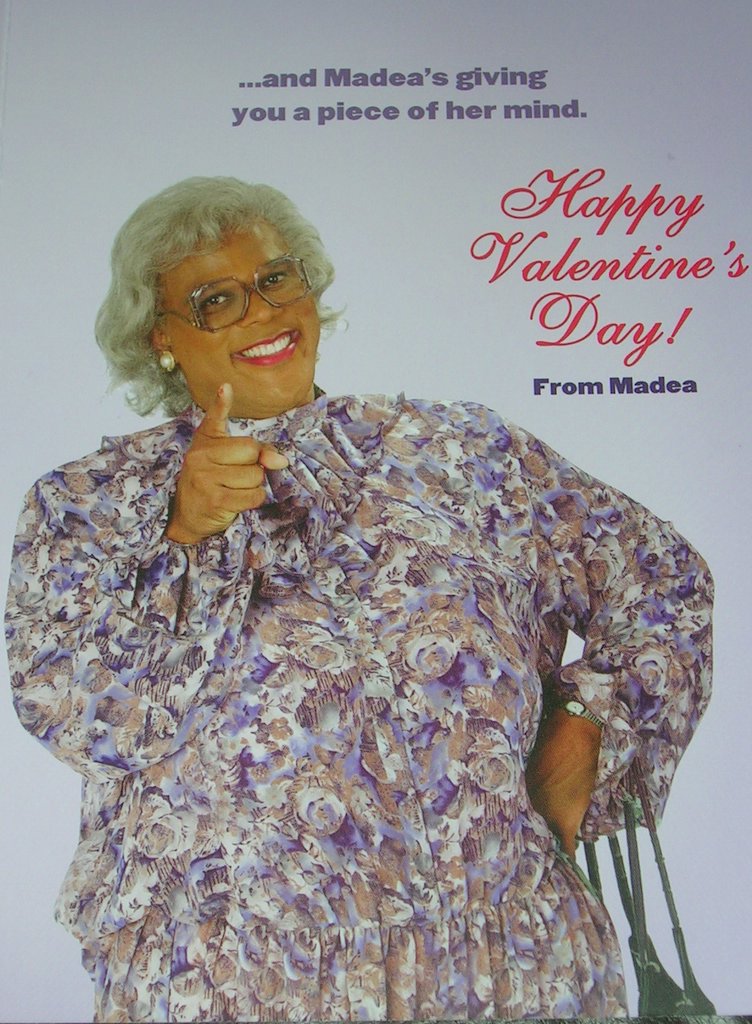
There must be something about dressing up as a large, older woman that brings out the best in Martin Lawrence. Typically he comes across as an obnoxious egotist, but as Big Momma he’s forced to dial down how pleased he is with himself and affect the manners of an earthy southern matron. Even underneath the fat suit, latex, and blonde wig, Lawrence won’t convince anyone that he’s Big Momma. His artificial folksiness and politeness through gritted teeth make a better, and funnier, disguise. (Lawrence could teach Tyler Perry a thing or two.) The humor derives from seeing Big Momma doing unexpected things for a woman of her age and size—adopting Bo Derek’s 10 beach look, teaching grade school cheerleaders Beyoncé’s booty dance—and as far as this sort of broad comedy goes, it’s mildly amusing despite its obviousness and lack of freshness
From the first film to the sequel Big Momma switches from small town Georgia to Wisteria Lane. The venue change is ripe with potential for an upper class family’s ambition and eccentricities to shock Big Momma. The kids are overscheduled with activities and underexposed to their parents. (Thankfully, the children are likable rather than bratty.) In addition to eating Brillo pads and remaining silent, the youngest child loves leaping from high places and landing face first, a gag that doesn’t get old. The family Chihuahua is depressed, wears cutesy outfits, and develops a fondness for tequila. These domestic scenes have a flair for the knowingly absurd, which is more than the humdrum crime plot has going for it.
BIG MOMMA’S HOUSE 2 draws out some laughs, but it isn’t a particularly well-made film. The cinematography is flat and washed out. There’s little concern for continuity or a commitment to convincing the audience of the ruse’s feasibility, even for a film requiring a large suspension of disbelief. Overnight Malcolm cleans the Fuller house while out of his Big Momma costume, a risk he surely wouldn’t take and a missed chance to show his invented character struggling with chores. It’s filled out with immaterial subplots, such as Malcolm hiding his undercover work from his wife, which inadvertently leads her to believe he’s having an affair. (At least this tired thread produces one good joke when Sherry finds an enormous blue thong stashed under their bed.)
BIG MOMMA’S HOUSE 2 lacks comedic momentum to sustain the ridiculousness of Lawrence as Big Momma, but it’s a welcome break from the star’s tough cop act and his abominable family film turn in REBOUND.
Grade: C+
Malcolm Turner (Martin Lawrence) has traded undercover work for the less dangerous job of a safety officer who wears an eagle costume at school assemblies in BIG MOMMA’S HOUSE 2. Although Malcolm switched to a desk job at his wife Sherry’s (Nia Long) request, he itches to return to the field. Opportunity knocks when an FBI agent is needed to infiltrate the household of Tom Fuller (Mark Moses), who is suspected of developing a computer worm that can do immense damage to the government intelligence community’s network. The FBI has an agent lined up to take a job as the Fuller’s nanny, but in defiance of his unknowing co-workers and pregnant spouse, Malcolm dresses up as Big Momma, wins over Mrs. Fuller (Emily Procter), and looks for clues between attending to the three children and completing chores.
There must be something about dressing up as a large, older woman that brings out the best in Martin Lawrence. Typically he comes across as an obnoxious egotist, but as Big Momma he’s forced to dial down how pleased he is with himself and affect the manners of an earthy southern matron. Even underneath the fat suit, latex, and blonde wig, Lawrence won’t convince anyone that he’s Big Momma. His artificial folksiness and politeness through gritted teeth make a better, and funnier, disguise. (Lawrence could teach Tyler Perry a thing or two.) The humor derives from seeing Big Momma doing unexpected things for a woman of her age and size—adopting Bo Derek’s 10 beach look, teaching grade school cheerleaders Beyoncé’s booty dance—and as far as this sort of broad comedy goes, it’s mildly amusing despite its obviousness and lack of freshness
From the first film to the sequel Big Momma switches from small town Georgia to Wisteria Lane. The venue change is ripe with potential for an upper class family’s ambition and eccentricities to shock Big Momma. The kids are overscheduled with activities and underexposed to their parents. (Thankfully, the children are likable rather than bratty.) In addition to eating Brillo pads and remaining silent, the youngest child loves leaping from high places and landing face first, a gag that doesn’t get old. The family Chihuahua is depressed, wears cutesy outfits, and develops a fondness for tequila. These domestic scenes have a flair for the knowingly absurd, which is more than the humdrum crime plot has going for it.
BIG MOMMA’S HOUSE 2 draws out some laughs, but it isn’t a particularly well-made film. The cinematography is flat and washed out. There’s little concern for continuity or a commitment to convincing the audience of the ruse’s feasibility, even for a film requiring a large suspension of disbelief. Overnight Malcolm cleans the Fuller house while out of his Big Momma costume, a risk he surely wouldn’t take and a missed chance to show his invented character struggling with chores. It’s filled out with immaterial subplots, such as Malcolm hiding his undercover work from his wife, which inadvertently leads her to believe he’s having an affair. (At least this tired thread produces one good joke when Sherry finds an enormous blue thong stashed under their bed.)
BIG MOMMA’S HOUSE 2 lacks comedic momentum to sustain the ridiculousness of Lawrence as Big Momma, but it’s a welcome break from the star’s tough cop act and his abominable family film turn in REBOUND.
Grade: C+
Last Holiday
LAST HOLIDAY (Wayne Wang, 2006)
Georgia Byrd (Queen Latifah) lives like her life is on hold. She pines for a department store co-worker but can’t tell him how she feels. She develops her culinary skills but won’t eat what she cooks, giving it away so she can stick to an unending diet. Georgia’s dreams and ambitions exist only as entries in her Book of Possibilities, a scrapbook of an imagined future that documents places she’d like to go, people she’d like to know better, and things she’d like to do. Georgia could use some assertiveness in talking with her secret crush Sean (LL Cool J) and her stingy boss, but otherwise she leads a humble life of admirable restraint.
The universe, though, has a big trick in store for Georgia. In LAST HOLIDAY she bumps her head and is taken to the store’s clinic for a routine examination. Much to everyone’s surprise, the diagnosis reveals that she has a rare terminal illness. Staring at three weeks left to live, Georgia withdraws all the money from her bank account and travels to Karlovy Vary.
Free to take risks, Georgia becomes the center of attention at the posh mountain hotel where she’s staying. She captivates Chef Didier (Gérard Depardieu), one of her cooking inspirations, and Senator Dillings (Giancarlo Esposito), who represents her New Orleans ward. Tycoon Matthew Kragen (Timothy Hutton), who owns the department store chain where Georgia was employed, fears that this unknown socialite is out to wreck his lobbying of the senator and goes about trying to uncover her identity.
LAST HOLIDAY possesses the look and feel of a 1950s Hollywood film. (As it turns out, it’s a remake of a 1950 British film starring Alec Guinness.) Set in a luxurious locale and awash in generosity for its characters, even the mean ones, LAST HOLIDAY delivers the glamour and sentimentality associated with classic movies. Director Wayne Wang’s film isn’t destined to be a classic, contemporary or otherwise, but it’s a pleasant movie with a light touch and some nice character work.
Latifah is an engaging presence and a gifted comic performer. She’s familiar and larger than life, which is why it’s easy to believe she attracts people to her. As Georgia, Latifah is a beacon of goodheartedness. It’s rewarding to see her cut loose and thwart any ill will directed at her because she conducts herself without an ounce of self-righteousness or pity-seeking. The supporting cast is fun too, with Depardieu making a nice kindred spirit with Latifah.
Since Georgia calls New Orleans home, LAST HOLIDAY gains unintended poignancy. The film’s message of living each day to the fullest seems more immediate when considering the devastation unleashed on that city, even if LAST HOLIDAY wasn’t made with this tragedy in mind.
Grade: B-
Georgia Byrd (Queen Latifah) lives like her life is on hold. She pines for a department store co-worker but can’t tell him how she feels. She develops her culinary skills but won’t eat what she cooks, giving it away so she can stick to an unending diet. Georgia’s dreams and ambitions exist only as entries in her Book of Possibilities, a scrapbook of an imagined future that documents places she’d like to go, people she’d like to know better, and things she’d like to do. Georgia could use some assertiveness in talking with her secret crush Sean (LL Cool J) and her stingy boss, but otherwise she leads a humble life of admirable restraint.
The universe, though, has a big trick in store for Georgia. In LAST HOLIDAY she bumps her head and is taken to the store’s clinic for a routine examination. Much to everyone’s surprise, the diagnosis reveals that she has a rare terminal illness. Staring at three weeks left to live, Georgia withdraws all the money from her bank account and travels to Karlovy Vary.
Free to take risks, Georgia becomes the center of attention at the posh mountain hotel where she’s staying. She captivates Chef Didier (Gérard Depardieu), one of her cooking inspirations, and Senator Dillings (Giancarlo Esposito), who represents her New Orleans ward. Tycoon Matthew Kragen (Timothy Hutton), who owns the department store chain where Georgia was employed, fears that this unknown socialite is out to wreck his lobbying of the senator and goes about trying to uncover her identity.
LAST HOLIDAY possesses the look and feel of a 1950s Hollywood film. (As it turns out, it’s a remake of a 1950 British film starring Alec Guinness.) Set in a luxurious locale and awash in generosity for its characters, even the mean ones, LAST HOLIDAY delivers the glamour and sentimentality associated with classic movies. Director Wayne Wang’s film isn’t destined to be a classic, contemporary or otherwise, but it’s a pleasant movie with a light touch and some nice character work.
Latifah is an engaging presence and a gifted comic performer. She’s familiar and larger than life, which is why it’s easy to believe she attracts people to her. As Georgia, Latifah is a beacon of goodheartedness. It’s rewarding to see her cut loose and thwart any ill will directed at her because she conducts herself without an ounce of self-righteousness or pity-seeking. The supporting cast is fun too, with Depardieu making a nice kindred spirit with Latifah.
Since Georgia calls New Orleans home, LAST HOLIDAY gains unintended poignancy. The film’s message of living each day to the fullest seems more immediate when considering the devastation unleashed on that city, even if LAST HOLIDAY wasn’t made with this tragedy in mind.
Grade: B-
Friday, January 27, 2006
Movie theater owners vs. Bubble
Steven Soderbergh's BUBBLE has received a fair share of attention, but all that ink has nothing to do with the film's merits (or lack thereof). No, what has a lot of movie theater owners and studio heads in a huff is that BUBBLE is opening today on screens across the country while also getting two showings on HDNet Movies and being made available for purchase on DVD Tuesday. Theater owners are scared that this distribution model will be the death of their business. Their response to this perceived threat has been a lot of public bellyaching and refusing to book the movie. Landmark Theaters, owned by BUBBLE'S production company 2929 Entertainment, will give the film the majority of its screenings. (In Columbus it will play a one-time members-only screening at the Wexner Center on February 1.)
Mark Cuban, the outspoken owner of the Dallas Mavericks and co-owner of 2929 Entertainment, thinks the complaining is a sign that theater owners don't know their business. Cuban makes some interesting arguments about the state of theatrical exhibition on his weblog Blog Maverick. He throws a lot out there, so rather than attempt to condense his overview of the matter, check out his posts "What business are theaters in?" and "Go see Bubble".
One of his better points is that a day-and-date multiple platform model should benefit smaller films. Arthouse films face the problem of frontloaded promotion for their New York and Los Angeles openings and little media presence by the time they filter down to the midsized and small cities, if they ever get there. Cuban's strategy is to make these films available to everyone (assuming a theater in your town opens them) and see if the marketplace will support them on a wider level than the current model. In a way, it's putting Jonathan Rosenbaum's MOVIE WARS argument--more people would watch these movies if provided better access to them--to the test.
I also Cuban's onto something in giving theaters that play these films a percentage of the DVD revenues. Studios practically treat theatrical runs like the first phase of DVD marketing campaigns as it is.
Mark Cuban, the outspoken owner of the Dallas Mavericks and co-owner of 2929 Entertainment, thinks the complaining is a sign that theater owners don't know their business. Cuban makes some interesting arguments about the state of theatrical exhibition on his weblog Blog Maverick. He throws a lot out there, so rather than attempt to condense his overview of the matter, check out his posts "What business are theaters in?" and "Go see Bubble".
One of his better points is that a day-and-date multiple platform model should benefit smaller films. Arthouse films face the problem of frontloaded promotion for their New York and Los Angeles openings and little media presence by the time they filter down to the midsized and small cities, if they ever get there. Cuban's strategy is to make these films available to everyone (assuming a theater in your town opens them) and see if the marketplace will support them on a wider level than the current model. In a way, it's putting Jonathan Rosenbaum's MOVIE WARS argument--more people would watch these movies if provided better access to them--to the test.
I also Cuban's onto something in giving theaters that play these films a percentage of the DVD revenues. Studios practically treat theatrical runs like the first phase of DVD marketing campaigns as it is.
On Film Festivals
With Sundance in full swing, I have film festivals on the brain. OK, the buzz from Sundance is weak, at least in the sources I'm reading, but nevertheless I'm getting stirred up for the three festivals I'll be attending before the next three and a half months are up.
This week I submitted my press pass requests to the Cleveland International Film Festival and Roger Ebert's Overlooked Film Festival, both of which were approved. Who says that it doesn't pay to slog away at this stuff for years without drawing a check for it?
As I understand it, Cleveland's film selections won't be announced until some time in February. If you live near Cleveland--and yes, that means Columbus readers who are only a two-hour drive away--this festival is worth visiting. Last year I attended for the first time and found it to be well-organized and easy to navigate. (You can read my write-up at The Film Journal.) All of the films are shown in Tower City Cinemas, a prime downtown location that affords festival attendees the pick of several places to eat within the shopping center. I did five films in a day with no trouble, meaning there was ample time to eat and catch a little of the NCAA basketball tournament on TV. This year morning screenings have been added during weekdays, and midnight screenings will be scheduled too.
I've attended Roger Ebert's Overlooked Film Festival, or Ebertfest for short, since 2001 and blogged about it the last two years. (Here are summaries and photos from last year's opening night, day 2, day 3, day 4, and day 5.) I waited around too late to buy a festival pass last year and had to take the press pass route. Little did I know it at the time, but that's what I had to do this year. Jarod Musgrave, who I've met at previous festivals, raises the point that festival passes aren't hard to buy, but don't bide your time because they're gone before you know it. According to Ticketweb, Ebertfest passes are sold out.
It's very impressive that the festival now sells out of the limited number of passes three months before the event, let alone before any of the films have been announced. (Tickets to individual films--a third(?) of the Virginia Theatre's seats--are held for sale closer to the festival.) Obviously they're doing something right in Champaign-Urbana. Many of those who attend are repeat customers, so they're having a good time and placing faith in the programming decisions. (While those of us programming the Deep Focus Film Fest don't have the name recognition of Ebert, I hope that our curated festival can develop the same kind of trust from audiences. Plus, you'll know upfront what you're paying to see.)
In Jarod's Ebertfest post, he takes a stab at what films might be selected this year. VERTIGO in 70mm seems like a strong possibility based on last year's rumor. DUMA, a very good film that will(?) look great on the Virginia's big screen, is a likely frontrunner for the free children's matinee. (Despite the efforts of Ebert and a few other critics, attempts to draw attention to it failed to ignite ticket sales. Still, the studio didn't give DUMA much of a chance with how it handled the release.) The Alloy Orchestra will be back, although the film they'll accompany is unknown. During the best films of 2005 Ebert & Roeper show, it was strongly hinted that JUNEBUG would be at the festival. How about Sundance entry SOMEBODIES? Last year Ebert picked two "pre-overlooked" Sundance films, and this one has the built-in advantage of having Ebertfest festival director Nate Kohn as one of its producers.
So upcoming months will bring my festival blogging from Cleveland and Champaign-Urbana. The same will hold true during the Deep Focus Film Fest, except for the writing from the road part.
While I'm thinking about it Deep Focus director Melissa Starker is trying out the blogging thing while she's at Sundance. You can read her daily updates at the Columbus Alive site. (Right now her newest post appears on the site's front page. If you're reading this a week from now, you'll probably have to do a little digging.)
This week I submitted my press pass requests to the Cleveland International Film Festival and Roger Ebert's Overlooked Film Festival, both of which were approved. Who says that it doesn't pay to slog away at this stuff for years without drawing a check for it?
As I understand it, Cleveland's film selections won't be announced until some time in February. If you live near Cleveland--and yes, that means Columbus readers who are only a two-hour drive away--this festival is worth visiting. Last year I attended for the first time and found it to be well-organized and easy to navigate. (You can read my write-up at The Film Journal.) All of the films are shown in Tower City Cinemas, a prime downtown location that affords festival attendees the pick of several places to eat within the shopping center. I did five films in a day with no trouble, meaning there was ample time to eat and catch a little of the NCAA basketball tournament on TV. This year morning screenings have been added during weekdays, and midnight screenings will be scheduled too.
I've attended Roger Ebert's Overlooked Film Festival, or Ebertfest for short, since 2001 and blogged about it the last two years. (Here are summaries and photos from last year's opening night, day 2, day 3, day 4, and day 5.) I waited around too late to buy a festival pass last year and had to take the press pass route. Little did I know it at the time, but that's what I had to do this year. Jarod Musgrave, who I've met at previous festivals, raises the point that festival passes aren't hard to buy, but don't bide your time because they're gone before you know it. According to Ticketweb, Ebertfest passes are sold out.
It's very impressive that the festival now sells out of the limited number of passes three months before the event, let alone before any of the films have been announced. (Tickets to individual films--a third(?) of the Virginia Theatre's seats--are held for sale closer to the festival.) Obviously they're doing something right in Champaign-Urbana. Many of those who attend are repeat customers, so they're having a good time and placing faith in the programming decisions. (While those of us programming the Deep Focus Film Fest don't have the name recognition of Ebert, I hope that our curated festival can develop the same kind of trust from audiences. Plus, you'll know upfront what you're paying to see.)
In Jarod's Ebertfest post, he takes a stab at what films might be selected this year. VERTIGO in 70mm seems like a strong possibility based on last year's rumor. DUMA, a very good film that will(?) look great on the Virginia's big screen, is a likely frontrunner for the free children's matinee. (Despite the efforts of Ebert and a few other critics, attempts to draw attention to it failed to ignite ticket sales. Still, the studio didn't give DUMA much of a chance with how it handled the release.) The Alloy Orchestra will be back, although the film they'll accompany is unknown. During the best films of 2005 Ebert & Roeper show, it was strongly hinted that JUNEBUG would be at the festival. How about Sundance entry SOMEBODIES? Last year Ebert picked two "pre-overlooked" Sundance films, and this one has the built-in advantage of having Ebertfest festival director Nate Kohn as one of its producers.
So upcoming months will bring my festival blogging from Cleveland and Champaign-Urbana. The same will hold true during the Deep Focus Film Fest, except for the writing from the road part.
While I'm thinking about it Deep Focus director Melissa Starker is trying out the blogging thing while she's at Sundance. You can read her daily updates at the Columbus Alive site. (Right now her newest post appears on the site's front page. If you're reading this a week from now, you'll probably have to do a little digging.)
Friday, January 20, 2006
Christine Vachon at the Wexner Center

Christine Vachon at the Wexner Center (January 20, 2006/Mark Pfeiffer)

This month the Wexner Center is honoring Christine Vachon and Killer Films with a retrospective. The producer was on hand tonight for an introduction of Mary Harron's THE NOTORIOUS BETTIE PAGE and an informative post-film discussion.
THE NOTORIOUS BETTIE PAGE won't open commercially until April, but it's not to be missed. As the titular pin-up queen Gretchen Mol gives a remarkable performance. The sumptuous cinematography--mostly in classic black and white plus a few scenes in early color, all rendered in a film stock fetishist's dream--should make Mott Hupfel in demand. It's a terrific, highly entertaining film and I intend to write about it more fully in the days to come.
Thursday, January 19, 2006
2005 OFCS awards ballot and comments
As promised, I'm posting my Online Film Critics Society awards nomination ballot. I'll make some comments along the way, but as for talking on the OFCS award winners, I really don't feel like I have anything to say.
Things to take into account when looking at these nominees:
-Nominees were ranked and given point values. Rather than list the points, I've put them in my preferred order.
-Nominees appear in categories where the OFCS deemed appropriate. I don't consider Kevin Costner a lead in THE UPSIDE OF ANGER, but it was determined he belonged in that category.
-While I'm generally happy with these nominees, that's not to say I wouldn't make changes if given the opportunity.
THE OFCS AWARDS BALLOT - NOMINATIONS
BEST PICTURE
1. Kings & Queen (Rois et reine)
2. Murderball
3. Munich
4. Nobody Knows (Dare mo shiranai)
5. Grizzly Man
I have no idea how the majority voted, but casting four of my five nominations for two foreign films and two documentaries was probably the fastest way to waste them. Regardless, I didn't feel it was necessary to ghettoize these films and nominate them in their specialty categories.
BEST DIRECTOR
1. Arnaud Desplechin, Kings & Queen (Rois et reine)
2. Werner Herzog, Grizzly Man
3. Steven Spielberg, Munich
4. Hirokazu Kore-eda, Nobody Knows (Dare mo shiranai)
5. Ang Lee, Brokeback Mountain
So MURDERBALL was good enough for the top five films but not directors? Did it direct itself? Of course not. Can I explain myself? Probably not satisfactorily.
BEST ACTOR
1. Joaquin Phoenix, Walk the Line
2. Jeff Daniels, The Squid and the Whale
3. Heath Ledger, Brokeback Mountain
4. Robert Downey Jr., Kiss Kiss Bang Bang
5. Kevin Costner, The Upside of Anger
Poor Joaquin Phoenix. He had one of the hot performances in November and now is an afterthought. Sure, an Oscar nom should be a lock, but his chance of winning is slim. Robert Downey Jr. is probably the most offbeat selection here--no awards talk at all--but he's very funny in the film. The same goes for Costner, although he's generated some awards talk, not that such things matter to me when I'm nominating.
BEST ACTRESS
1. Emmanuelle Devos, Kings & Queen (Rois et reine)
2. Gwyneth Paltrow, Proof
3. Reese Witherspoon, Walk the Line
4. Jennifer Connelly, Dark Water
5. Radha Mitchell, Melinda and Melinda
OK, a lot of you probably think I'm nuts for putting Jennifer Connelly on there for DARK WATER, but if her performance weren't in a disreputable genre--a studio horror film--this wouldn't seem as crazy. Woody Allen films were usually the ticket to awards, but lately no one takes notice. Mitchell balanced two very different takes on the same character and should have received more credit for doing so.
BEST SUPPORTING ACTOR
1. Val Kilmer, Kiss Kiss Bang Bang
2. Richard Jenkins, North Country
3. John C. Reilly, Dark Water
4. Ed Harris, A History of Violence
5. Heath Ledger, Lords of Dogtown
Comedy doesn't get enough credit. Kilmer is hysterical as Hollywood detective gay Perry. For that matter, Ledger is pretty funny in a Kilmer-like performance in LORDS OF DOGTOWN. William Hurt got most of the supporting actor buzz in Cronenberg's film, but Ed Harris chewed the scenery well too. John C. Reilly provided the necessary comic relief in DARK WATER, but I can bet you're not buying what I'm selling. I could have included Richard Jenkins on the strength of one critical scene in NORTH COUNTRY. Consider him my token dramatic nomination if you like.
BEST SUPPORTING ACTRESS
1. Amy Adams, Junebug
2. Michelle Williams, Brokeback Mountain
3. Rachel Weisz, The Constant Gardener
4. Maria Bello, A History of Violence
5. Thandie Newton, Crash
No, these aren't my predictions for the Oscar nominations, but I have a feeling that at least four of these will be up.
BEST ORIGINAL SCREENPLAY
1. Noah Baumbach, The Squid and the Whale
2. Roger Bohbot and Arnaud Desplechin, Kings & Queen (Rois et reine)
3. Paul Haggis and Robert Moresco, Crash
4. Frank Cottrell Boyce, Millions
5. George Clooney and Grant Heslov, Good Night, and Good Luck.
BEST ADAPTED SCREENPLAY
1. Larry McMurtry and Diana Ossana, Brokeback Mountain
2. Shane Black, Kiss Kiss Bang Bang
3. Tony Kushner and Eric Roth, Munich
4. Deborah Moggach, Pride & Prejudice
5. Lowell Ganz and Babaloo Mandel, Fever Pitch
BEST CINEMATOGRAPHY
1. Christopher Doyle, Kwan Pun Leung, and Lai Yiu-Fai, 2046
2. Rodrigo Prieto, Brokeback Mountain
3. Roman Osin, Pride & Prejudice
4. Robert Rodriguez, Sin City
5. Janusz Kaminski, War of the Worlds
BEST EDITING
1. Paul Tothill, Pride & Prejudice
2. Michael Kahn, Munich
3. Conor O’Neill and Geoffrey Richman, Murderball
4. Hughes Winborne, Crash
5. William Chang, 2046
Talk about a difficult category for making nominations. I remember performances, writing, and visuals of films, but I'm hard pressed to say that the editing sticks with me. These were the ones that stuck out as I racked my brain.
BEST MUSIC SCORE
1. Gustavo Santaolallo, Brokeback Mountain
2. Dario Marianelli, Pride & Prejudice
3. Alexandre Desplat, Syriana
4. Yo La Tengo, Junebug
5. John Williams, Munich
BEST DOCUMENTARY
1. Murderball
2. Grizzly Man
3. The Aristocrats
4. Up for Grabs
5. Lipstick & Dynamite
Just now I realized that four of the five docs I nominated are sports-themed. It wasn't intentional.
Before making a shortlist I expected to find a lot of good documentaries from 2005. I'd call the top two great, but after that it drops off significantly. I wrote about LIPSTICK & DYNAMITE in my coverage of the Cleveland International Film Festival.
BEST FOREIGN-LANGUAGE (NON-ENGLISH) FILM
1. Kings & Queen (Rois et reine)
2. Nobody Knows (Dare mo shiranai)
3. Oldboy
4. The Edukators (Die Fetten Jahre sind vorbei)
5. Downfall (Der Untergang)
2005 was a good year for seeing foreign films in the U.S. Things were not so hot at the box office, but there's not much I can do about that. Look at Germany representin' with two films.
BEST ANIMATED FEATURE
1. Wallace & Gromit: The Curse of the Were-Rabbit
2. Tim Burton’s Corpse Bride
3. Madagascar
I recommended a couple of other animated films, perhaps at my mistake, but I couldn't nominate any more than three. As it was, MADAGASCAR was pushing it.
BREAKTHROUGH FILMMAKER
1. Joe Wright, Pride & Prejudice
2. Shane Black, Kiss Kiss Bang Bang
3. Paul Haggis, Crash
4. Miranda July, Me and You and Everyone We Know
5. Scott Caan, Dallas 362
Shane Black qualified because he didn't have any prior experience as a director. I threw Scott Caan a bone knowing full well that he didn't have a prayer. DALLAS 362 was far from perfect but showed some talent.
BREAKTHROUGH PERFORMANCE
1. Michelle Monaghan, Kiss Kiss Bang Bang, Mr. & Mrs. Smith, North Country, and Winter Solstice
2. Tony Jaa, Ong-bak
3. Camilla Belle, The Ballad of Jack and Rose
4. Alex Michaeletos, Duma
5. Miranda July, Me and You and Everyone We Know
For all I know, my top vote for Michelle Monaghan may have been tossed. The fuzzy criteria seemed to me to define the category as those making their first appearances in films. I tried to stick by that but ultimately submitted my nominations with a broader definition. (Terrence Howard was ruled out here, and rightly so. Amy Adams was declared ineligible here as well, a decision I disagree with but can abide by.)
Things to take into account when looking at these nominees:
-Nominees were ranked and given point values. Rather than list the points, I've put them in my preferred order.
-Nominees appear in categories where the OFCS deemed appropriate. I don't consider Kevin Costner a lead in THE UPSIDE OF ANGER, but it was determined he belonged in that category.
-While I'm generally happy with these nominees, that's not to say I wouldn't make changes if given the opportunity.
THE OFCS AWARDS BALLOT - NOMINATIONS
BEST PICTURE
1. Kings & Queen (Rois et reine)
2. Murderball
3. Munich
4. Nobody Knows (Dare mo shiranai)
5. Grizzly Man
I have no idea how the majority voted, but casting four of my five nominations for two foreign films and two documentaries was probably the fastest way to waste them. Regardless, I didn't feel it was necessary to ghettoize these films and nominate them in their specialty categories.
BEST DIRECTOR
1. Arnaud Desplechin, Kings & Queen (Rois et reine)
2. Werner Herzog, Grizzly Man
3. Steven Spielberg, Munich
4. Hirokazu Kore-eda, Nobody Knows (Dare mo shiranai)
5. Ang Lee, Brokeback Mountain
So MURDERBALL was good enough for the top five films but not directors? Did it direct itself? Of course not. Can I explain myself? Probably not satisfactorily.
BEST ACTOR
1. Joaquin Phoenix, Walk the Line
2. Jeff Daniels, The Squid and the Whale
3. Heath Ledger, Brokeback Mountain
4. Robert Downey Jr., Kiss Kiss Bang Bang
5. Kevin Costner, The Upside of Anger
Poor Joaquin Phoenix. He had one of the hot performances in November and now is an afterthought. Sure, an Oscar nom should be a lock, but his chance of winning is slim. Robert Downey Jr. is probably the most offbeat selection here--no awards talk at all--but he's very funny in the film. The same goes for Costner, although he's generated some awards talk, not that such things matter to me when I'm nominating.
BEST ACTRESS
1. Emmanuelle Devos, Kings & Queen (Rois et reine)
2. Gwyneth Paltrow, Proof
3. Reese Witherspoon, Walk the Line
4. Jennifer Connelly, Dark Water
5. Radha Mitchell, Melinda and Melinda
OK, a lot of you probably think I'm nuts for putting Jennifer Connelly on there for DARK WATER, but if her performance weren't in a disreputable genre--a studio horror film--this wouldn't seem as crazy. Woody Allen films were usually the ticket to awards, but lately no one takes notice. Mitchell balanced two very different takes on the same character and should have received more credit for doing so.
BEST SUPPORTING ACTOR
1. Val Kilmer, Kiss Kiss Bang Bang
2. Richard Jenkins, North Country
3. John C. Reilly, Dark Water
4. Ed Harris, A History of Violence
5. Heath Ledger, Lords of Dogtown
Comedy doesn't get enough credit. Kilmer is hysterical as Hollywood detective gay Perry. For that matter, Ledger is pretty funny in a Kilmer-like performance in LORDS OF DOGTOWN. William Hurt got most of the supporting actor buzz in Cronenberg's film, but Ed Harris chewed the scenery well too. John C. Reilly provided the necessary comic relief in DARK WATER, but I can bet you're not buying what I'm selling. I could have included Richard Jenkins on the strength of one critical scene in NORTH COUNTRY. Consider him my token dramatic nomination if you like.
BEST SUPPORTING ACTRESS
1. Amy Adams, Junebug
2. Michelle Williams, Brokeback Mountain
3. Rachel Weisz, The Constant Gardener
4. Maria Bello, A History of Violence
5. Thandie Newton, Crash
No, these aren't my predictions for the Oscar nominations, but I have a feeling that at least four of these will be up.
BEST ORIGINAL SCREENPLAY
1. Noah Baumbach, The Squid and the Whale
2. Roger Bohbot and Arnaud Desplechin, Kings & Queen (Rois et reine)
3. Paul Haggis and Robert Moresco, Crash
4. Frank Cottrell Boyce, Millions
5. George Clooney and Grant Heslov, Good Night, and Good Luck.
BEST ADAPTED SCREENPLAY
1. Larry McMurtry and Diana Ossana, Brokeback Mountain
2. Shane Black, Kiss Kiss Bang Bang
3. Tony Kushner and Eric Roth, Munich
4. Deborah Moggach, Pride & Prejudice
5. Lowell Ganz and Babaloo Mandel, Fever Pitch
BEST CINEMATOGRAPHY
1. Christopher Doyle, Kwan Pun Leung, and Lai Yiu-Fai, 2046
2. Rodrigo Prieto, Brokeback Mountain
3. Roman Osin, Pride & Prejudice
4. Robert Rodriguez, Sin City
5. Janusz Kaminski, War of the Worlds
BEST EDITING
1. Paul Tothill, Pride & Prejudice
2. Michael Kahn, Munich
3. Conor O’Neill and Geoffrey Richman, Murderball
4. Hughes Winborne, Crash
5. William Chang, 2046
Talk about a difficult category for making nominations. I remember performances, writing, and visuals of films, but I'm hard pressed to say that the editing sticks with me. These were the ones that stuck out as I racked my brain.
BEST MUSIC SCORE
1. Gustavo Santaolallo, Brokeback Mountain
2. Dario Marianelli, Pride & Prejudice
3. Alexandre Desplat, Syriana
4. Yo La Tengo, Junebug
5. John Williams, Munich
BEST DOCUMENTARY
1. Murderball
2. Grizzly Man
3. The Aristocrats
4. Up for Grabs
5. Lipstick & Dynamite
Just now I realized that four of the five docs I nominated are sports-themed. It wasn't intentional.
Before making a shortlist I expected to find a lot of good documentaries from 2005. I'd call the top two great, but after that it drops off significantly. I wrote about LIPSTICK & DYNAMITE in my coverage of the Cleveland International Film Festival.
BEST FOREIGN-LANGUAGE (NON-ENGLISH) FILM
1. Kings & Queen (Rois et reine)
2. Nobody Knows (Dare mo shiranai)
3. Oldboy
4. The Edukators (Die Fetten Jahre sind vorbei)
5. Downfall (Der Untergang)
2005 was a good year for seeing foreign films in the U.S. Things were not so hot at the box office, but there's not much I can do about that. Look at Germany representin' with two films.
BEST ANIMATED FEATURE
1. Wallace & Gromit: The Curse of the Were-Rabbit
2. Tim Burton’s Corpse Bride
3. Madagascar
I recommended a couple of other animated films, perhaps at my mistake, but I couldn't nominate any more than three. As it was, MADAGASCAR was pushing it.
BREAKTHROUGH FILMMAKER
1. Joe Wright, Pride & Prejudice
2. Shane Black, Kiss Kiss Bang Bang
3. Paul Haggis, Crash
4. Miranda July, Me and You and Everyone We Know
5. Scott Caan, Dallas 362
Shane Black qualified because he didn't have any prior experience as a director. I threw Scott Caan a bone knowing full well that he didn't have a prayer. DALLAS 362 was far from perfect but showed some talent.
BREAKTHROUGH PERFORMANCE
1. Michelle Monaghan, Kiss Kiss Bang Bang, Mr. & Mrs. Smith, North Country, and Winter Solstice
2. Tony Jaa, Ong-bak
3. Camilla Belle, The Ballad of Jack and Rose
4. Alex Michaeletos, Duma
5. Miranda July, Me and You and Everyone We Know
For all I know, my top vote for Michelle Monaghan may have been tossed. The fuzzy criteria seemed to me to define the category as those making their first appearances in films. I tried to stick by that but ultimately submitted my nominations with a broader definition. (Terrence Howard was ruled out here, and rightly so. Amy Adams was declared ineligible here as well, a decision I disagree with but can abide by.)
Wednesday, January 18, 2006
Hostel
HOSTEL (Eli Roth, 2006)
Three tourists, two Americans and an Icelander, enter a world of pain in HOSTEL. Their hedonistic quest for drugs and women takes them from Amsterdam to Slovakia, where they have been told they can find beautiful women willing to fulfill their every sexual indulgence. Sure enough, their room at the hostel is populated with partially clad women eager to sleep with them. Their good fortune splits up the group, with Oli (Eythor Gudjonsson), the Icelandic acquaintance, leaving without saying goodbye, followed by Josh (Derek Richardson). Paxton (Jay Hernandez) begins to get concerned and demands one of the locals take him to where his friends are.
Paxton is brought to a rundown factory. Inside he finds rooms where men pay to torture and kill their prey, presumably gullible youth traveling through Europe. The customers are charged on a sliding scale depending on the nationality of their victims, with Americans bringing the top price.
As pointless and contemptible I thought WOLF CREEK was, HOSTEL ups the ante in on-screen depiction of fetishized violence. This is a vile exploitation film, and a shoddily-made one, that’s half softcore porn and half horror porn. HOSTEL is a showcase for bare breasts, the most depraved acts of torture (represented and implied), and nothing else. There’s really no story. What Roth stitches together amounts to little more than a poorly told urban legend in which key moments occur off-screen.
There are valid defenses for showing nudity and violence in the cinema—form is often as critical in evaluation as content—but HOSTEL obliterates the line between appropriate and inappropriate. The leering misogyny and orgasmic joy in watching torture make this an unpleasant viewing experience of the highest order (and I don’t mean that as a compliment). Roth appears to be trying his hand at Asian extreme cinema, but for all the shock value and blood in superior films like OLDBOY and AUDITION—not to mention Quentin Tarantino’s two KILL BILL volumes, somewhat of an American equivalent—they operate in moral universes and contain the filmmaking prowess that Roth lacks.
What makes HOSTEL most deplorable, though, is that much of it is coded to play as comedy. HOSTEL isn’t at all scary. For instance, Paxton escapes from a torture chamber, or so he thinks, on a cart. A severed hand impedes the cart’s progress, the destination of which is a chop shop. The scene plays out with queasy humor at his misfortune rather than any tension. HOSTEL’S worst scene isn’t a violent one. (OK, the blowtorch to the face is pretty bad.) Paxton has a conversation with an American businessman (Rick Hoffman) who wants advice on how he should torture and kill his specially selected victim. Hoffman plays it with comic glee in a sequence that’s more off-putting than any of the physical violence.
The counter argument to the charge of amorality is that Roth has fashioned a startling warning regarding amoral youthful behavior. Such justification is a specious argument because HOSTEL is so obviously enjoying the ugliness, but even if one could make such a case, only the most stringent hellfire and brimstone speaker could believe that these pothead horndogs deserve their fate.
At the risk of sounding like a humorless moralist (if I haven’t already), HOSTEL is a repulsive film that is harmful to watch. The degradation of humanity and celebration of our worst impulses are not fodder fit for consumption.
Grade: F
Three tourists, two Americans and an Icelander, enter a world of pain in HOSTEL. Their hedonistic quest for drugs and women takes them from Amsterdam to Slovakia, where they have been told they can find beautiful women willing to fulfill their every sexual indulgence. Sure enough, their room at the hostel is populated with partially clad women eager to sleep with them. Their good fortune splits up the group, with Oli (Eythor Gudjonsson), the Icelandic acquaintance, leaving without saying goodbye, followed by Josh (Derek Richardson). Paxton (Jay Hernandez) begins to get concerned and demands one of the locals take him to where his friends are.
Paxton is brought to a rundown factory. Inside he finds rooms where men pay to torture and kill their prey, presumably gullible youth traveling through Europe. The customers are charged on a sliding scale depending on the nationality of their victims, with Americans bringing the top price.
As pointless and contemptible I thought WOLF CREEK was, HOSTEL ups the ante in on-screen depiction of fetishized violence. This is a vile exploitation film, and a shoddily-made one, that’s half softcore porn and half horror porn. HOSTEL is a showcase for bare breasts, the most depraved acts of torture (represented and implied), and nothing else. There’s really no story. What Roth stitches together amounts to little more than a poorly told urban legend in which key moments occur off-screen.
There are valid defenses for showing nudity and violence in the cinema—form is often as critical in evaluation as content—but HOSTEL obliterates the line between appropriate and inappropriate. The leering misogyny and orgasmic joy in watching torture make this an unpleasant viewing experience of the highest order (and I don’t mean that as a compliment). Roth appears to be trying his hand at Asian extreme cinema, but for all the shock value and blood in superior films like OLDBOY and AUDITION—not to mention Quentin Tarantino’s two KILL BILL volumes, somewhat of an American equivalent—they operate in moral universes and contain the filmmaking prowess that Roth lacks.
What makes HOSTEL most deplorable, though, is that much of it is coded to play as comedy. HOSTEL isn’t at all scary. For instance, Paxton escapes from a torture chamber, or so he thinks, on a cart. A severed hand impedes the cart’s progress, the destination of which is a chop shop. The scene plays out with queasy humor at his misfortune rather than any tension. HOSTEL’S worst scene isn’t a violent one. (OK, the blowtorch to the face is pretty bad.) Paxton has a conversation with an American businessman (Rick Hoffman) who wants advice on how he should torture and kill his specially selected victim. Hoffman plays it with comic glee in a sequence that’s more off-putting than any of the physical violence.
The counter argument to the charge of amorality is that Roth has fashioned a startling warning regarding amoral youthful behavior. Such justification is a specious argument because HOSTEL is so obviously enjoying the ugliness, but even if one could make such a case, only the most stringent hellfire and brimstone speaker could believe that these pothead horndogs deserve their fate.
At the risk of sounding like a humorless moralist (if I haven’t already), HOSTEL is a repulsive film that is harmful to watch. The degradation of humanity and celebration of our worst impulses are not fodder fit for consumption.
Grade: F
Monday, January 16, 2006
Grandma's Boy
GRANDMA’S BOY (Nicholaus Goossen, 2006)
In GRANDMA’S BOY, Alex (Allen Covert), a stoner video game tester in his mid-thirties, gets booted from his apartment and turns to the only viable housing provider available: his grandmother and her two elderly housemates. A gaming master worshiped by nerdy co-workers, Alex spins his living arrangement as cohabitation with three women who are wearing him out—a true, albeit misleading, story. Pressure is bearing down on him as he needs to complete levels on a game soon to go to market while handling with the chores his elderly roomies want him to do.
GRANDMA’S BOY is what would result if Adam Sandler and his high profile co-stars bailed on a movie and the understudies took over. A terminally unfunny story of arrested adolescence, GRANDMA’S BOY reeks of stale ideas and desperation. Comprised of what might as well be discarded jokes from Sandler vehicles—his production company made the film—GRANDMA’S BOY mucks around with drug humor, non sequiturs, and a paralyzing terror and disgust of old age.
Sandler sometimes looks bored in his movies, but at least he’s able to summon glimmers of impish charisma. Covert, who co-wrote the screenplay, has neither the built-in boyish charm nor the manic range of Sandler at his best. The kindest thing I can say about GRANDMA’S BOY is that it isn’t as awful as I feared. Some pity laughs are to be had at the MATRIX-obsessed programmer who imagines he’s an android and the tester who lives with his parents and wears pajamas with feet. Nevertheless, GRANDMA’S BOY is still pretty terrible.
Grade: F
In GRANDMA’S BOY, Alex (Allen Covert), a stoner video game tester in his mid-thirties, gets booted from his apartment and turns to the only viable housing provider available: his grandmother and her two elderly housemates. A gaming master worshiped by nerdy co-workers, Alex spins his living arrangement as cohabitation with three women who are wearing him out—a true, albeit misleading, story. Pressure is bearing down on him as he needs to complete levels on a game soon to go to market while handling with the chores his elderly roomies want him to do.
GRANDMA’S BOY is what would result if Adam Sandler and his high profile co-stars bailed on a movie and the understudies took over. A terminally unfunny story of arrested adolescence, GRANDMA’S BOY reeks of stale ideas and desperation. Comprised of what might as well be discarded jokes from Sandler vehicles—his production company made the film—GRANDMA’S BOY mucks around with drug humor, non sequiturs, and a paralyzing terror and disgust of old age.
Sandler sometimes looks bored in his movies, but at least he’s able to summon glimmers of impish charisma. Covert, who co-wrote the screenplay, has neither the built-in boyish charm nor the manic range of Sandler at his best. The kindest thing I can say about GRANDMA’S BOY is that it isn’t as awful as I feared. Some pity laughs are to be had at the MATRIX-obsessed programmer who imagines he’s an android and the tester who lives with his parents and wears pajamas with feet. Nevertheless, GRANDMA’S BOY is still pretty terrible.
Grade: F
Sunday, January 15, 2006
2005 Online Film Critics Society year-end awards
And the results from the other critics group in which I'm a voting member. Comments and my nomination ballot to follow.
2005 Online Film Critics Society year-end awards
Best Picture: A History of Violence
Best Director: David Cronenberg, A History of Violence
Best Actor: Philip Seymour Hoffman, Capote
Best Actress: Reese Witherspoon, Walk the Line
Best Supporting Actor: Mickey Rourke, Sin City
Best Supporting Actress: Maria Bello, A History of Violence
Best Original Screenplay: Good Night and Good Luck, George Clooney and Grant Heslov
Best Adapted Screenplay: Brokeback Mountain, Larry McMurty and Diana Ossana, based on L. Annie Proulx’s short story
Best Cinematography: Sin City, Robert Rodriguez
Best Editing: Sin City, Robert Rodriguez
Best Score: Brokeback Mountain, Gustavo Santaolalla
Best Documentary: Grizzly Man
Best Foreign-Language Film: Downfall (Germany)
Best Animated Feature: Wallace and Gromit: The Curse of the Were-Rabbit
Breakthrough Filmmaker: Paul Haggis, Crash
Breakthrough Performance: Owen Kline, The Squid and the Whale
Friday, January 13, 2006
4th annual COFCA Awards comments
Yesterday the Central Ohio Film Critics Association announced its 4th annual awards. Much to my relief, the winners varied enough from perceived frontrunners in the Oscar race (and winners of other critics groups' awards) to make them worth discussing.
There's nothing inherently wrong with mass agreement, but in matters as highly subjective as best films and performances, it seems suspicious when everyone is in lockstep. Of course, this process tends to award the compromise selections, films seen by most of the voters that don't generate many diametrically opposed opinions. This doesn't diminish the achievement of such films and performances--the winners would still have to rank highly on the majority's ballots even if they weren't top-ranked--so don't think I'm slagging the winners. I'm just reviving my consensus vs. passion argument.
I had hoped MURDERBALL, which was exceptionally well-reviewed locally and nationally, might muscle its way to Best Film; however, 2005 was a big year for genre filmmaking, so it's appropriate that A HISTORY OF VIOLENCE won the most awards, including the top prize. David Cronenberg took a genre set-up and used it as a potent commentary on American idealism and role-playing in interpersonal relationships. It's also fitting that Maria Bello, whose character best integrates the natural and artificial, was recognized.
BROKEBACK MOUNTAIN didn't win the most awards, but in winning Lead Performance and Screenplay, being a key factor in Actor of the Year, and piling up plenty of runners-up, it was anything but an awards also-ran.
Before I post my ballot, I should qualify my nominations. All nominees are listed alphabetically. While I try to avoid gamesmanship in how I nominate, it comes into play, mostly in the case of not nominating films I know most of the membership hasn't seen. (Still, you'll notice some of my nominees likely never stood a chance.) Thus, the top ten films I nominated is not necessarily how my final top ten list will shake out. Per COFCA's decision, the performance categories make no distinction between male and female performances, and the screenwriting category makes no distinction between original and adapted screenplays.
Here is my nomination ballot:
Film
-Brokeback Mountain
-Grizzly Man
-Kings & Queen
-Kiss Kiss Bang Bang
-Munich
-Murderball
-Nobody Knows
-Pride & Prejudice
-Wallace & Gromit: The Curse of the Were-Rabbit
-War of the Worlds
Direction
-Arnaud Desplechin, KINGS & QUEEN
-Werner Herzog, GRIZZLY MAN
-Hirokazu Kore-eda, NOBODY KNOWS
-Ang Lee, BROKEBACK MOUNTAIN
-Steven Spielberg, MUNICH
Lead Performance
-Jeff Daniels, THE SQUID AND THE WHALE
-Emmanuelle Devos, KINGS & QUEEN
-Joaquin Phoenix, WALK THE LINE
-Gwyneth Paltrow, PROOF
-Reese Witherspoon, WALK THE LINE
Here's where pie in the sky mentality trumped practicality. Emmanuelle Devos probably didn't get any other votes, but her stunning performance in Desplechin's film was far and away one of the year's best. I had to stick to my guns in her cas. You may notice the conspicuous absence of Heath Ledger and Philip Seymour Hoffman. I figured neither needed my help--they didn't--so I could try to rally some support for Phoenix. Remember when he was considered a favorite?
Supporting Performance
-Amy Adams, JUNEBUG
-Kevin Costner, THE UPSIDE OF ANGER
-Richard Jenkins, NORTH COUNTRY
-Val Kilmer, KISS KISS BANG BANG
-Michelle Williams, BROKEBACK MOUNTAIN
Actor of the Year
-Joan Allen, OFF THE MAP, THE UPSIDE OF ANGER, and YES
-Terrence Howard, CRASH, FOUR BROTHERS, GET RICH OR DIE TRYIN', and HUSTLE & FLOW
-Heath Ledger, BROKEBACK MOUNTAIN, THE BROTHERS GRIMM, CASANOVA, and LORDS OF DOGTOWN
-Rachel McAdams, THE FAMILY STONE, RED EYE, and WEDDING CRASHERS
-Cillian Murphy, BATMAN BEGINS, BREAKFAST ON PLUTO, and RED EYE
With a body of work award, it might seem like nominees were selected on the basis of how many films they were in. In actuality, I've listed all of 2005 films in which these actors appeared. I admired Allen's work in all of her films, but Ledger's nom is based on BROKEBACK MOUNTAIN and LORDS OF DOGTOWN.
Ensemble
-Crash
-A History of Violence
-The Squid and the Whale
-Syriana
-Walk the Line
Screenplay
-Brokeback Mountain
-Kiss Kiss Bang Bang
-Munich
-Pride & Prejudice
-The Squid and the Whale
Formal Design
-2046
-Brokeback Mountain
-Pride & Prejudice
-Sin City
-War of the Worlds
Sound Design
-Brokeback Mountain
-Murderball
-Star Wars: Episode III: Revenge of the Sith
-Walk the Line
-War of the Worlds
Sound isn't always about the most effects. BROKEBACK MOUNTAIN'S score, MURDERBALL'S clanging wheelchairs, and WALK THE LINE'S music were just as pivotal to their films as all of the space age sounds. (That said, WAR OF THE WORLDS terrifying sound design got my top vote.)
Breakthrough Film Artist
-Amy Adams, JUNEBUG (actor)
-Steve Carell, THE 40 YEAR-OLD VIRGIN (actor and writer)
-Tony Jaa, ONG-BAK: THE THAI WARRIOR (actor)
-Michelle Monaghan, KISS KISS BANG BANG, MR. & MRS. SMITH, NORTH COUNTRY, and WINTER SOLSTICE (actor)
-Joe Wright, PRIDE & PREJUDICE (director)
This is a tricky category because the definition of "breakthrough" is up to the individual voters. I didn't vote for Terrence Howard because he'd been visible for some time. (I first noticed him in 1999's THE BEST MAN.)
Adams did a nice job with a small role in CATCH ME IF YOU CAN, but JUNEBUG put her on the map. Carell won good notices for his supporting work, often in less than stellar films, but the mispunctuated 40 YEAR-OLD VIRGIN vaulted him to a new level. (That film's success also gave a higher profile to the excellent U.S. version of THE OFFICE, which Amy Adams has made a few guest appearances on.)
Monaghan's roles ran the gamut, with her KISS KISS BANG BANG performance being the primary one. (Her 2005 filmography would have been longer if she weren't cut out of CONSTANTINE and SYRIANA.) Wright's PRIDE & PREJUDICE was one of the year's most pleasant surprises, largely due to his direction.
There's nothing inherently wrong with mass agreement, but in matters as highly subjective as best films and performances, it seems suspicious when everyone is in lockstep. Of course, this process tends to award the compromise selections, films seen by most of the voters that don't generate many diametrically opposed opinions. This doesn't diminish the achievement of such films and performances--the winners would still have to rank highly on the majority's ballots even if they weren't top-ranked--so don't think I'm slagging the winners. I'm just reviving my consensus vs. passion argument.
I had hoped MURDERBALL, which was exceptionally well-reviewed locally and nationally, might muscle its way to Best Film; however, 2005 was a big year for genre filmmaking, so it's appropriate that A HISTORY OF VIOLENCE won the most awards, including the top prize. David Cronenberg took a genre set-up and used it as a potent commentary on American idealism and role-playing in interpersonal relationships. It's also fitting that Maria Bello, whose character best integrates the natural and artificial, was recognized.
BROKEBACK MOUNTAIN didn't win the most awards, but in winning Lead Performance and Screenplay, being a key factor in Actor of the Year, and piling up plenty of runners-up, it was anything but an awards also-ran.
Before I post my ballot, I should qualify my nominations. All nominees are listed alphabetically. While I try to avoid gamesmanship in how I nominate, it comes into play, mostly in the case of not nominating films I know most of the membership hasn't seen. (Still, you'll notice some of my nominees likely never stood a chance.) Thus, the top ten films I nominated is not necessarily how my final top ten list will shake out. Per COFCA's decision, the performance categories make no distinction between male and female performances, and the screenwriting category makes no distinction between original and adapted screenplays.
Here is my nomination ballot:
Film
-Brokeback Mountain
-Grizzly Man
-Kings & Queen
-Kiss Kiss Bang Bang
-Munich
-Murderball
-Nobody Knows
-Pride & Prejudice
-Wallace & Gromit: The Curse of the Were-Rabbit
-War of the Worlds
Direction
-Arnaud Desplechin, KINGS & QUEEN
-Werner Herzog, GRIZZLY MAN
-Hirokazu Kore-eda, NOBODY KNOWS
-Ang Lee, BROKEBACK MOUNTAIN
-Steven Spielberg, MUNICH
Lead Performance
-Jeff Daniels, THE SQUID AND THE WHALE
-Emmanuelle Devos, KINGS & QUEEN
-Joaquin Phoenix, WALK THE LINE
-Gwyneth Paltrow, PROOF
-Reese Witherspoon, WALK THE LINE
Here's where pie in the sky mentality trumped practicality. Emmanuelle Devos probably didn't get any other votes, but her stunning performance in Desplechin's film was far and away one of the year's best. I had to stick to my guns in her cas. You may notice the conspicuous absence of Heath Ledger and Philip Seymour Hoffman. I figured neither needed my help--they didn't--so I could try to rally some support for Phoenix. Remember when he was considered a favorite?
Supporting Performance
-Amy Adams, JUNEBUG
-Kevin Costner, THE UPSIDE OF ANGER
-Richard Jenkins, NORTH COUNTRY
-Val Kilmer, KISS KISS BANG BANG
-Michelle Williams, BROKEBACK MOUNTAIN
Actor of the Year
-Joan Allen, OFF THE MAP, THE UPSIDE OF ANGER, and YES
-Terrence Howard, CRASH, FOUR BROTHERS, GET RICH OR DIE TRYIN', and HUSTLE & FLOW
-Heath Ledger, BROKEBACK MOUNTAIN, THE BROTHERS GRIMM, CASANOVA, and LORDS OF DOGTOWN
-Rachel McAdams, THE FAMILY STONE, RED EYE, and WEDDING CRASHERS
-Cillian Murphy, BATMAN BEGINS, BREAKFAST ON PLUTO, and RED EYE
With a body of work award, it might seem like nominees were selected on the basis of how many films they were in. In actuality, I've listed all of 2005 films in which these actors appeared. I admired Allen's work in all of her films, but Ledger's nom is based on BROKEBACK MOUNTAIN and LORDS OF DOGTOWN.
Ensemble
-Crash
-A History of Violence
-The Squid and the Whale
-Syriana
-Walk the Line
Screenplay
-Brokeback Mountain
-Kiss Kiss Bang Bang
-Munich
-Pride & Prejudice
-The Squid and the Whale
Formal Design
-2046
-Brokeback Mountain
-Pride & Prejudice
-Sin City
-War of the Worlds
Sound Design
-Brokeback Mountain
-Murderball
-Star Wars: Episode III: Revenge of the Sith
-Walk the Line
-War of the Worlds
Sound isn't always about the most effects. BROKEBACK MOUNTAIN'S score, MURDERBALL'S clanging wheelchairs, and WALK THE LINE'S music were just as pivotal to their films as all of the space age sounds. (That said, WAR OF THE WORLDS terrifying sound design got my top vote.)
Breakthrough Film Artist
-Amy Adams, JUNEBUG (actor)
-Steve Carell, THE 40 YEAR-OLD VIRGIN (actor and writer)
-Tony Jaa, ONG-BAK: THE THAI WARRIOR (actor)
-Michelle Monaghan, KISS KISS BANG BANG, MR. & MRS. SMITH, NORTH COUNTRY, and WINTER SOLSTICE (actor)
-Joe Wright, PRIDE & PREJUDICE (director)
This is a tricky category because the definition of "breakthrough" is up to the individual voters. I didn't vote for Terrence Howard because he'd been visible for some time. (I first noticed him in 1999's THE BEST MAN.)
Adams did a nice job with a small role in CATCH ME IF YOU CAN, but JUNEBUG put her on the map. Carell won good notices for his supporting work, often in less than stellar films, but the mispunctuated 40 YEAR-OLD VIRGIN vaulted him to a new level. (That film's success also gave a higher profile to the excellent U.S. version of THE OFFICE, which Amy Adams has made a few guest appearances on.)
Monaghan's roles ran the gamut, with her KISS KISS BANG BANG performance being the primary one. (Her 2005 filmography would have been longer if she weren't cut out of CONSTANTINE and SYRIANA.) Wright's PRIDE & PREJUDICE was one of the year's most pleasant surprises, largely due to his direction.
Thursday, January 12, 2006
4th annual Central Ohio Film Critics Association Awards
Some surprises, which are nice to see. My comments and nomination ballot are forthcoming. Last year's COFCA winners are here.
CENTRAL OHIO FILM CRITICS ASSOCIATION RELEASES ITS FOURTH ANNUAL YEAR-END FILM AWARDS
(Columbus, January 12, 2006) Now in its fourth year, the Central Ohio Film Critics Association has released its list of year-end awards, honoring the best and most unique accomplishments in filmmaking during 2005.
David Cronenberg's edgy rumination on the nature and effects of violence, A History of Violence, took the group's top prize as the Best Film of the year. Cronenberg himself was awarded a citation for Best Direction.
For his lauded performance in Ang Lee's acclaimed Brokeback Mountain, Heath Ledger was named the best Lead Performance. Maria Bello was cited for her Supporting Performance in A History of Violence.
Larry McMurtry and Diana Ossana won the Best Screenplay award for their adaptation of Pulitzer Prize winner Annie Proulx's short story, Brokeback Mountain.
Actor of the Year, awarded to a singularly impressive body of work, was also awarded to Heath Ledger, for his performances in Brokeback Mountain, Casanova, Lords of Dogtown and The Brothers Grimm.
The Central Ohio Film Critics Association was created in 2002 by leading print, broadcast and Internet film critics for the purpose of enriching the Columbus area's burgeoning film viewing community.
Complete list of awards:
Best Film: A History of Violence
(Runner up: Brokeback Mountain)
Best Direction: David Cronenberg, A History of Violence
(Runner up: Ang Lee, Brokeback Mountain)
Best Lead Performance: Heath Ledger, Brokeback Mountain
(Runner up: Reese Witherspoon, Walk the Line)
Best Supporting Performance: Maria Bello, A History of Violence
(Runner up: Amy Adams, Junebug)
Actor of the Year (for an exemplary body of work): Heath Ledger (Brokeback Mountain, Casanova, Lords of Dogtown, The Brothers Grimm)
(Runner up: Terrence Howard)
Best Ensemble: The cast of Munich
(Runner up: The cast of Brokeback Mountain)
Best Screenplay: Larry McMurtry and Diana Ossana, Brokeback Mountain
(Runner up: George Clooney and Grant Heslov, Good Night, and Good Luck)
Best Formal Design (for exceptional visual aesthetic): Frank Miller's Sin City
(Runner up: Brokeback Mountain)
Best Sound Design (for exceptional aural aesthetic): War of the Worlds
(Runner up: Walk the Line)
Breakthrough Film Artist: Amy Adams, for her performance in Junebug
(Runner up: Joe Wright, for directing Pride & Prejudice)
Top Ten Films:
1. A History of Violence
2. Brokeback Mountain
3. Wallace and Gromit in the Curse of the Were-Rabbit
4. Good Night, and Good Luck
5. Munich
6. Murderball
7. Crash
8. Frank Miller's Sin City
9. Pride & Prejudice
10. Batman Begins
COFCA would like to offer its congratulations to the winners. Voting members include critics from The Columbus Dispatch, Alive, The Other Paper, The Film Journal, WCBE, WAZU, WOSU and WOCC-TV 3.
Friday, January 06, 2006
Early new year movie blues
Could the first movie weekend of the new year be any worse? I know, typically this is the time when crap streams into theaters from deep off of studio shelves, but today's three wide openers were not screened for most critics, which is rarely a sign that they're burrowing away a gem. I've seen GRANDMA'S BOY, a stoner/nerd comedy starring a guy who's been in a lot of Adam Sandler comedies. Although it's terrible, it's not as bad as I feared, which should reveal how low my expectations were. The most curious thing about it is the 2.35:1 aspect ratio, which you don't see very often for comedies, especially cheap ones like this.
Also debuting is HOSTEL from CABIN FEVER director Eli Roth. All indications are that it's more horror porn along the likes of WOLF CREEK. Great.
And then there's BLOODRAYNE. Sight unseen, I'd say this is a likely candidate for many worst of the year lists. I'm also really tempted to see it. Coming from director Uwe Boll, it's likely to be the most unintentionally hilarious movie to come along since ALONE IN THE DARK.
Today's releases aren't all hidden garbage. CASANOVA expands (and no, that's not an intended pun on the legendary lover's manhood). BROKEBACK MOUNTAIN is the much better Heath Ledger film in theaters, but this light comedy is okay, especially when compared to the competition. (If you're trying to parse those words, that's not a ringing endorsement.) Columbus readers will also get the opening of BREAKFAST ON PLUTO. Neil Jordan's latest wasn't screened for local critics, but with arthouse films, that's not as much of a garbage indicator as it is for big mainstream releases. The trailer's killer, for what it's worth.
Also debuting is HOSTEL from CABIN FEVER director Eli Roth. All indications are that it's more horror porn along the likes of WOLF CREEK. Great.
And then there's BLOODRAYNE. Sight unseen, I'd say this is a likely candidate for many worst of the year lists. I'm also really tempted to see it. Coming from director Uwe Boll, it's likely to be the most unintentionally hilarious movie to come along since ALONE IN THE DARK.
Today's releases aren't all hidden garbage. CASANOVA expands (and no, that's not an intended pun on the legendary lover's manhood). BROKEBACK MOUNTAIN is the much better Heath Ledger film in theaters, but this light comedy is okay, especially when compared to the competition. (If you're trying to parse those words, that's not a ringing endorsement.) Columbus readers will also get the opening of BREAKFAST ON PLUTO. Neil Jordan's latest wasn't screened for local critics, but with arthouse films, that's not as much of a garbage indicator as it is for big mainstream releases. The trailer's killer, for what it's worth.
Tuesday, January 03, 2006
The Ringer
THE RINGER (Barry W. Blaustein, 2005)
In desperate need of money, nice guy Steve Barker (Johnny Knoxville) consents to his uncle Gary’s (Brian Cox) contemptible plan to rig the Special Olympics in THE RINGER. Gary’s bookie is a big fan of Special Olympic champion Jimmy (Leonard Flowers), so Gary figures he can talk him into making a bet that someone will knock off the longtime king of the track. By his reasoning, Steve should have no trouble winning.
Full of self-loathing for what he’s going to do, Steve poses as Jeffy and qualifies in the pertinent events. Complications set in when he develops feelings for Special Olympics volunteer Lynn (Katherine Heigl) and the other athletes see through his act. They agree not to reveal who he is because they want to see Jimmy, the cocky, posse-surrounded, ladies man, get his comeuppance.
Whether as producers or directors, Peter and Bobby Farrelly's films specialize in finding humor in subjects and people usually considered off limits. They've produced a laugher about the fear of unwittingly committing incest (SAY IT ISN'T SO, easily the worst film with which they've been associated) and directed comedies about conjoined twins (STUCK ON YOU), the obese (SHALLOW HAL), and multiple personality disorder (ME, MYSELF & IRENE). The initial impulse is to believe they’ve finally crossed the line of good taste as executive producers of THE RINGER, but anyone familiar with the Rhode Island-based filmmakers knows that they are involved with the disabled community and don’t intend to make these people the objects of derision. The Special Olympics even gave their approval. That’s not to say THE RINGER isn’t without its uncomfortable moments or that no one will laugh for the wrong reasons--the audience I was in had more than a handful whose reactions indicated they missed the film's point--but the heart is in the right place.
Content aside, there’s also some controversy whether the SOUTH PARK boys or THE RINGER screenwriter Ricky Blitt came up with the idea first—an episode of the Comedy Central series features Cartman pretending to be intellectually disabled so he can compete in the Special Olympics—but that’s a matter for the entertainment lawyers. The question here is if THE RINGER succeeds on its own. It does.
THE RINGER’S humor stems from how it challenges stereotypes and reveals how foolish the ignorant characters are. The joke is on people like Steve and Gary, who think that they can learn to fake disabilities by studying FORREST GUMP, RAINMAN, I AM SAM, and the collected works of Chevy Chase. Steve's ridiculous adopted name of Jeffy and his exaggerated mannerisms show him to be the dumb one.
We truly are laughing with the Special Olympians, not at them. Many of them appear in THE RINGER alongside professional actors and look to be having a great time showing people that they aren’t as different from those that conventional wisdom consider normal. It isn’t a stride forward for the portrayal of women, but when a female Special Olympian emerges from a pool and gets the full slow-motion sex siren treatment, it feels like some kind of milestone in mainstream cinema has been passed.
Some are sure to be offended no matter how good the intentions are, and there are times when laughing may also evoke guilt for doing so. The difference in THE RINGER is that there’s a lot of sweetness to go with the outrageousness, a hallmark of the Farrelly brothers’ films. There’s not a trace of condescension or pity for the Special Olympians but real affection.
Johnny Knoxville is perfectly cast as Steve. Considering all of the jackass things he’s done on his way to fame, his presence in THE RINGER helps the film challenge the idea of what is normal and what is intellectually disabled. Cox says many of the worst—and the funniest—things in the movie with gusto. As intellectually disabled Glen, Jed Rees (an actor perhaps most recognizable as Chuck in ELIZABETHTOWN) scores many laughs. Flowers, a Special Olympics champ off-screen, rips it up as the arrogant Jimmy.
Positive social messages are nice, but THE RINGER wins because it is a very funny movie. Even though on occasion you might feel ashamed for laughing, when’s the last time a comedy made you consider what you should and shouldn’t find funny and gave you this kind of insight into the experiences of those unlike you?
Grade: B
In desperate need of money, nice guy Steve Barker (Johnny Knoxville) consents to his uncle Gary’s (Brian Cox) contemptible plan to rig the Special Olympics in THE RINGER. Gary’s bookie is a big fan of Special Olympic champion Jimmy (Leonard Flowers), so Gary figures he can talk him into making a bet that someone will knock off the longtime king of the track. By his reasoning, Steve should have no trouble winning.
Full of self-loathing for what he’s going to do, Steve poses as Jeffy and qualifies in the pertinent events. Complications set in when he develops feelings for Special Olympics volunteer Lynn (Katherine Heigl) and the other athletes see through his act. They agree not to reveal who he is because they want to see Jimmy, the cocky, posse-surrounded, ladies man, get his comeuppance.
Whether as producers or directors, Peter and Bobby Farrelly's films specialize in finding humor in subjects and people usually considered off limits. They've produced a laugher about the fear of unwittingly committing incest (SAY IT ISN'T SO, easily the worst film with which they've been associated) and directed comedies about conjoined twins (STUCK ON YOU), the obese (SHALLOW HAL), and multiple personality disorder (ME, MYSELF & IRENE). The initial impulse is to believe they’ve finally crossed the line of good taste as executive producers of THE RINGER, but anyone familiar with the Rhode Island-based filmmakers knows that they are involved with the disabled community and don’t intend to make these people the objects of derision. The Special Olympics even gave their approval. That’s not to say THE RINGER isn’t without its uncomfortable moments or that no one will laugh for the wrong reasons--the audience I was in had more than a handful whose reactions indicated they missed the film's point--but the heart is in the right place.
Content aside, there’s also some controversy whether the SOUTH PARK boys or THE RINGER screenwriter Ricky Blitt came up with the idea first—an episode of the Comedy Central series features Cartman pretending to be intellectually disabled so he can compete in the Special Olympics—but that’s a matter for the entertainment lawyers. The question here is if THE RINGER succeeds on its own. It does.
THE RINGER’S humor stems from how it challenges stereotypes and reveals how foolish the ignorant characters are. The joke is on people like Steve and Gary, who think that they can learn to fake disabilities by studying FORREST GUMP, RAINMAN, I AM SAM, and the collected works of Chevy Chase. Steve's ridiculous adopted name of Jeffy and his exaggerated mannerisms show him to be the dumb one.
We truly are laughing with the Special Olympians, not at them. Many of them appear in THE RINGER alongside professional actors and look to be having a great time showing people that they aren’t as different from those that conventional wisdom consider normal. It isn’t a stride forward for the portrayal of women, but when a female Special Olympian emerges from a pool and gets the full slow-motion sex siren treatment, it feels like some kind of milestone in mainstream cinema has been passed.
Some are sure to be offended no matter how good the intentions are, and there are times when laughing may also evoke guilt for doing so. The difference in THE RINGER is that there’s a lot of sweetness to go with the outrageousness, a hallmark of the Farrelly brothers’ films. There’s not a trace of condescension or pity for the Special Olympians but real affection.
Johnny Knoxville is perfectly cast as Steve. Considering all of the jackass things he’s done on his way to fame, his presence in THE RINGER helps the film challenge the idea of what is normal and what is intellectually disabled. Cox says many of the worst—and the funniest—things in the movie with gusto. As intellectually disabled Glen, Jed Rees (an actor perhaps most recognizable as Chuck in ELIZABETHTOWN) scores many laughs. Flowers, a Special Olympics champ off-screen, rips it up as the arrogant Jimmy.
Positive social messages are nice, but THE RINGER wins because it is a very funny movie. Even though on occasion you might feel ashamed for laughing, when’s the last time a comedy made you consider what you should and shouldn’t find funny and gave you this kind of insight into the experiences of those unlike you?
Grade: B
Wolf Creek
WOLF CREEK (Greg McLean, 2005)
The horror film WOLF CREEK is based on the true account of three backpackers who were stranded in a remote area of Australia. Two girls and a guy drive to see a massive crater far from civilization. Their amazement at the natural beauty is eclipsed by their concern when they return from the hike and find their car won’t start. During the night a man drives by and offers to fix the car if they’ll let him tow it to his camp. Although they’re a little unsettled by him, they don’t have any better options. And really, what harm could come to them? A lot, as it turns out.
WOLF CREEK is a well-made film, but its technical merits are overwhelmed by the disgust registered as it wallows in some of the nastiest human behavior imaginable. The desolation of the locations is strongly felt, and the violence has been edited for maximum effect. Director Greg McLean does an excellent job evoking 70s-style horror and those films’ backwoods killers, or an outback murderer in this instance.
WOLF CREEK is a deeply unpleasant film to watch, which isn’t a problem in and of itself. THE PASSION OF THE CHRIST doesn’t qualify as comfortable viewing, but whatever issues I had with Gibson’s film, his depiction of explicit violence served a purpose. WOLF CREEK exists to enjoy the torture and mutilation of three innocents. It isn’t scary, and it doesn’t provide any insight into the true crime. The end calls into question everything preceding it, a twist that might have been valuable if it weren’t an offhanded inference. WOLF CREEK can only revel in ugliness. While I can appreciate the skill necessary to make the film, I can’t condone it being in service of this pointless exercise in brutality.
Grade: C
(Author's note: Determining grades, stars, etc. can be a tricky thing, and I realize that my contempt for the film and its purposelessness may not appear to be reflected in the grade. My reaction to WOLF CREEK was complicated. Ultimately I felt that a "C" grade, which reflects a mixed opinion, was the best compromise. It is not intended to be interpreted as an equal division of "A" for technical merit and "F" for content, although I'm more likely to favor the latter.)
The horror film WOLF CREEK is based on the true account of three backpackers who were stranded in a remote area of Australia. Two girls and a guy drive to see a massive crater far from civilization. Their amazement at the natural beauty is eclipsed by their concern when they return from the hike and find their car won’t start. During the night a man drives by and offers to fix the car if they’ll let him tow it to his camp. Although they’re a little unsettled by him, they don’t have any better options. And really, what harm could come to them? A lot, as it turns out.
WOLF CREEK is a well-made film, but its technical merits are overwhelmed by the disgust registered as it wallows in some of the nastiest human behavior imaginable. The desolation of the locations is strongly felt, and the violence has been edited for maximum effect. Director Greg McLean does an excellent job evoking 70s-style horror and those films’ backwoods killers, or an outback murderer in this instance.
WOLF CREEK is a deeply unpleasant film to watch, which isn’t a problem in and of itself. THE PASSION OF THE CHRIST doesn’t qualify as comfortable viewing, but whatever issues I had with Gibson’s film, his depiction of explicit violence served a purpose. WOLF CREEK exists to enjoy the torture and mutilation of three innocents. It isn’t scary, and it doesn’t provide any insight into the true crime. The end calls into question everything preceding it, a twist that might have been valuable if it weren’t an offhanded inference. WOLF CREEK can only revel in ugliness. While I can appreciate the skill necessary to make the film, I can’t condone it being in service of this pointless exercise in brutality.
Grade: C
(Author's note: Determining grades, stars, etc. can be a tricky thing, and I realize that my contempt for the film and its purposelessness may not appear to be reflected in the grade. My reaction to WOLF CREEK was complicated. Ultimately I felt that a "C" grade, which reflects a mixed opinion, was the best compromise. It is not intended to be interpreted as an equal division of "A" for technical merit and "F" for content, although I'm more likely to favor the latter.)
Fun with Dick and Jane
FUN WITH DICK AND JANE (Dean Parisot, 2005)
Dick and Jane Harper (Jim Carrey and Téa Leoni) are just like any other hardworking Americans. Jane holds a travel agency job that may not be all that fulfilling, but it helps pay the bills. Dick strives to get the promotion he’s wanted for so long. Then the day comes at Dick's mega-employer Globodyne when the amiable fellow, overlooked so many previous times, is promoted to Vice President of Communications. Flush with visions of wealth, Jane quits her job, and the couple treats themselves to some luxuries.
The success is short-lived, though. After all, in FUN WITH DICK AND JANE it’s the year 2000, and an examination of Globodyne’s economic health is as dire as that of scandal-plagued corporations Enron and Tyco. Unable to find employment, Dick and Jane lose everything. Even their lawn gets repossessed. Wiped out financially and emotionally, they unwittingly discover that turning to crime may be the solution to their problems.
FUN WITH DICK AND JANE is a furious comedy about corporate crime, but this strange mix of seething satire and the broadest of Carrey’s shtick fails to come together. Carrey shamelessly mugs to an inspirational R. Kelly song alongside jokes featuring Ralph Nader and referencing FAHRENHEIT 9/11. Alternating between lowbrow comedy and pointed political commentary is a bold strategy, but the combination results in a film neither dumb enough nor smart enough to work.
Dick and Jane become common criminals after a descent into despair and much hand wringing. Such moral dilemmas are worth exploring but not in the context of a movie that aims for silliness. FUN WITH DICK AND JANE’S halfhearted commitment to its central conceit—broke middle class workers become thieves—makes the characters seem more despicable than they’re supposed to be. Instead of a breezy caper movie, FUN WITH DICK AND JANE is an inner turmoil-filled downer that climaxes with a lame heist scene that manages to be simple and convoluted.
Grade: D
Dick and Jane Harper (Jim Carrey and Téa Leoni) are just like any other hardworking Americans. Jane holds a travel agency job that may not be all that fulfilling, but it helps pay the bills. Dick strives to get the promotion he’s wanted for so long. Then the day comes at Dick's mega-employer Globodyne when the amiable fellow, overlooked so many previous times, is promoted to Vice President of Communications. Flush with visions of wealth, Jane quits her job, and the couple treats themselves to some luxuries.
The success is short-lived, though. After all, in FUN WITH DICK AND JANE it’s the year 2000, and an examination of Globodyne’s economic health is as dire as that of scandal-plagued corporations Enron and Tyco. Unable to find employment, Dick and Jane lose everything. Even their lawn gets repossessed. Wiped out financially and emotionally, they unwittingly discover that turning to crime may be the solution to their problems.
FUN WITH DICK AND JANE is a furious comedy about corporate crime, but this strange mix of seething satire and the broadest of Carrey’s shtick fails to come together. Carrey shamelessly mugs to an inspirational R. Kelly song alongside jokes featuring Ralph Nader and referencing FAHRENHEIT 9/11. Alternating between lowbrow comedy and pointed political commentary is a bold strategy, but the combination results in a film neither dumb enough nor smart enough to work.
Dick and Jane become common criminals after a descent into despair and much hand wringing. Such moral dilemmas are worth exploring but not in the context of a movie that aims for silliness. FUN WITH DICK AND JANE’S halfhearted commitment to its central conceit—broke middle class workers become thieves—makes the characters seem more despicable than they’re supposed to be. Instead of a breezy caper movie, FUN WITH DICK AND JANE is an inner turmoil-filled downer that climaxes with a lame heist scene that manages to be simple and convoluted.
Grade: D
Memoirs of a Geisha
MEMOIRS OF A GEISHA (Rob Marshall, 2005)
As a girl Sayuri (Ziyi Zhang) and her sister are taken from their home in the country. They are brought to the city, with Sayuri landing in a geisha house. In MEMOIRS OF A GEISHA the feisty girl with stunning blue eyes attracts the jealousy of the geisha Hatsumomo (Gong Li), who makes certain that Sayuri loses favor with Mother (Kaori Momoi).
The hot-tempered Hatsumomo is grooming the weak-willed Pumpkin (Youki Kudoh) to become Mother’s heir so that she can assume control of the house. Sayuri is a potential threat to that plan, especially when the popular geisha Mameha (Michelle Yeoh) takes an interest in her and teaches her the ways of the geisha.
The geisha world is cloaked in secrecy, but beyond taking the audience into the okiya, MEMOIRS OF A GEISHA does little to illuminate these women described in the film as living works of art. MEMOIRS OF A GEISHA insists that geishas are not prostitutes, something that becomes harder to understand when the defining attribute of Sayuri and Mameha are the prices they fetch for their virginity.
The life Sayuri leads is not truly her own, and MEMOIRS OF A GEISHA plays out at an emotional distance even though the title suggests a personal tale. The love story between Sayuri and Chairman (Ken Watanabe), her desired patron and romantic interest, is undercooked to develop any emotional weight. Like the dolled-up women, the film is pleasing to the eyes and inscrutable. The mystery, though, is tedious rather than captivating.
Grade: C-
As a girl Sayuri (Ziyi Zhang) and her sister are taken from their home in the country. They are brought to the city, with Sayuri landing in a geisha house. In MEMOIRS OF A GEISHA the feisty girl with stunning blue eyes attracts the jealousy of the geisha Hatsumomo (Gong Li), who makes certain that Sayuri loses favor with Mother (Kaori Momoi).
The hot-tempered Hatsumomo is grooming the weak-willed Pumpkin (Youki Kudoh) to become Mother’s heir so that she can assume control of the house. Sayuri is a potential threat to that plan, especially when the popular geisha Mameha (Michelle Yeoh) takes an interest in her and teaches her the ways of the geisha.
The geisha world is cloaked in secrecy, but beyond taking the audience into the okiya, MEMOIRS OF A GEISHA does little to illuminate these women described in the film as living works of art. MEMOIRS OF A GEISHA insists that geishas are not prostitutes, something that becomes harder to understand when the defining attribute of Sayuri and Mameha are the prices they fetch for their virginity.
The life Sayuri leads is not truly her own, and MEMOIRS OF A GEISHA plays out at an emotional distance even though the title suggests a personal tale. The love story between Sayuri and Chairman (Ken Watanabe), her desired patron and romantic interest, is undercooked to develop any emotional weight. Like the dolled-up women, the film is pleasing to the eyes and inscrutable. The mystery, though, is tedious rather than captivating.
Grade: C-
Subscribe to:
Posts (Atom)