Showing posts with label romantic comedy. Show all posts

Thursday, February 25, 2016

How to Be Single


HOW TO BE SINGLE (Christian Ditter, 2016)

Alice (Dakota Johnson) is in a happy relationship with longtime college boyfriend Josh (Nicholas Braun), but she wants to take a break because she doesn’t feel she knows who she is outside of a couple. In HOW TO BE SINGLE she begins this presumably temporary split from Josh while working as a paralegal in New York City. At the office she meets and befriends Robin (Rebel Wilson), a hard-partying, commitment-resistant dynamo who is eager to teach her new friends in the ways of the modern single woman. Robin encourages Alice to get christened into the world of carefree hook-ups with Tom (Anders Holm), a bar owner with a pathological compulsion for ensuring that no woman will linger at his apartment the morning after. It doesn’t take long for Alice to determine that she and Josh were right for each other, but when she’s ready to end this experiment, she discovers he’s found another girlfriend during their time off.

Alice’s older sister Meg (Leslie Mann) is unattached and appears content with focusing on being an obstetrician than having a family of her own. Whether it’s her biological clock or daily interaction with infants, she eventually realizes she wants a baby of her own and turns to in vitro fertilization. Tom has a thing for Lucy (Alison Brie), who is friendly with him but appears to see him for what he is. Lucy wants someone serious about getting married and is using analytics on dating sites to locate the perfect man.

HOW TO BE SINGLE plays as a less bawdy version of SEX AND THE CITY when it was a television show, although the main characters aren’t nearly as tight socially as those on the HBO series. Alice and Robin are supposedly fast friends--and best ones too--yet Robin vanishes for long stretches, returning only when the film needs a jolt of energy. The episodic nature carves HOW TO BE SINGLE into segments that withhold it from establishing a comedic rhythm or narrative flow.

What Alice elects to do is the solo version of couples on THE AMAZING RACE that say they want to put themselves through a high stress situation to test their relationships’ strength. At one point someone on screen wisely acknowledges that maybe this isn’t the smartest thing to try. Screenwriters Abby Kohn, Marc Silverstein, and Dana Fox also have a curious idea of what Alice’s journey of self-discovery should be. She continues to be defined through the relationships she has, even if they’re fleeting, which directly contradicts what the character states that she wants to learn at the film’s start. There’s no personal growth for Alice other than some lip service toward the end. Otherwise the insistent message is that when she finds the right guy, she needs to lock him down as soon as possible. The film upholds the importance of female bonds yet often has the gals pushing each other into the arms of some guy lest they contemplate the horror of being alone for one second.

HOW TO BE SINGLE comes from the production company Flower Films, which Drew Barrymore co-founded. Alice is the type of character Barrymore would have been playing about fifteen years ago. Johnson is funny when showing how bad or out of practice Alice is at flirting, but she can seem too innocent, inexperienced, or passive. The film is divided among too many characters as it is, so it would have been better to invest Alice with the certainty that Brie’s Lucy displays. Wilson’s devil-may-care attitude boosts the laughs. Mann brings some pathos to Meg’s longing for a child and gets a physical comedy highlight when crawling out of a cab’s window while on the verge of giving birth.

HOW TO BE SINGLE gets tripped up by the fantasy it wishes to indulge about independence and the struggle for interdependence rather than codependence. It could stand to get a do-over, which is something the lead character would probably appreciate too.

Grade: C+

Wednesday, February 25, 2015

The DUFF


THE DUFF (Ari Sandel, 2015)

Nearly every development and stylistic touch in THE DUFF has appeared in at least one other high school comedy, with MEAN GIRLS and EASY A serving as primary influences. Nevertheless, THE DUFF displays enough of its own charm and wisdom to distinguish it from the teen films with which it has much in common. Although it all looks and feels exceedingly familiar, director Ari Sandel and screenwriter Josh A. Cagan handle the material with sensitivity and insight.

Seniors Bianca Piper (Mae Whitman) and her two best friends, Jess Harris (Skyler Samuels) and Casey Cordero (Bianca A. Santos), don’t rule Malloy High School but have enough social capital to grant them high-ranking status. Actually, that holds true for Jess and Casey, who are admired for their kindness and toughness, while the undefined Bianca drafts on her prettier friends’ desirability to hang with the cooler kids. About a month before homecoming Bianca is made aware of her function in the social order when Wesley Rush (Robbie Amell), the popular boy next door, informs her that she is what’s known as the DUFF, or Designated Ugly Fat Friend. The DUFF’s role is to remain socially invisible while operating as a gatekeeper to his or her better-looking friends.

Wesley tells Bianca that the term isn’t literal, just that it refers to the least attractive person in the group, as if that takes away the sting. Bianca was unaware that this is how she is perceived and does not take the news well. She gets mad at Jess and Casey and cuts off communication with them, which just isolates her more from her classmates. When Wesley’s failing grades get him suspended from the football team, Bianca strikes a deal to help him pass science in return for him teaching her how to shed her DUFF qualities.

Wesley’s hurtful remarks put events in THE DUFF into motion, but the film resists being cruel. Although Bianca is embarrassed and humiliated at times, she’s never pitied as though she is some hideous girl who requires a magical transformation to be liked and loved. It’s key that THE DUFF does not have a moment in which Bianca lets her hair down or takes off proverbial glasses to reveal her inner hottie. Her fashion preferences for overalls, novelty tees, and flannel shirts may not do her any favors in getting noticed, but she’s comfortable wearing those clothes, which makes Bianca beautiful in a way that suits her.

THE DUFF hits upon an ingenious observation about teenage insecurity that a lot of these films tend to miss when changing their ugly ducklings into swans. Feeling lack of self worth is as much, if not mostly, the result of the messages one tells oneself than what others might think and say. Bianca is right to be offended that Wesley labels her as a DUFF, but her problems begin when she accepts his comments as fact. Previously she’d been at ease with herself, even when she was awkward. Jess and Casey’s words and actions contradict Wesley’s statement. The trio have a genuine friendship instead of a tool for socially engineering more popularity for Jess and Casey, but once Bianca adopts a negative self-image, she views everything through that lens.

THE DUFF’s wish fulfillment elements are generally believable because the screenplay establishes long-standing connections between many of the characters. Bianca and Wesley rank on different levels of the school’s social hierarchy, but they’ve also grown up together. Their budding attraction and casual conversations, including the one that instigates Bianca’s drop in confidence, ring of a certain kind of closeness that comes from knowing someone since childhood than a jock-nerd alliance of convenience. Whitman, perhaps best remembered as the forgettable Ann Veal on ARRESTED DEVELOPMENT, shines in weathering Bianca’s emotional turbulence. Bianca is the smart, snarky sidekick pushed into the leading role, and Whitman invests her with humor, appealing eccentricity, vulnerability, and strength. Funny and sweet in spirit, THE DUFF shows that surviving high school can feel like running the gauntlet, but it can be a lot easier if you aren’t beating yourself.

Grade: B

Friday, August 29, 2014

What If


WHAT IF (Michael Dowse, 2013)

In WHAT IF medical school dropout Wallace (Daniel Radcliffe) is still brooding over the break-up of his last relationship more than a year ago when he meets animator Chantry (Zoe Kazan) at a party thrown by his college roommate and her cousin Allan (Adam Driver). Wallace and Chantry hit it off immediately, but after accompanying her home and getting her number, he learns that she has a longtime boyfriend. Although Wallace says that he’s happy to be friends, this bit of news kills his desire to contact her again.

After running into each other alone after a movie they talk some more and decide that they can have a relationship without romance entering into the equation. The situation becomes more complicated when Ben (Rafe Spall), her boyfriend of five years, gets a job opportunity that requires him to move from Toronto to Dublin for six months minimum. While Ben is in Ireland, Wallace and Chantry build a closer friendship. Although nothing untoward happens between them to jeopardize what she has with Ben, Chantry’s loneliness and Wallace’s unspoken attraction to her complicate their interactions. Making things even messier, Chantry’s sister Dalia (Megan Park) has her eyes on Wallace.

WHAT IF bears some natural comparisons to WHEN HARRY MET SALLY, but the the issue here is less a question of if men and women can just be friends but how to be friends when romantic love is felt but must be suppressed. Wallace and Chantry are two fundamentally decent and compatible people who, in different circumstances, may have become a happy couple in no time flat. As it stands their timing is inopportune with Chantry committed to her boyfriend and Wallace adamant about not scheming to split them up. Relationships are challenging enough to maintain without contriving excuses to test them. WHAT IF generally resists such romantic comedy machinations, although when it succumbs, the developments and actions appear mostly true to the characters.

Whether Radcliffe and Kazan are spending time together on screen or hashing out their problems separately, they’re a joy to be around. Obviously the film has designs on uniting them in the end, but even if romance is not in the cards, their friendship has a nice, relaxed feel to it in spite of what either one may be dealing with internally. As far as that goes, director Michael Dowse also gets friends and siblings in WHAT IF to treat one another with ease, familiarity, and love. The performances speak of characters who know and care deeply for each other, and this goes a long way in selling their behaviors and decisions.

Kazan gets the best part in WHAT IF because her character has more to process. What Chantry feels evolves according to the conditions she encounters, and Kazan softly but assertively expresses the conflict and loss she feels being suspended in relationship limbo. By finding the happy middle between impossibly sensitive doormat and hormonally raging bro Radcliffe plays the regular guy with charisma. Elan Mastai’s screenplay, based on a play by T.J. Dawe and Michael Rinaldi, teases out how people can make things more difficult for themselves with a great deal of sympathy. Whether they act on it or not, Wallace and Chantry recognize that they’ve found the complete package in one another. WHAT IF demonstrates that a romantic comedy can have it all too. It’s a funny, moving, and smart film.

Grade: A-

Saturday, June 28, 2014

They Came Together


THEY CAME TOGETHER (David Wain, 2014)

Among film genres the romantic comedy is not alone in relying on conventions, but it may be the most hidebound to them. While horror and action movies have predictable narrative arcs, they differentiate themselves more often through style and directorial voice. Romantic comedies tend to sand down singular qualities to the point that the films seem interchangeable. Settings and character names and occupations vary, although less than you’d think, but an overwhelming majority follow the same formula. Two people meet, fall in love, separate over a usually trivial misunderstanding or disagreement, and reunite via a grand display of affection. THEY CAME TOGETHER isn’t the first spoof to make fun of the genre’s clichés, but rather than torching romantic comedies, it simply and sweetly toasts them like a marshmallow.

Loosely resembling YOU’VE GOT MAIL, which was a remake of THE SHOP AROUND THE CORNER, THEY CAME TOGETHER pairs up Joel (Paul Rudd) and Molly (Amy Poehler). She runs a cute candy shop in Manhattan that distributes all proceeds to charity. He works as a development executive at Candy Systems and Research, which plans to open a superstore across the street and run her out of business. Their friends intend to introduce the cute, klutzy Molly and newly single, non-threatening Joel at a Halloween party, but they become acquainted when literally bumping into one another on the way there. Both are dressed as Ben Franklin, which suggests they must have plenty in common, but their ungraceful meeting and conflicting jobs endanger a relationship from being established. Luckily for the adorable twosome, Joel apologizes the next day, and they bond over usual first date chatter about Q-tips and communism.

THEY CAME TOGETHER isn’t far removed from something like DATE MOVIE, a supremely lazy 2006 parody film with the same target. The difference is that screenwriter Michael Showalter and co-writer/director David Wain construct jokes rather than using references to popular films as sloppy shorthand. (There may be a joke linked to Werner Herzog’s MY SON, MY SON, WHAT HAVE YE DONE, but if it’s intended, the number of people who get it has to be infinitesimally small.) Clearly THEY CAME TOGETHER is riffing on romantic comedies like WHEN HARRY MET SALLY and SLEEPLESS IN SEATTLE, but the humor comes from ribbing overused narrative elements than requiring recognition of specific sources.

Among the things Wain and Showalter call out are how supporting characters’ lives exist completely in relation to how they can help the couple, how coincidences and the protagonists’ awful behavior are taken for granted, and how there’s always time for a ridiculous montage of trying on clothes. The easy laugh lines are clever and consistent enough to supercede the one-note nature of them. Rudd and Poehler are supremely likable and play off each other so well that someone ought to cast them in a romantic comedy that isn’t an ironic roast of them.

Although there’s plenty of obvious humor, like the jars of tennis balls and gumballs on a shelf just waiting to be spilled when Molly and Joel wreck the apartment when making out for the first time, some of the funniest jokes in THEY CAME TOGETHER are hidden in the margins. Joel’s apartment is my favorite. It has the stereotypical set decorations that are always seen in the living spaces of big city dwellers. Joel’s home is decked out with multiple clocks, a vintage Pepsi sign, street signs, reels, a small and enormous desk globe, a guitar, and a pinball machine. The film doesn’t comment on how the apartment looks; it just lets its absurd existence be on display as further evidence of the artificial and prosaic qualities too many romantic comedies settle for.

Grade: B

Monday, May 05, 2014

The Other Woman


THE OTHER WOMAN (Nick Cassavetes, 2014)

New York City lawyer Carly Whitten (Cameron Diaz) has only been seeing Mark King (Nikolaj Coster-Waldau) for eight weeks in THE OTHER WOMAN, but her behavior suggests she believes he may be the one with whom she’ll settle down. She’s exclusively dating Mark and even invites him to meet her dad Frank (Don Johnson). To her the first sign of trouble in their relationship comes when he calls off the dinner because he has to attend to a plumbing emergency at his Connecticut home. Nevertheless, Carly decides to make the best of the situation by putting on a sexy plumber’s outfit and surprising him at his place. She’s the recipient of the unexpected, though, when his wife Kate (Leslie Mann) answers the door.

Being confronted with news of her husband’s philandering shatters Kate. With no support system around her, she tracks down Carly for a shoulder to cry on. Carly is done with Mark because she refuses to go out with married men, but she’s not particularly sympathetic to Kate. Through their anger at Mark they gradually bond until Kate believes Carly may still have something on the side with him. To their shock, they discover he’s cheating on both of them with the nubile Amber (Kate Upton). Carly and Kate inform Amber of Mark’s ways and plot together to get their revenge on him.

THE OTHER WOMAN puts on a brave face as if it’s a gleeful women’s revenge comedy, but for much of its running time the characters’ pain overwhelms the feeble humor. Rather than feeling energized as they team up in sisterly power, Kate and Carly are forced to examine their lots in life. Kate is terrified at the idea that she has to choose between staying in a broken marriage or starting over without a career, family, or friends. She gave up her work for Mark, delayed having kids at his insistence, and has a social circle tied to his pals. Carly despairs at remaining in the dating world as the prospects become fewer and competition gets stiffer from younger women. Carly’s five-time divorced father habitually moves on to younger partners, so she’s keenly aware of what awaits her if she doesn’t snag a man soon.

In theory THE OTHER WOMAN views these existential conflicts from the female perspective. While it has the hallmarks of a Nancy Meyers film--complicated women’s love lives, lavish living spaces, and pop standards on the soundtrack--the sensibility behind THE OTHER WOMAN seems to belong more to a man. (The film is written by Melissa Stack and directed by Nick Cassavetes. The problems could be endemic to the screenplay, although how Cassavetes has scenes play suggests significant blame should be assigned to him.) The easy, unlikely friendship among Kate, Carly, and Amber reads as a misguided belief in divine sisterhood. The wronged women are often made to look more ridiculous than the man committing serial infidelity. All three continue to be drawn to and want to compete for Mark despite staggering evidence of his shortcomings. Mark is such a non-presence in the film that it hardly feels like a victory for the ladies when he is served his comeuppance. It’s also impossible to ignore that the camera adopts the leering male gaze when Amber is on screen in bikinis or low-cut clothing.

Diaz and Mann are fine comedic performers who also locate the anguish in their roles despite THE OTHER WOMAN not being particularly concerned with the deeper emotional aspect. Watching them flail about with material that doesn’t respect them goes to show how lousy the roles for women often are in Hollywood, even in a project targeted at the female audience. While women get more screen time here than they do as props for heroes in other films, they’re made to act like hens chasing after the rooster. It’s hardly a fair trade-off.

Grade: D+

Tuesday, February 25, 2014

About Last Night

ABOUT LAST NIGHT (Steve Pink, 2014)

ABOUT LAST NIGHT strives to rise above romantic comedy clichés, but in its haste to push through every stage in a relationship it fails to let its primary couple just be.  Danny (Michael Ealy) and Debbie (Joy Bryant) experience the ups and downs of being together in moments akin to montages expanded with dialogue.  The course of them growing close and apart are like a collection of Instagram videos rather than full scenes.  These peeks at the dating life are long enough to get the basic idea across but feel rushed and incomplete.  

The remake of the 1986 Brat Pack film, itself an adaptation of a David Mamet play, relocates from Chicago to Los Angeles to follow friends and co-workers Bernie (Kevin Hart) and Danny and the main women in their lives, roommates Joan (Regina Hall) and Debbie.  Bernie and Joan are a combustible couple eager for their low-key friends to find someone special too.  Danny is still nursing his wounds a year after the end of his previous relationship.  Debbie isn’t in any rush either.  They hit it off, though, and while initially cautious about becoming seriously involved, they decide to share a place.  As the seasons change, so too do the temperatures in their connection.  

To its credit, ABOUT LAST NIGHT doesn’t contrive some nonsensical reason or easily resolved misunderstanding to instigate Danny and Debbie’s break-up.  If anything it pokes fun at such movie devices through Bernie and Joan’s manufactured excuses for splitting.  Still, director Steve Pink and screenwriter Leslye Headland are in such a hurry to get to that point that they skim over much of what would advance the main duo’s commitment to one another beyond the first level of intense physical attraction.  This might be understandable if ABOUT LAST NIGHT were commenting on how sexual chemistry can lead people to form deeper ties than they are prepared to accept, but the film seems convinced of their appropriateness for one another even if it fails to convey this.  Having laid a weak foundation for Danny and Debbie’s relationship, the disagreements and separation don’t mean as much when from the outset the mechanics to get them apart are visible.

Ealy and Bryant are never less than appealing as the sensitive and grounded characters, but the prescriptive nature of their arcs isn’t nearly as much fun as the passion and bickering between Hart and Hall.  Their playful and volatile relationship is meant to contrast with the stable one.  Instead it does a much better job of assuring that these are the two people in the film who really mean something to one another, even if sometimes they drive themselves crazy.  Hart is very funny as he vigorously recounts Bernie’s exploits and performs dating arithmetic so he maintains the upper hand.  Hall matches his energy and ruthlessness while holding onto some vulnerability.  Bernie and Joan’s pairing is a caricature, yet they feel like the ones with something at stake.    

ABOUT LAST NIGHT is more frank, especially out of the gate, in its descriptions regarding what goes on in private between men and women than many romantic comedies.  While some of that crudity comes across like it’s there for shock value in this genre, it helps to remind of the animalistic motivations underneath the social rituals. For a film that often doesn’t take the easy way out, it’s unfortunate that the larger share of screen time is devoted to the more conventional but less satisfying relationship.

Grade: C+

Wednesday, December 05, 2012

Silver Linings Playbook

SILVER LININGS PLAYBOOK (David O. Russell, 2012)

Pat Solitano (Bradley Cooper) has resided at a Baltimore psychiatric facility for eight months when his mother Dolores (Jacki Weaver) arrives to see that he is discharged in SILVER LININGS PLAYBOOK.  Diagnosed with a bipolar disorder after beating the stuffing out of a man having an affair with his wife Nikki (Brea Bee), Pat is better than he was before being admitted.  He’s lost a lot of weight and talks about having a positive mental attitude, but his improvements cover up the fact that he’s still struggling to control his explosive anger.

Pat moves into the attic of his parents’ Philadelphia home eager to fix what his violent outburst ruined.  Although Pat is laser focused on repairing his marriage with Nikki, everyone else doesn’t seem to think it’s such a good idea.  For one, she has a restraining order, so Pat isn’t supposed to communicate with her.  His friend Ronnie (John Ortiz) tries to set him up with Tiffany (Jennifer Lawrence), an emotionally damaged widow, but Pat thinks she’s even more messed up than he is.  He reconsiders getting to know Tiffany when his therapist points out that helping her as a friend would be good for him too.  Also, Tiffany says she can get a letter to Nikki for him.  The catch is that in return Pat must be her partner in a dance competition.

On the surface SILVER LININGS PLAYBOOK is a raucous romantic comedy, but its real interests are superstition and delusion.  In a world that can be senseless and cruel, dealing with pain and disappointment through irrational beliefs or rituals can provide comfort and order.  Pat puts his trust in the self-improvement system and psychotherapy.  His father Pat Sr. (Robert De Niro), running books to make ends meet since he was laid off, casts his lot with obsessive-compulsive behavior and sports and combines them when it comes to rooting on the Eagles.  Donning a favorite team’s jersey doesn’t help them win, and wearing black while in mourning won’t bring back a loved one. Religion isn’t explicitly mentioned, although both Pats wear necklaces bearing the face of Christ.  Dressing in these ways can give relief, though.  
Whether or not one sees putting faith in any of these spots as silly or meaningless, they aren’t necessarily problematic unless they harm others or cause self-incapacitation.  Of course, that’s where the delusion comes in and the source of these characters’ struggles.  Pat can’t fully recover until he accepts that his wife may not want anything to do with him again and that he ought to stay on his meds.  Serial flings won’t grant Tiffany the freedom to shed her grief.  The tension and confusion pinging inside these characters’ brains have them poised on the knife’s edge.  Writer-director David O. Russell emphasizes their jittery mindsets and boundary issues through editing and camera placement and movements that indicate manic depression.

From the taboo scenario in SPANKING THE MONKEY to the protagonist’s combative family in THE FIGHTER, Russell’s films feed on chaos and relationship dysfunction. The humor in SILVER LININGS PLAYBOOK flows from unfiltered words and deeds. Cooper and Lawrence’s scenes crackle with their blunt and hilarious assessments of each other’s neuroses.  Both give excellent comedic performances that avoid playing mental illness as a colorful quirk.  While there’s a lot of brutal truth telling in their exchanges, tenderness and vulnerability underline the sharpness.  

The romantic comedy formula often contends that people being horrid to one another masks a deep, abiding affection that will eventually emerge.  It’s a crock but nevertheless that’s what gets stressed time and again.  The difference in SILVER LININGS PLAYBOOK is that presenting abrasive personalities is a distancing technique for scared people struggling to recognize their willingness to love and be loved.

Grade: B+

Sunday, July 22, 2012

Extraterrestrial (Extraterrestre)

EXTRATERRESTRIAL (EXTRATERRESTRE) (Nacho Vigalondo, 2011)

Julio (Julián Villagrán) wakes up in an unfamiliar apartment with little memory of the wild Saturday night he apparently had.  The flat belongs to Julia (Michelle Jenner), who is eager to send him on his way.  As they try to recall the previous evening and each others’ names, Julio and Julia become aware that the world to which they’ve awakened in EXTRATERRESTRIAL (EXTRATERRESTRE) is no longer ordinary.

The downtown Madrid streets are empty.  Neither cell phones nor landlines work. The television is not picking up any signals, and internet access is unavailable.  Then they notice that a massive flying saucer is hovering above the city.  Julio and Julia are able to tune in a radio broadcast to gain some information, although the news that most people have been evacuated and stragglers should remain inside is less than reassuring.

Among those still in the city is Julia’s stalkerish neighbor Ángel (Carlos Areces), who tells them that about thirty spaceships are reported over Spain and untold numbers have appeared all over the globe.  Carlos (Raúl Cimas), Julia’s longtime boyfriend, eventually turns up as well.  He doesn’t suspect Julia and Julio of doing anything improper and believes the story she contrives about spotting Julio on the street and inviting him in.  Carlos is so trusting he insists that Julio stays with them.  Julio and Julia fear that Ángel will tell Carlos the truth about how they know one another, so they convince Carlos that Ángel is really an alien posing as a human.
Although set during an alien occupation of Earth, the science fiction trappings function as a readily apparent misdirect for staging a romantic comedy/drama. Writer-director Nacho Vigalondo’s interest lays not in little green men attacking earthlings but in the disruptive effect an outsider can have on a couple.  The problem is that the interpersonal dynamics aren’t developed sufficiently or invested with high enough stakes for what Vigalondo wants to study to matter.

If EXTRATERRESTRIAL is to explore what might be called Third Wheel Syndrome, Vigalondo needed to bring greater tension to the romantic triangle than what exists.  The mere presence of Julio, the proverbial extraterrestrial, alters the environment, but circumstances have a convenient way of mitigating his culpability. In due time Julia reveals to Julio that she has been with Carlos since she was nineteen and that their relationship was distressed before the spacecrafts appeared. The implication is that the relationship had soured before Julio’s arrival and that he need not feel guilty for whatever is transpiring between him and Julia, regardless of Ángel’s attempts to expose what he views as a tawdry secret.  Meanwhile, Carlos seems oblivious to any potential hanky-panky between Julia and Julio and then, having broken the trio’s agreement never to go anywhere alone, makes it easy for them to ask him to go away.  Despite Vigalondo presenting Julio as the suffering romantic, the emotional burden he is carrying could be shrugged off with little effort. The noble decision facing Julio packs less of a wallop because it feels unnecessary.

EXTRATERRESTRIAL’s combination of romantic comedy and genre movie elements recall SHAUN OF THE DEAD while failing to blend them nearly as well as Edgar Wright’s feature.  Having confined the action to a pocket of the world, Vigalondo’s featherweight film relies on the small but affable cast to be its saving grace, a task they are capable of handling.  With Carlos behaving as though the invasion has drawn out his purpose in life, Cimas is funny kicking into survivalist mode at the expense of all rational thought. As the third wheel supplanted by Julio, Areces adds some amusing moments in his awkward interactions with the others and his bold bids to restore his position, not the least of which involves a tennis ball cannon.  Miguel Noguera gets laughs as a resistance fighter constantly feeling demeaned by the technical ineptitude of those helping him with a UHF broadcast. Villagrán and Jenner are good in their underwritten roles, but the end of life as the characters know it doesn’t feel at risk collectively or individually in EXTRATERRESTRIAL.  Lacking a sense of cataclysmic change in civilization or a couple thus sells short what could have made for a thrilling adventure or a potent metaphor for love.

Grade: C

Monday, February 20, 2012

This Means War


THIS MEANS WAR (McG, 2012)

CIA operatives and best friends Tuck (Tom Hardy) and FDR (Chris Pine) discover that they’re both dating the same woman in THIS MEANS WAR, so the competition is on to see who can be the first to win her heart or at least make her break it off with the other.

Both men utilize the full resources of their employer to gain intelligence on indecisive consumer product tester Lauren (Reese Witherspoon) and to thwart the other’s romantic advances.  Lauren’s none the wiser to their spying or their friendship, leaving her free to enjoy being lavished with her suitors’ intense attention.  Encouraging her to string both men along for as long as possible is her married friend Trish (Chelsea Handler), who lives vicariously through Lauren’s suddenly active love life.

Love is a battlefield in THIS MEANS WAR, and the three likable leads are the casualties.  Witherspoon has served her duty logging time in romantic comedies, but she deserves better than one that requires her to play a character who doesn’t seem likely to behave in a duplicitous manner or ignore what her beaus pulled on her.  That she has to follow the advice of a thoroughly unappealing Handler, who never declines an opportunity to make a smutty comment, is all the more indignity.  Hardy is left to look like a noble, wounded service dog as he respectfully appeals for Lauren’s affection, excepting that whole invasion of privacy thing.  Pine settles easily into the lady-killer role, even if he’s a bad boy to be redeemed, at least according to this film’s confused perspective.

Of course, the huge unspoken problem with THIS MEANS WAR is the aggressive eavesdropping on and monitoring of Lauren.  It’s hard to feel a rooting interest for Tuck or FDR when their courtship of her hinges on recording and reviewing her every word and is motivated by the pettiest masculine rivalry.  Never mind that much of what they might learn about Lauren could come from simply asking her about her interests rather than treating her as if she were in a terrorist cell.  That wouldn’t allow director McG to trick out THIS MEANS WAR with a bunch of high tech gadgetry and action scenes.

I often feel like the people making romantic comedies don’t actually like the genre. THIS MEANS WAR never attempts to create an air of romance.  The creepy vibe permeating the love triangle doesn’t allow it all to be played off as a light contrivance either.  Although Pine, Hardy, and Witherspoon are squandered, they offer a game effort at making this dubious material work.   Ultimately, though, THIS MEANS WAR is a pronouncement of aggression on the very audience that wants to see a funny love story.

Grade: C-

Saturday, July 23, 2011

Friends with Benefits

FRIENDS WITH BENEFITS (Will Gluck, 2011)

As in NO STRINGS ATTACHED, the protagonists in the romantic comedy FRIENDS WITH BENEFITS seek to enjoy carnal pleasures with a trusted pal without a dating relationship’s emotional complications or commitment. Dylan (Justin Timberlake) gets to know Jamie (Mila Kunis) when she recruits him to become the art director at GQ. The job requires him to move from Los Angeles to New York City. Without a social network in his new home, Dylan starts hanging out with Jamie, and the two become fast friends.

Both were recently dumped in their long-term relationships. Dylan and Jamie are feeling frisky and attracted to each other but don’t want to risk ruining their new friendship. Instead, they agree to have casual sex without any expectations of romantic obligations. In fact, such feelings and action are not just discouraged but deal breakers.

For awhile the pair enjoy the pleasure of each other’s company in and out of bed without needing to perform the duties incumbent on those who are dating. Gradually, though, the arrangement proves to be harder to navigate without feelings getting in the way.

Just as Dylan and Jamie wish to stake out a relationship on their own terms but ultimately conform to the norm, FRIENDS WITH BENEFITS wants to blow up the romantic comedy formula but finds itself succumbing to the template’s demands and sentiments. The characters and the filmmakers think they are more evolved than to follow established patterns. The time-tested sturdiness of these structures prevails, but the different paths to these ends is just as rewarding.

FRIENDS WITH BENEFITS benefits from Timberlake and Kunis’ sparkling lead performances. While it may seem common logic to build a romantic comedy around two people liking and getting to know each other, so many films in the genre substitute petty bickering for compatibility and push the lovers apart so they can have a big reunion. Timberlake and Kunis show why that way of doing business is often wrongheaded. As they flirt and grow fond of each other, so too does the audience gain affection for them. Here is an attractive pair matching wits and deepening their connection whether they realize it or not. In some respects, that’s all this type of movie requires. The lead actors use their star power to radiate warmth and humor. It’s simple and effective yet frequently bungled by the purveyors of romantic comedies.

FRIENDS WITH BENEFITS also looks better as the second film of the year with a similar but less successfully executed premise. Here the set-up and follow-through regarding commitment-free sex is actually explored, unlike in NO STRINGS ATTACHED. It helps too that FRIENDS WITH BENEFITS’ Dylan and Jamie don’t seem pathological in interpersonal communication, which was the defining characteristic of Natalie Portman’s NO STRINGS ATTACHED character.

Through its magnetic stars, funny crudity, and observation of people’s foibles in relationships, FRIENDS WITH BENEFITS consummates the deal that viewers enter with romantic comedies. Deliver regular laughs. Construct an atmosphere in which love can thrive. Mission accomplished.

Grade: B

Saturday, February 12, 2011

Just Go With It

JUST GO WITH IT (Dennis Dugan, 2011)

In JUST GO WITH IT Danny (Adam Sandler) detects that wearing a wedding ring and concocting a tale of marital woe is just the ticket for hooking up with any hottie possessing a scintilla of sensitivity. Danny is a plastic surgeon who’s been using this knowledge with great success for more than twenty years.

His technique backfires on him, though, when school teacher Palmer (Brooklyn Decker) finds the ring after a romantic night together on the beach. When he explains that he’s getting a divorce, she insists on meeting his wife to verify the story. Danny bribes his assistant Katherine (Jennifer Aniston) to pose as his spouse. The matter seems to be taken care of, but an ill-timed phone call leaves Palmer with the impression that Danny and Katherine have two kids whom she’d also like to meet.

Lies pile upon lies. To keep up the charade Danny books a trip to Hawaii with Palmer, Katherine, her kids, and his cousin Eddie (Nick Swardson), who pretends to be Katherine’s German lover.

JUST GO WITH IT is an extraordinarily bad match of star and material. Sandler has never been the most energetic screen presence, and his films usually lope along so he doesn’t have to expend too much effort. JUST GO WITH IT, though, is a farce and needs to run at a high speed. The slack pace, as evidenced by its nearly two hour running time, kills any potential humor found in this comedy of deceptions and misunderstandings. The premise practically begs for a flurry of zingers. Instead the screenplay and performances offer soft volleys and returns.

An underlying anger and cruelty exists in Sandler’s films, but except for the movies made with those outside his usual collaborators, he’s too concerned with being likable to let that unfiltered meanness rise to the surface. Again, that makes JUST GO WITH IT a bad fit. This premise requires some acid in the jokes. It certainly has contempt for several of the characters, but the tone here is sickly sweet and sentimental even though nothing about the plot is.

It doesn’t help that the characters come off as beyond stupid. The lies told are never believable and become even more improbable as they escalate. To top it off, JUST GO WITH IT revels in its obnoxiousness, like the little girl who mostly speaks in an exaggerated British accent, and its laziness. Between this and GROWN UPS, it seems like Sandler’s movies are an excuse to subsidize his vacations with friends on screen. Heaven help us when this becomes too much for him and he turns to releasing his home movies with beautiful women fawning over him.

Grade: D-

Wednesday, January 26, 2011

No Strings Attached

NO STRINGS ATTACHED (Ivan Reitman, 2011)

To Adam (Ashton Kutcher) the proposal sounds too good to be true. Longtime acquaintance Emma (Natalie Portman) suggests that they become, to use a euphemism, friends with benefits. As the film’s title explains, they’ll have sex with no strings attached. They won’t go on dates or take vital roles in one another’s lives. Developing feelings, like post-coital cuddling, isn’t just discouraged but is strictly forbidden. They’ll use each other for sex. That’s it.

The pact seems ideal for Adam, who receives this offer after coming off a bender inspired by learning that his ex-girlfriend Vanessa (Ophelia Lovibond) is now sleeping with his dad (Kevin Kline). After such an emotionally traumatic experience, he can limit his vulnerability if involved with Emma in a purely physical way. Plus, he’s been interested in her since they attended summer camp together as kids.

As with most deals that defy belief, being best sex friends is more complicated than Adam anticipated. He feels jealous of a co-worker who pays her attention and begins to crave something akin to a dating relationship. Emma rebuffs the idea and encourages him to sleep with another woman so they won’t become too dependent on each other. Inevitably, though, Emma regrets pushing him into someone else’s embrace while remaining uncertain of what she wants.

NO STRINGS ATTACHED entices with its libertine premise about the joys of relationship-free sex, but the come-on is really just a lusty tease for a standard romantic comedy. Aside from an early montage of Kutcher and Portman coupling in beds, showers, and storage closets, Elizabeth Meriwether’s screenplay ditches the central conceit to get down to the business of making the leads acknowledge their love for each other.

The problem isn’t that NO STRINGS ATTACHED resolves itself in traditional moral terms but that it lacks the conviction to explore the very basis of the plot. A better version of the film might still arrive at the same conclusion while also considering the dynamics of a sex-based relationship free of emotional ties. NO STRINGS ATTACHED doesn’t allow room for such reflection. Rather, it sees two attractive people and decrees that they should be together happily ever after. Leave it to Joe Swanberg or the French to examine hook-up culture.

Then again, maybe a more thoughtful approach wouldn’t have worked because Portman’s character verges on having a full-blown personality disorder. Her refusal to develop close connections to anyone indicates issues beyond a mere desire for casually indulging in pleasures of the flesh. Emma is written crueler than Portman seems capable of playing her, which makes for a lighter film and a fine bit of irony with NO STRINGS ATTACHED coming on the heels of BLACK SWAN. She and Kutcher make an appealing on-screen pair, although not one with much spark or color. They seem like nice but boring people.

The more interesting characters are hidden in the margins, and director Ivan Reitman gets his money’s worth when briefly giving them the spotlight. Stuck in the sidekick zone are Greta Gerwig, Mindy Kaling, and Guy Branum as Emma’s fellow doctors and roommates, Olivia Thirlby as her engaged sister, and Jake Johnson and Ludacris as Adam’s pals. NO STRINGS ATTACHED tends to perk up and be funnier when the extensive supporting cast chimes in with their opinions about the predicament Adam and Emma have boxed themselves in. It even produces a greater sense of romantic longing missing in the main couple when the attention shifts to the hesitant and flirtatious interactions between Adam and his infatuated co-worker Lucy (Lake Bell).

Reitman guides NO STRINGS ATTACHED with an old pro’s workmanlike abilities, but when it comes to love, sex, or just a couple hours at the movies, achieving efficient competence isn’t the most satisfactory outcome.

Grade: C

Friday, October 08, 2010

Life as We Know It

LIFE AS WE KNOW IT (Greg Berlanti, 2010)

In LIFE AS WE KNOW IT married couple Peter and Alison Novak (Hayes MacArthur and Christina Hendricks) try to set up their best friends with each other, but the disastrous first date between Holly Berenson and Eric Messer (Katherine Heigl and Josh Duhamel) assures there won’t be a love connection in the near future.

During the next couple years Holly and Messer only cross paths when attending their friends’ parties and doting on Peter and Alison’s baby. One day news arrives that Peter and Alison have died in a car accident and left their two single friends with shared custody of their one-year-old Sophie.

Neither Holly nor Messer were aware of the big responsibility their friends were entrusting them with. The love for their friends and orphaned daughter transcends their dislike for one another, so they try their best to raise a child together and live under the same roof.

Reviewing films usually means assessing the stylistic treatment of a subject rather than critiquing the subject itself. LIFE AS WE KNOW IT is a special case where the core idea of the film is as off-putting as the way in which the premise is depicted. When it comes to films featuring characters engaging in controlling behavior from beyond the grave, LIFE AS WE KNOW IT ranks up there with the romance P.S. I LOVE YOU, in which Hilary Swank’s dead husband’s letters dictate her day-to-day life.

Screenwriters Ian Deitchman and Kristin Rusk Robinson set up a scenario in which the loss of two close friends isn’t traumatic enough. Instead the protagonists must also rearrange their entire lives, give up their own places, and become unwitting caretakers to an orphaned child in their deceased friends’ home. No worries, though. It’s all to be accepted because those friends knew these two single people were meant to be together despite all evidence to the contrary.

Director Greg Berlanti’s romantic comedy approach makes LIFE AS WE KNOW IT’S rather repellent set-up even more unpalatable. The cutesy but chemistry-free banter, scenes of playing house, and Holly and Messer’s neighbors finding the situation so adorable are among the major miscalculations in tone.

In fairness, the film doesn’t ignore the strains on the main characters. It simply chalks them up to the worthwhile costs of Holly and Messer getting necessary life makeovers. The film’s comfortable sitcom-like form allows LIFE AS WE KNOW IT to settle into a groove in which the goings-on are taken for granted no matter how deeply dysfunctional this arrangement is. While Sarah Burns’ funny performance as a frazzled social services case worker deserves a better film than this, thankfully she brings the needed acknowledgement of how absurd the basis of it is.

Grade: C-

Friday, September 03, 2010

Going the Distance

GOING THE DISTANCE (Nanette Burstein, 2010)

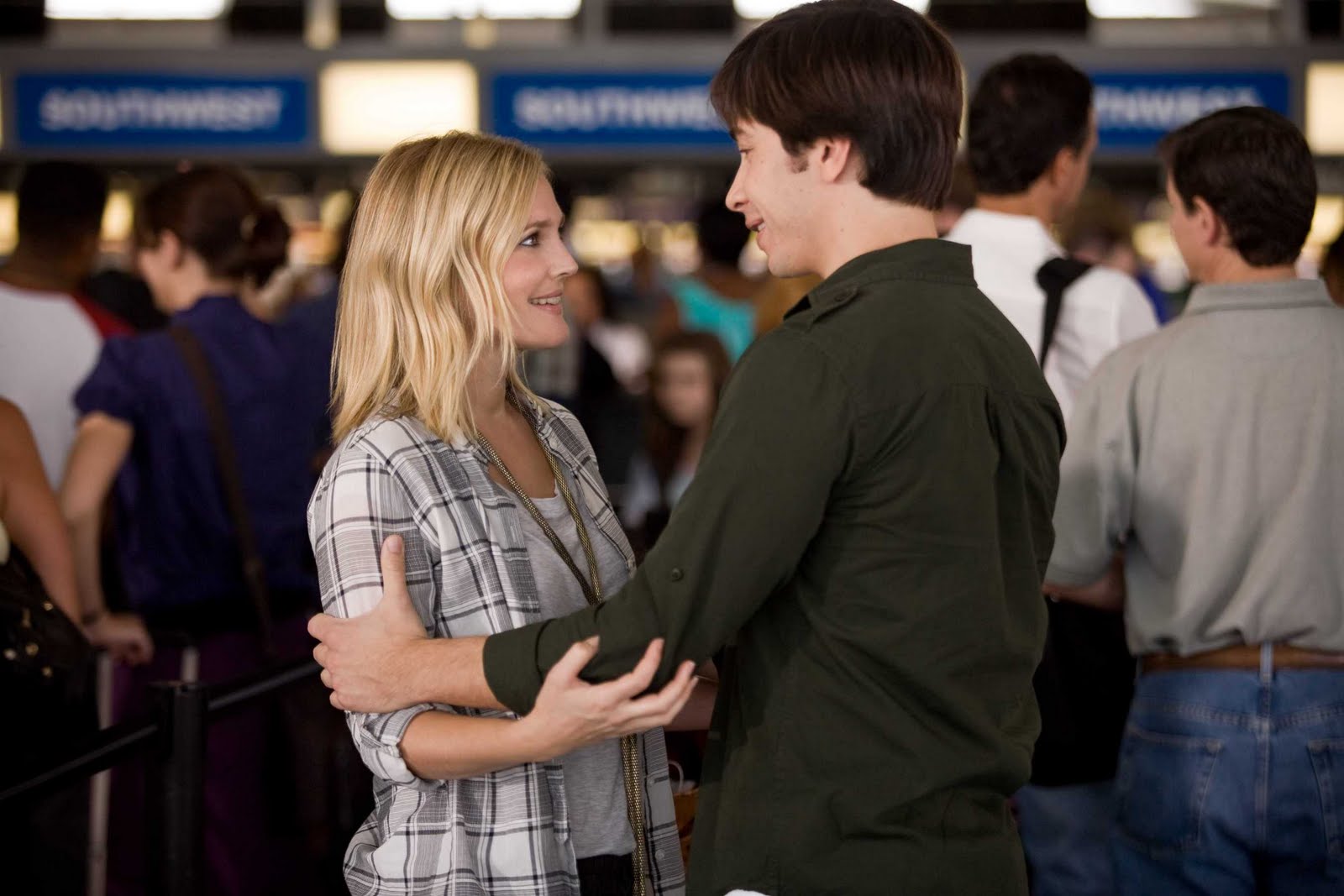
Drew Barrymore and Justin Long attempt to maintain a bicoastal relationship in the romantic comedy GOING THE DISTANCE. Long’s record label employee Garrett and Barrymore’s aspiring journalist Erin hit it off immediately, but they promise not to get too serious because in six weeks she’ll be leaving New York City for grad school in California. When the time comes for her to head west, Garrett and Erin realize that they want to continue their young romance in spite of whatever difficulties the distance might bring.

Not only is GOING THE DISTANCE a consistently funny romantic comedy, it possesses the rare wisdom to explore the relationship rather than contriving conflicts. So many films in this genre get bogged down in generating immediate artificial discord to split the couple apart for the inevitable big reunion. This strategy loses sight of developing a romance that stokes the desire for such a reconciliation in the first place. Building with scene upon scene of Garrett and Erin showing their funny, warm, and vulnerable sides, GOING THE DISTANCE lets the characters fall in love and gives the audience a reason to root for them before they have reasonable problems to overcome.

It helps that Barrymore either has a nose for the right script or knows how to tailor them to her strengths. She’s again playing a variation on her usual role of the down to earth free spirit, but why complain when she is so good at creating appealing and relatable characters like she does here?

GOING THE DISTANCE gives both elements of this film type equal weight. While the romance is nurtured, the laughs never wane in this sharply timed comedy. Director Nanette Burstein and screenwriter Geoffrey LaTulippe spread the wealth, and the raunch, among the strong ensemble, which includes Jason Sudeikis, Christina Applegate, and Jim Gaffigan. As Garrett’s strange, good-natured roommate Dan, Charlie Day swipes the most scenes, whether it’s by listening too attentively through the bedroom wall or conducting conversations with the bathroom door open. GOING THE DISTANCE is concocted from a familiar formula. It just happens to be a really good example of what can be done with it.

Grade: B+

Saturday, April 10, 2010

Date Night

DATE NIGHT (Shawn Levy, 2010)

When their seemingly happy friends split up, the Fosters question if their relationship is showing similar signs of strain. Looking to add a little spice into their routine marriage, Phil and Claire Foster (Steve Carell and Tina Fey) head from New Jersey to the big city in DATE NIGHT. The Fosters arrive too late to get a table at a trendy New York City restaurant, but an emboldened Phil claims the reservation of the Tripplehorns, a couple who don't appear to be at the fine dining establishment.

The date night is going very well until two shady characters ask the Fosters to accompany them to the alley. They believe the Fosters are the Tripplehorns, who took something from someone you don't want to steal from. Thus begins a crazy evening for the suburban parents as they run for their lives.

Carell and Fey make a believable couple who are comfortable with one another yet worry that they've settled into a safe but boring marriage. DATE NIGHT'S undercurrent of quiet panic fleshes out the Fosters more than other comedies attempt to do, and it goes a long way in making them relatable. Unfortunately, DATE NIGHT takes two funny people, puts them in unfunny situations, and has them do and say unfunny things.

The comedy is disappointingly lousy rather than aggressively bad. Carell and Fey give their best effort and salvage occasional scenes. When they pose as a hipster couple to obtain a crucial telephone number, the actors find laughs in looking foolish and behaving with false confidence they've not shown to that point.

Carell and Fey can only do so much with this material. It's telling that some of the ad libs in the outtakes during the credits are funnier than what's in the proper movie. Who needs the lame thriller and action elements when these two performers can be funny themselves?

Grade: D+

Tuesday, March 23, 2010

The Bounty Hunter

THE BOUNTY HUNTER (Andy Tennant, 2010)

Ex-husband and wife Milo Boyd (Gerard Butler) and Nicole Hurley (Jennifer Aniston) are reunited in THE BOUNTY HUNTER when she skips out on a court appearance and he's tasked with bringing her in. Nicole is an ambitious journalist whose career focus led to her break-up with Milo. Now that job fixation leads Nicole to digging into a story about a suspicious-looking suicide rather than showing up for her appointed case before a judge.

Since the divorce Milo has lost his job as a police detective and makes ends meet as a bounty hunter. Apprehending his former wife looks like a chance for some sweet revenge, but Nicole can be a wily target.

As a lousy mystery and lousier romantic comedy, THE BOUNTY HUNTER is two bad films in one. For a comedy of remarriage, Aniston and Butler have a distinct lack of chemistry. Their failed relationship is supposed to provide that extra zing to his pursuit of her, but little evidence exists that these two characters ever felt deeply for one another or even were more than passingly familiar. Based on their absent romantic history and tension, she might as well be some random bail-jumper for him to chase.

Butler again plays a sensitive soul hiding behind a malicious creep persona. His BOUNTY HUNTER role isn't quite as off-putting as his turn in THE UGLY TRUTH, but both parts have the diminishing effect of molding Butler into a smug, unappealing performer to watch. Aniston has rarely found film work that caters to her comedic strengths. In THE BOUNTY HUNTER she seems as disinterested as everyone else.

Director Andy Tennant possesses a decent track record for light entertainments, with EVER AFTER and HITCH among his filmography highlights. This candy-coated yet ill-tempered version of a procedural isn't suited to his romantic comedy chops. In a confounding choice, the film is built around the suicide Nicole is investigating. The crime and corruption mystery is as boilerplate as they come. It also receives excessive and misplaced attention for a film with the primary concern of convincing us these two squabbling lovebirds are destined for one another despite their protests.

Grade: D+

Friday, January 08, 2010

Leap Year

LEAP YEAR (Anand Tucker, 2010)

Amy Adams tries to get the ultimate commitment from her longtime boyfriend in the romantic comedy LEAP YEAR. As hyper-organized Anna Brady, Adams gets her hopes up that her cardiologist boyfriend Jeremy (Adam Scott) will finally propose, but rather than getting an engagement ring, the tiny box he gives her contains just earrings.

Soon after Jeremy departs for a work conference in Dublin, Ireland. Luckily for Anna, the Irish have a tradition that reverses commonly accepted gender roles. On February 29, women can ask the men they love to marry them. There's even precedent for a woman in her own family to propose to a man in such a fashion.

Impetuously Anna takes off for the Emerald Isle with plans to ask Jeremy to be her husband, but the weather interferes with reaching her destination. Anna only gets to the small town of Dingle. There she meets Declan (Matthew Goode), a young, grouchy inn owner who agrees to drive her to Dublin for a princely sum. While neither intend for the arrangement to lead to anything beyond a business agreement, their bumpy Irish adventure draws them closer than either expects.

Although LEAP YEAR is contrived like mad, its mechanisms for putting love in motion are a little less artificially manufactured than what comes as standard equipment in most romantic comedies. The characters are bound in outlandish circumstances, but at least writers Deborah Kaplan and Harry Elfont attempt to make the set-ups seem organic according to movie logic. Nevertheless, the screenwriters paint themselves into a corner and concoct a badly flubbed ending that brings matters to a conventionally satisfactory conclusion but wholly unbelievable one.

Yet the charming performances of and chemistry between Adams and Goode help LEAP YEAR overcome all the forced narrative devices and blarney about whimsical Irish townsfolk and their customs. Adams exudes pluck and cheerful sincerity, and it's often funny to see her enthusiasm rub against the scruffy Goode's negative outlook. The tension between the characters is well-earned, and the understanding and affection that grows between them seems like a natural, if quick, offshoot of their time together.

For all their squabbling, there's a mutual respect underlining this relationship borne from necessity. Plus, as far as romantic comedies are concerned, if two people can disagree with the kind of electricity surging between Adams and Goode, they're destined for each other. LEAP YEAR is not constructed from the finest materials, but its two appealing lead actors make the most with what they're given to provide a sweet, breezy escape.

Grade: B-

Sunday, December 27, 2009

It's Complicated

IT'S COMPLICATED (Nancy Meyers, 2009)

In IT'S COMPLICATED former husband and wife Jake and Jane (Alec Baldwin and Meryl Streep) find that there are still some sparks between them ten years after their divorce. Jane has been wrapped up in her career and kids since the marriage ended, but as she watches their youngest child leave her home, the lack of a personal life becomes more apparent. Meanwhile, Jake went on to marry the much younger woman who had been his mistress.

While in New York for their son's graduation, Jane and Jake share an impromptu dinner that leads to the hotel room and a mess of a morning after. Jane has now become the other woman yet entertains the idea of getting back together with Jake. She knows it's probably a terrible mistake but can't help but reveling in what it is like to feel desirable again. The problematic nature of Jane and Jake's arrangement gets compounded when her architect Adam (Steve Martin) begins competing for her affections as well.

IT'S COMPLICATED is a triumph of casting. Streep, Baldwin, and Martin are having so much fun in this romantic comedy-drama that it's impossible not to get swept up in the good time they're having as well. As a bakery owner, Jane makes and sells sweet indulgences but has denied herself the same relationship-wise. Streep cuts loose in the role, and it's a pleasure to watch her dithered and delighted as the character rediscovers her attractiveness and worth.

The rascally Baldwin stirs up laughs with the confident satisfaction he exudes in seducing his ex-wife and juvenile jealousy he exhibits when another man comes across Jane's radar. Martin shows fragility, comfortable resoluteness, and good humor in how his character deals with post-divorce life and the love triangle he's unwittingly wandered into.

Writer-director Nancy Meyers keeps the complications in IT'S COMPLICATED more in the scenarios than in the emotions, which holds back what is otherwise an often funny film. It's a pleasant surprise that Jake's second wife Agness (Lake Bell) isn't portrayed as a shrew, yet Meyers evades thorny questions of the primary ethical dilemma Jane faces if she is to continue seeing Jake on such enraptured terms.

The oh-so-French set-up is managed as consequence-free wish fulfillment rather than the existential examination a more serious-minded filmmaker might give it. Meyers also infantilizes Jane's adult children to a weird degree, but such shortcomings can't undermine a good film with three actors having a blast.

Grade: B-

Friday, December 18, 2009

Did You Hear About the Morgans?

DID YOU HEAR ABOUT THE MORGANS? (Marc Lawrence, 2009)

Witness relocation could be the cure for a wounded marriage in the romantic comedy DID YOU HEAR ABOUT THE MORGANS? Hugh Grant and Sarah Jessica Parker star as the separated New York City power couple Paul and Meryl Morgan. Paul's infidelity fractured the relationship, but after months apart he is eager to patch things up. Meryl still isn't convinced the marriage is worth saving.

During a post-dinner walk the two see one of her clients murdered. The dead man was an international arms dealer bumped off by a professional killer now seeking to eliminate those who can identify him. With their lives in jeopardy, Paul and Meryl have no choice but to accept an offer to go into witness protection and be shuttled to the sleepy burg of Ray, Wyoming.

The folksy sheriff Clay Wheeler (Sam Elliott) and his deputy wife Emma (Mary Steenburgen) welcome the displaced duo into their home and function as a model couple for the Morgans. Removed from the bustling careers and personal lives they know, Paul and Meryl can now figure out if love remains between them.

DID YOU HEAR ABOUT THE MORGANS? deploys the familiar and unfortunate strategy of making its New Yorkers outlandishly insular and heartland characters simple and virtuous. Such stereotyping is offered in a prostrate appeal to a perceived lumpen middle America that wants to see city slickers taken down several pegs.

In fairness, the overdone exaggerations eventually become less of a factor in the film's humor and are not condescending, unlike the 2009 Renée Zellweger film NEW IN TOWN, which bordered on the offensive in portraying common folks. Still, Hollywood's broad conceptualizing of urban and rural areas seems stuck in the 1930s.

On the plus side for DID YOU HEAR ABOUT THE MORGANS?, writer-director Marc Lawrence works toward reconciling the main characters rather than having them at each others' throats before the inevitable eleventh hour change of heart. Romantic comedy filmmakers have become so focused on using jokes to tear lovers apart that they lose sight of the mushy sentiment that comprises half of the genre's name.

DID YOU HEAR ABOUT THE MORGANS? strives to reignite the extinguished flame between the separated husband and wife and achieves flickers of success. The mediocre material gets a boost from a hardworking Grant, who uses his trademark bumbling formality to deliver dry commentary and wring out the most laughs possible. DID YOU HEAR ABOUT THE MORGANS? shows the strain of its screenplay shortcomings and buckles under them, but at least that's preferable to the romantic comedies full of spite.

Grade: C

Sunday, September 06, 2009

All About Steve

ALL ABOUT STEVE (Phil Traill, 2009)

In ALL ABOUT STEVE crossword puzzle creator Mary Horowitz (Sandra Bullock) grudgingly accepts a parentally-arranged blind date with cable news videographer Steve (Bradley Cooper). Upon seeing her handsome date Mary becomes hot to trot, but her intensity and incessant chatter lead Steve to cut short their time together. His job provides the convenient excuse of a breaking news assignment out of town. Steve politely but insincerely says that he wishes Mary could accompany him.

Instantly obsessed with Steve, Mary misreads the situation and decides that fate is telling her to follow him around the country. The situation worsens when Steve's co-worker, pompous news reporter Hartman Hughes (Thomas Haden Church), encourages Mary's seemingly delusional actions.

ALL ABOUT STEVE is constructed as a romantic comedy, but Mary's tireless, stalker-like behavior suggests that this ought to be a horror film. There's that and the matter of ALL ABOUT STEVE being dreadfully unfunny. Hartman feeds her delusions, but Mary's inability to decode social cues and her ceaseless cheer are intended as cute quirks, as though she's an innocent venturing into the world for the first time.

Bullock plays Mary as a sweet savant with no concept of how demented she is. Twinkly tics and all, Bullock's performance is an irritating one, to say the least. It's as if Poppy, the positive thinking main character of HAPPY-GO-LUCKY, wandered into this movie and lost all self-awareness.

Propagating ALL ABOUT STEVE'S spectacular misconception is its drumbeat of up with the unusual, down with the press. There's a touch of Billy Wilder's ACE IN THE HOLE to ALL ABOUT STEVE'S media criticism, although if that parallel was intended, director Phil Traill and screenwriter Kim Barker missed that the gathering gawkers and carnival building up around a rescue site were not positive developments.

ALL ABOUT STEVE is an atypical romantic comedy, but different for different's sake doesn't automatically equate to good.

Grade: D